Best Tailwaters for Fly Fishing: 8 Rivers That Fish Year-Round
These dam-release fisheries don't care what the calendar says
Greg Lamp
January 4, 2026
9 min read
When freestone rivers blow out in spring and freeze solid in winter, tailwaters keep fishing. That's the beauty of dam-release fisheries. The water coming off the bottom of a reservoir runs 38-52°F year-round, creating a climate-controlled environment where trout feed consistently regardless of what's happening above the surface.
If you've never fished a tailwater, you're missing out on some of the most productive trout water in the country. These rivers routinely hold 3,000 to 15,000 trout per mile, and because the water temperature stays stable, fish metabolism stays consistent too.
What Makes Tailwaters Special
The secret is cold, bottom-release water. When a dam pulls water from 40-120 feet below the surface, that water stays cold even in August. The consistent temperatures support prolific insect populations. Midges and BWOs hatch year-round on most tailwaters, with caddis, PMDs, and green drakes adding to the mix in warmer months.
Stable flows matter too. While freestone rivers spike and crash with every thunderstorm, tailwater flows are controlled by dam operators. You can check USGS gauges before you go and actually trust what you see.
The tradeoff? Tailwater trout see a lot of flies. They can be technical, demanding precise presentations and small patterns. But that's part of the appeal. These fish teach you to be a better angler.
I learned this lesson the hard way at Cheesman Canyon years ago. Spooked six fish before I hooked one. I was wading too fast, casting too close, and using 4X tippet like an amateur. The guy 50 yards upstream was crushing it. Barely moving, long casts, tiny flies. Tailwaters will humble you, but they'll also make you better.
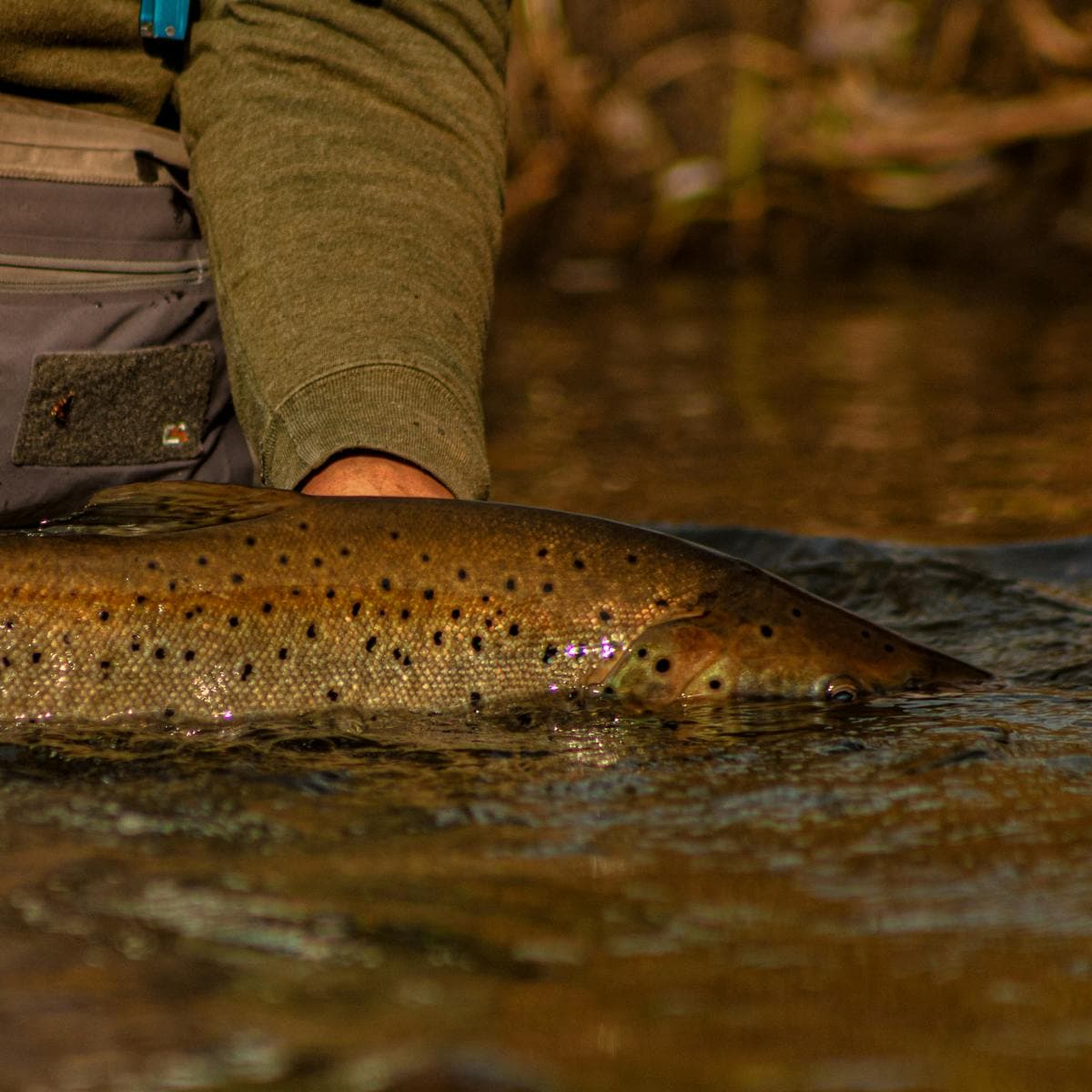
A tailwater brown heading back to the water. These fisheries produce healthy, well-fed trout year-round.
The San Juan River, New Mexico
The San Juan below Navajo Dam is one of the most famous tailwaters in the world, and for good reason. Studies suggest 15,000 trout per mile in the quality water, with fish averaging 16-18 inches.
The first 3.5 miles below the dam are catch-and-release only, and this is where you want to be. Flows typically run 300-500 CFS most of the year, though spring environmental releases can spike to 5,000 CFS for up to 60 days.
The Juan rewards technical fishing. Think size 22-26 midges and RS2s fished on 6X or 7X fluorocarbon. When flows are around 800 CFS, wading anglers can work side channels and riffles effectively. Lower flows mean more fish concentrated in the main channel.
Prime times: February through April, mid-June to July, mid-September to mid-November
Check flows: San Juan at Archuleta on RiverReports
Green River, Utah
Below Flaming Gorge Dam, the Green River holds between 8,000 and 22,000 trout per mile in the A Section, numbers that rival any tailwater in the country. Browns, rainbows, cutthroats, and cutbows all call this water home.
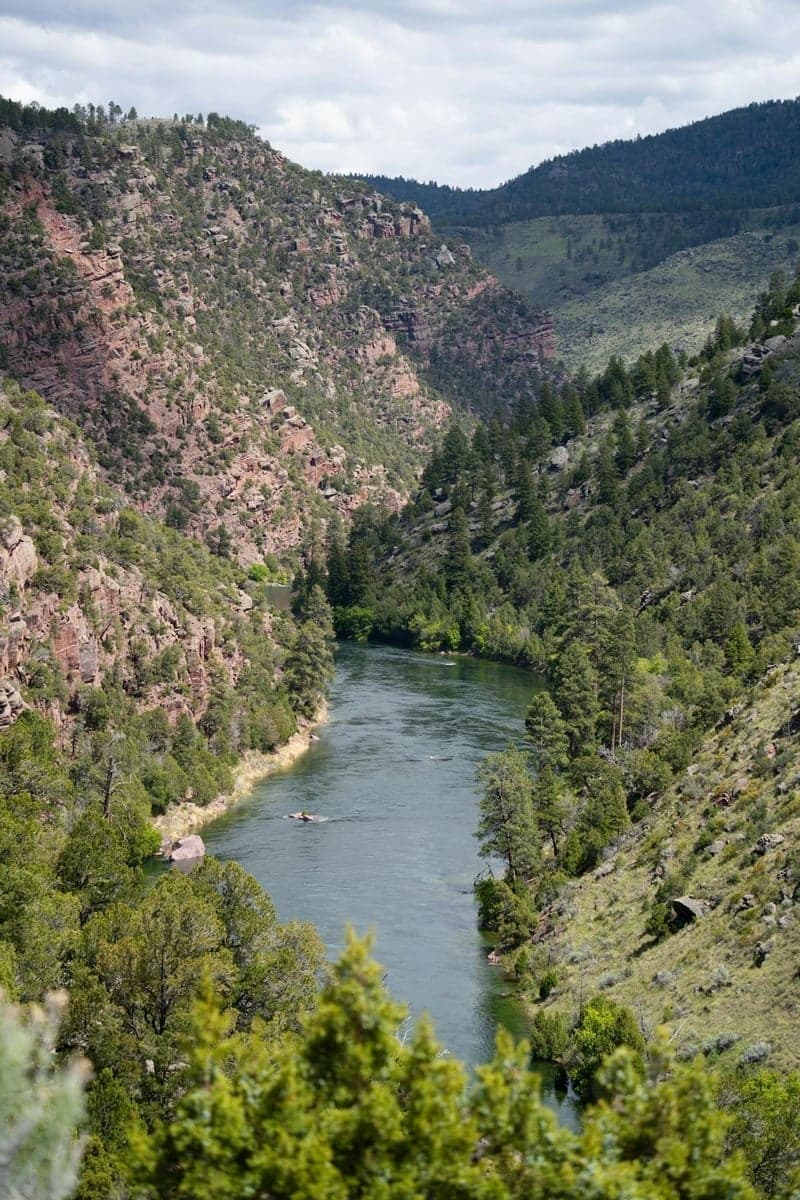
The Green River flowing through stunning canyon country below Flaming Gorge Dam.
The river divides into three distinct sections:
- A Section (7 miles): From the dam to Little Hole. Highest fish densities, most fishing pressure, but spectacular scenery and consistent hatches.
- B Section: More remote, requiring a long drive. Brown trout and hybrid cutbows thrive here with less pressure.
- C Section: Warmer water, brown trout paradise. Starts at John Jarvie Ranch.
The Green's dry fly fishing is legendary, especially in summer when terrestrials hit the water. BWOs hatch March through May with peak activity in mid-April. At Little Hole, regulations require releasing fish between 13-20 inches. You can keep two under 15 inches and one over 22 inches.
Missouri River, Montana
The Missouri below Holter Dam is a 35-mile tailwater that holds 5,000-8,000 trout per mile in the upper stretch, with fish averaging 16-18 inches. Rainbows outnumber browns about 3:1.
Three reservoirs in a row feed Holter Dam, which creates incredibly stable flows and temperatures. The result is a 365-day fishery with prolific hatches of mayflies, caddis, and midges. The Missouri is famous for technical sight fishing to rising trout. If you want to work on your dry fly game, this is the place.
The 35 miles from Holter Dam to Cascade offer the best fishing, with the stretch through Craig seeing the most guide traffic. Float fishing is the norm here, though wade fishing spots exist near access points.
Bighorn River, Montana
The Bighorn below Yellowtail Dam has been a destination fishery since the dam was completed in 1967. The first 13 miles from the Afterbay to Bighorn Fishing Access hold an estimated 3,000-6,000 trout per mile, averaging 14 inches with plenty of fish over 20.
The Afterbay Dam sits one mile below Yellowtail and removes the flow fluctuations from hydroelectric generation, giving the Bighorn remarkably consistent flows year-round. You can fish the Bighorn in January when it's -20°F outside. The trout don't care.
The hatches are excellent: BWOs, PMDs, caddis, and midges all make appearances throughout the season. Trout populations thin out below Bighorn Fishing Access Site, as does the fishing pressure.
White River, Arkansas
The White River system below Bull Shoals Dam is arguably the best tailwater in the South, with nearly 100 miles of cold water holding browns, rainbows, brookies, and cutthroats. Yes, all four species. You can catch a grand slam here.
What brings most anglers to the White is the trophy brown trout fishing. The current world record brown (40 pounds, 4 ounces) came from the Greers Ferry tailwater in 1992. Fish over 20 pounds are caught regularly.
High water periods in winter and spring are prime time for trophy browns. Streamer fishing during generation flows is the ticket: big flies, heavy tippet, and holding on.
South Platte River, Colorado
The South Platte from Cheesman Canyon down to Chatfield Reservoir offers over 100 miles of public access and some of the most technical trout fishing in the West. Cheesman Canyon was Colorado's first catch-and-release-only section, and the fish there act like it. They've seen everything.
Flows in Cheesman run around 100-150 CFS in winter and 500-1200 CFS in summer. The canyon requires a 1.5-mile hike from the parking lot, but the effort filters out casual anglers and leaves you with quality water.
Expect to fish size 18-22 nymphs on 5X or 6X tippet. Midges, BWOs, and small black stoneflies are the winter staples. Due to clear water and high pressure, stealth matters here more than anywhere. Stay low, move slow, and don't line the fish.
Check flows: South Platte at Deckers on RiverReports
Fryingpan River, Colorado
The Fryingpan below Ruedi Reservoir is a Gold Medal tailwater famous for Mysis shrimp, green drakes, and big trout. The 14-mile stretch from the dam to Basalt holds rainbows, browns, brookies, and cutthroats.
Flows typically run 80-150 CFS year-round, with occasional bumps to 300+ CFS during reservoir releases. At normal flows, the upper mile below the dam is easily wadeable—just watch for slick rocks. Mysis shrimp come through the dam from the reservoir, and the trout have grown fat on them. Fish the right Mysis pattern near the dam and you'll understand why anglers drive hours to get here.
Green drake and PMD hatches start in early July and run into September, some of the best dry fly fishing in Colorado. The upper section near the dam sees the most pressure, but 8.5 miles of public access means you can find water.
Check flows: Fryingpan at Ruedi on RiverReports
Lees Ferry, Arizona
The 15-mile stretch of the Colorado River from Glen Canyon Dam to the Grand Canyon might be the most unique tailwater in the country. Crystal-clear, 50°F water flows through a canyon of 1,000-foot sandstone cliffs, holding thousands of wild rainbow trout per mile.
Flows run high here, typically 8,000-15,000 CFS depending on downstream water needs and hydropower generation. That sounds unwadeable, but the river is wide and the edges fish well. Wade fishing works for about a mile below the dam; beyond that, you'll need a boat.
Midges and scuds are the primary food sources, so most fishing happens below the surface, though BWO hatches bring fish up at times. The scenery alone is worth the trip. Adding in consistently good fishing for 14-22 inch wild rainbows makes Lees Ferry a bucket-list destination.
Check flows: Colorado River at Lees Ferry on RiverReports
Planning Your Tailwater Trip
Tailwaters fish differently than freestone rivers. A few things to keep in mind:
Timing around releases: Learn how dam releases affect the water you're fishing. Some tailwaters have daily generation schedules that change fishing conditions dramatically. Wade fishermen may need to position themselves far below the dam so rising water takes hours to reach them.
Think small: Midges dominate most tailwater food chains. Carry a good selection of size 20-26 patterns in various stages. RS2s, Zebra midges, and midge emergers are essential.
Bring light tippet: 5X is often too heavy for tailwater work. 6X and 7X fluorocarbon should be standard. These fish have seen it all.
Check the flows: Before any tailwater trip, look at current conditions and recent trends. A big flow change can concentrate fish in different spots or put them down entirely.
Check current flows for tailwaters across the country
Your Move
Tailwaters are the closest thing fly fishing has to a sure bet. While nothing in fishing is guaranteed, dam-release fisheries offer the consistency that freestone rivers can't match. When your local water is too high, too low, too warm, or frozen solid, somewhere there's a tailwater fishing just fine.
Pick a river from this list. Set up flow alerts so you know when conditions are right. Check the current flows before you book anything. And when you get there, slow down. Tailwater fish reward patience more than anything else.
See you on the water.
Get River Intel Weekly
Flow updates and fishing intel delivered every Thursday.
River Intel Weekly
Weekly flow updates and fishing intel.
© 2026 RiverReports, Inc.