Fly Fishing Near Atlanta: Day Trips to Weekend Getaways
Trout tailwaters, native brookies, and bass—all within driving distance of the city
River Reports Staff
December 17, 2025
14 min read
TLDR
Atlanta has surprisingly good fly fishing within easy driving distance. The Chattahoochee River tailwater runs right through the metro area with wild browns and stocked rainbows. Head 90 minutes north and you're in mountain trout country. The Toccoa, Soque, and dozens of small streams holding wild fish, including Georgia's native brook trout. Add in bass lakes and you've got year-round options without leaving the state.
Quick Reference
| What | When | Key Numbers |
|---|---|---|
| Chattahoochee tailwater | Year-round (best Nov-May) | 400-800 CFS ideal; dam hotline: 770-945-1466 |
| Toccoa tailwater (wade) | Year-round | Under 350 CFS for wading; water stays 48-52°F |
| Toccoa tailwater (float) | April-October | 130+ CFS minimum; 3-6 hr float to Curtis Switch |
| Mountain freestones | March-October | Stop fishing if water hits 68°F |
| Native brookies | May-September | Headwater creeks above 2,000 ft elevation |
| Bass (Lanier/Allatoona) | March-November | Topwater at dawn/dusk; 8-weight recommended |
| Fly shop | Unicoi Outfitters | (706) 878-3083, Helen, GA |
The Chattahoochee: Atlanta's Backyard Tailwater
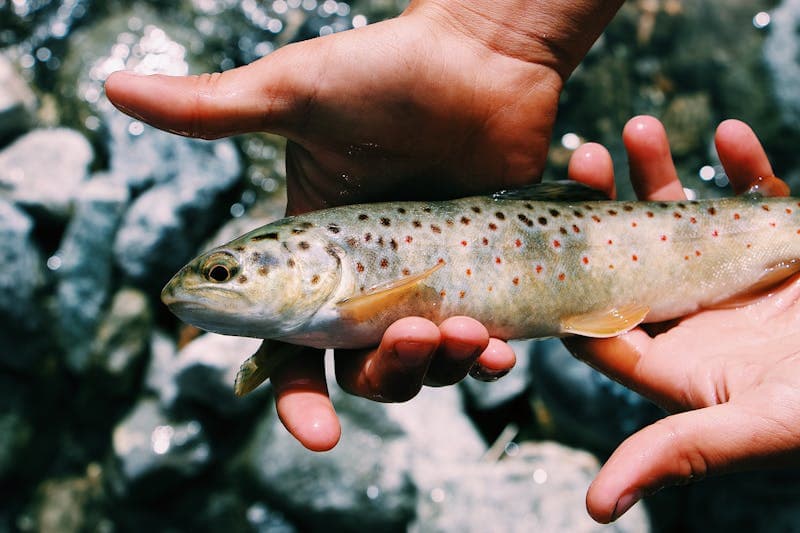
Wild browns thrive in the cold tailwater below Buford Dam
Yes, a legitimate trout fishery runs right through metro Atlanta. The Chattahoochee below Buford Dam offers 48 miles of designated trout water managed by the National Park Service.
Cold, oxygen-rich water from Lake Lanier keeps temps around 48°F year-round, perfect for trout even in August. The state record brown (18 pounds, 2003) came from this water. Realistically, you're looking at 12-16 inch fish most days, with browns pushing 18+ inches if you put in the time and fish streamers low-light.
Best Sections (with specifics)
Bowman's Island (just below Buford Dam) Two parking areas. The first lot serves hikers heading to lower shoals and Bowman Island; the main lot has restrooms. From the first lot, take the trail and cross the bridge, then walk about a quarter mile to reach the fishing. A pedestrian fishing bridge on the east side gives you a view of holding water below.
Where to fish: Work the riffles and pocket water downstream of the bridge. Stocked rainbows stack in the slower pools when they're new to the river, but the wild browns hold in surprisingly shallow water along the edges. Don't wade past fishable water. I've spooked good browns in water barely covering my boots. When you spook one, note what that water looks like and fish similar structure.
Settles Bridge More wade-friendly than Bowman's, with deep runs and defined pools. Bug life increases here compared to the upper section, which opens up your fly selection. This stretch has a good mix of stocked rainbows and small browns, lots of 10-14 inch fish with occasional quality browns in the deeper structure.
Where to fish: Focus on the deeper troughs with nymphs, then work streamers along the shaded banks. The browns here aren't huge, but they're wild and spooky. Approach low, lead with the fly, and use longer leaders.
Delayed Harvest Section (I-285 Area) Convenient for after-work sessions, close to the city, heavily stocked, catch-and-release Nov through May. Pressure is real. Fish here are PhD-level educated. Downsize to 6x, use smaller flies (20-24), and slow everything down.
Flows and Safety
This is dam-controlled water. Check the release schedule before you go:
- Phone: 770-945-1466 or 1-855-DAM-FLOW (1-855-326-3569)
- Radio: 1610 AM broadcasts release info near the dam
- Online: USACE Lake Lanier
Normal flows run around 600 CFS. Releases spike above 1,000 CFS within minutes, and the river can rise several feet before you realize what's happening. Four warning sirens between Buford Dam and Highway 20. If you hear them, move.
The water is 48°F year-round. That's hypothermia territory if you go in. Winter wading gear: neoprene waders or heavyweight fleece under breathables, neoprene booties, and wool socks aren't optional, they're survival gear. If you notice the water getting murky and debris floating downstream, you're already behind. Get to high ground.
The Corps typically releases weekday afternoons, but unscheduled releases happen during rain or high demand. Mornings and weekends are usually safer, but not guaranteed.
Required: PFD from Buford Dam south to Highway 20.
What Works
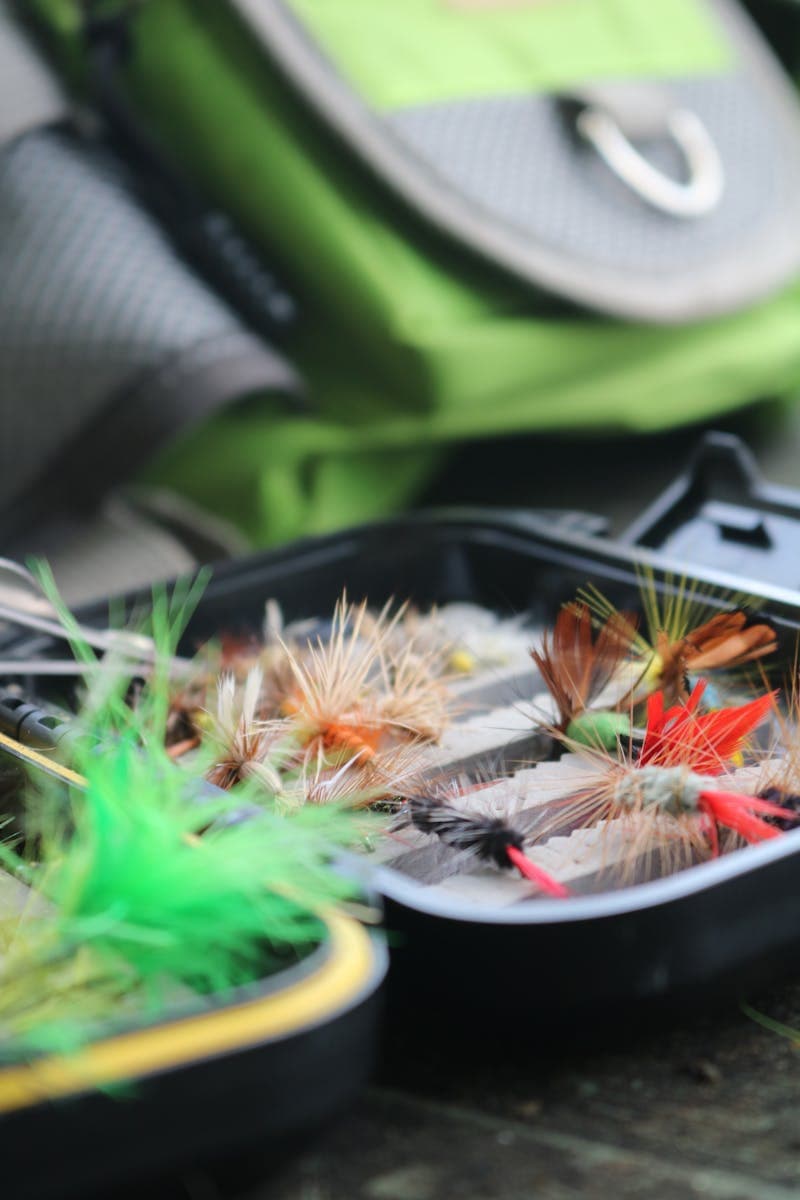
A well-stocked fly box for the Chattahoochee: midges, nymphs, and streamers
The Hooch is a nymphing river. The Blue Assassin (a blue-bodied midge in sizes 18-22) is the signature pattern. It works year-round.
Core nymph box:
- Blue Assassin (18-22)
- Zebra Midge, black and red (20-24)
- Pheasant Tail (16-20)
- Pat's Rubber Legs (10-14)
- San Juan Worm, red (12-14)
For browns: Olive Woolly Bugger (8-10), small Sculpins (6-8). Fish streamers early and late, especially during the spawn (late October through January). Egg patterns work when browns are on redds.
Winter is prime time. Everyone else is home watching football, the browns are spawning and aggressive, and you might have the river to yourself on a Tuesday in January.
Guide Service: River Through Atlanta. Owner Chris Scalley fishes 200+ days a year on this water. If you want to float the sections between access points where the best fish live, he's your guy.
Day Trips: 1-2 Hours from Atlanta
Helen and the Upper Chattahoochee (1.5 hours)
The Chattahoochee starts in the mountains near Helen, a kitschy Bavarian tourist town that happens to sit on good trout water. Classic freestone: cold, clear, and holding all three species.
Unicoi Outfitters is the hub. Half-day guided trips start at $230 (gear included). They won Orvis Fly Shop of the Year in 2018 and know every pool.
Dukes Creek at Smithgall Woods is Georgia's only public trophy water. Reservation required ($10/day). Call (706) 878-3087. Fish quality is exceptional; 18-24 inch fish are realistic. When the caddis are popping in spring, this is the best dry fly fishing in the Southeast.
Blue Ridge and the Toccoa Tailwater (1.5 hours)
Blue Ridge calls itself Georgia's trout capital. The Toccoa backs it up. The tailwater below Lake Blue Ridge runs 14 miles north into Tennessee with consistent temps and real hatches (caddis and mayflies that actually bring fish up), unlike the midge-dominated Chattahoochee.
Float trips here access water that wading anglers never see. Rainbows over 20 inches get caught regularly, and the wild browns in the private sections grow fat.
Wade Access (with specifics)
Tammen Park (just below dam) Shallow riffles, easy access, beginner-friendly. Water stays in the 50s even in August. Heavily stocked, so expect company on weekends.
Where to fish: Work upstream from the parking area. The riffles hold recently stocked rainbows. For better fish, walk further than most people bother to.
Curtis Switch Park (~5 miles downstream) The river widens here with deeper pools and slower water. Browns start showing up more consistently in this section. They like the structure.
Where to fish: The deep pool where you first see the river from the parking area holds fish, but everyone hammers it. Walk downstream and look for undercut banks and shaded water. Streamers along the edges produce the best browns. About a mile of good water in each direction.
Horseshoe Bend Park (McCaysville, GA/TN line) End of Georgia's trout water. Quieter. Mixed water types, so you need to adapt technique. Best shot at fish that don't see 50 anglers a week.
Float Trip Logistics
| Section | Distance | Time | Notes |
|---|---|---|---|
| Dam → Curtis Switch | ~5 mi | 3-6 hrs | Best variety; deep pools, runs, riffles |
| Curtis Switch → Horseshoe | ~9 mi | 4-6 hrs | More remote; bigger water |
Minimum float flow: 130 CFS. Ideal wading: Under 350 CFS. Above that, hire a drift boat.
Float trips on the Toccoa are worth the money. You access private sections where 20+ inch rainbows actually exist. Last spring, one angler posted a 21-inch rainbow from the upper float. That's not a fish you're catching from Tammen Park.
Outfitters:
- Cohutta Fishing Company - Wade/float, starting $225/half-day
- Reel'Em In Guide Service - 18 miles of river
- Bowman Fly Fishing - Drift boat specialists
What Works on the Toccoa
The Toccoa has better dry fly fishing than the Chattahoochee.
Dries: Elk Hair Caddis (14-16), Parachute Adams (14-18), Chubby Chernobyl (10-12) Nymphs: Pheasant Tail (14-18), Walt's Worm (14-16), Pat's Rubber Legs (10-14) Streamers: Olive Woolly Bugger, small Intruders for swinging riffles
Spring caddis hatches have been solid recently. When you see bugs on the water, switch to dries. Fish here will actually eat them.
Ellijay: Cartecay River and Mountaintown Creek (1.5 hours)
Maybe the closest quality water to Atlanta. Both hold wild and stocked trout.
Mountaintown Creek - Artificial only, which keeps crowds down. Pocket water and plunge pools. Small stream, so fish 16-18 Elk Hair Caddis and Parachute Adams.
Cartecay River - Slightly larger, easier wading. Access at Whitepath Lodge and roadside pulloffs. Heavily stocked in spring; summer fishing is better for wild fish.
Ellijay itself is worth a stop for the good food, apple orchards (October), craft beer.
North Georgia Hatch Chart
| Season | Hatches | Patterns |
|---|---|---|
| Winter | Midges, Black Stones | Black Midge (22-24), Winter Stone (14-16) |
| Early Spring | BWOs, Quill Gordons | BWO (18-22), Quill Gordon (14-16) |
| Late Spring | Sulphurs, Caddis, Yellow Sallies | Sulphur (16-18), Elk Hair Caddis (14-16), Yellow Stimulator (12-14) |
| Summer | Golden Stones, Terrestrials | Stimulator (10-14), Hopper (8-12), Beetle (14-16) |
| Fall | BWOs, October Caddis | BWO (18-22), Orange Caddis (12-14) |
Timing varies by elevation. Bugs emerge 1-2 weeks later higher up.
Summer Fishing: The 68°F Rule
Georgia freestones warm fast in summer. Trout stress at 68°F and can die from catch-and-release even if they swim away fine.
Temperature guide:
- 50-65°F: Prime feeding
- 65-68°F: Slow down, handle fish carefully
- 68°F+: Stop fishing freestones. Period.
Summer strategy:
- Fish tailwaters (Chattahoochee and Toccoa stay cold all day)
- Hit freestones at dawn, quit by 10-11 AM
- Carry a thermometer
- Seek spring-fed tributaries
The Appalachian Slam: Native Brookies
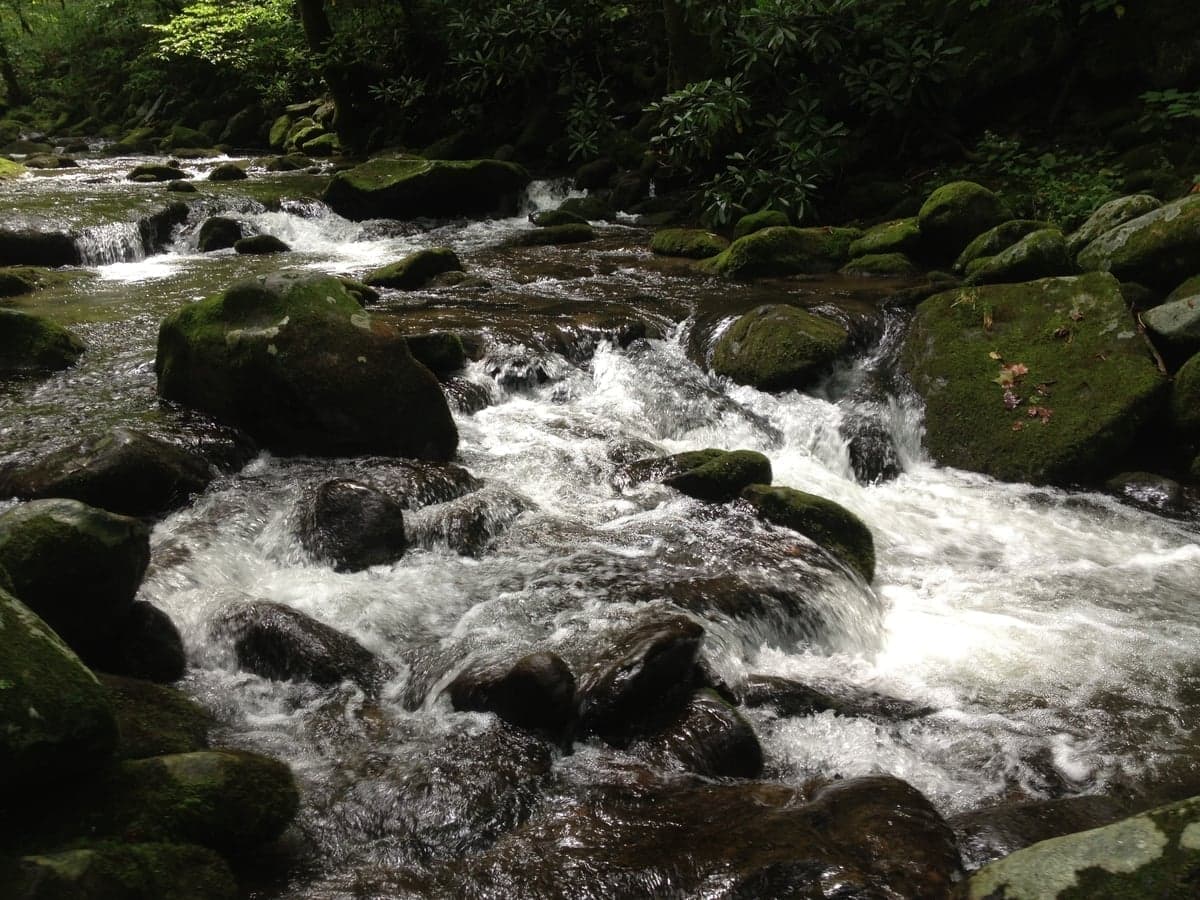
Native brookies hide in remote headwater creeks above 2,000 feet
Georgia is the southern edge of native brook trout range. These fish run 4-6 inches. A 7-incher is good, 8 inches is a trophy. What they lack in size they make up in color and the satisfaction of finding them.
Brookies survive above 2,000 feet in cold headwater creeks. About 150 miles of Georgia streams still hold them.
Where to Look
Noontootla Creek - Wild fishery, unstocked since the 1940s. All three species, and your best Appalachian Slam water. Artificial only. Access via Blue Ridge WMA.
Upper Chattooga River - Remote, near NC border. All three species. Bring hiking boots.
Cooper Creek WMA - Main creek is stocked; native brookies live in the small tributaries. Explore the headwaters.
Tallulah River - Upper reaches toward NC. Good Slam water.
Brookie Tips
- Go small: 6-7' rod, 2-3 weight, 5x-6x tippet, sizes 14-20 flies
- Stay low: These fish spook in inches of water
- Expect tight quarters: Bow-and-arrow casts, roll casts. Distance doesn't matter.
- Dries work: Wild brookies rise aggressively. Parachute Adams, Royal Wulff, Elk Hair Caddis.
Join Trout Unlimited or North Georgia Trout Online for specific brookie spots. Word of mouth is how you find the best water.
The Soque River: Private Trophy Water
Brigadoon Lodge controls the only private stretch of the Soque, with stream-bred rainbows and browns to 30+ inches. Featured in Southern Living, Garden & Gun, Field & Stream. President Carter fishes here.
Logistics:
- Fly fishing only, C&R, no droppers
- Full day: $550 (1) / $800 (2)
- Half day: $500 (1) / $750 (2)
- Reservation: (706) 754-1558
- High season: April-June, Sept-Nov (book months ahead)
Splurge option. If you want legitimate trophy trout without flying west, this is it.
Bass Fishing Near Atlanta
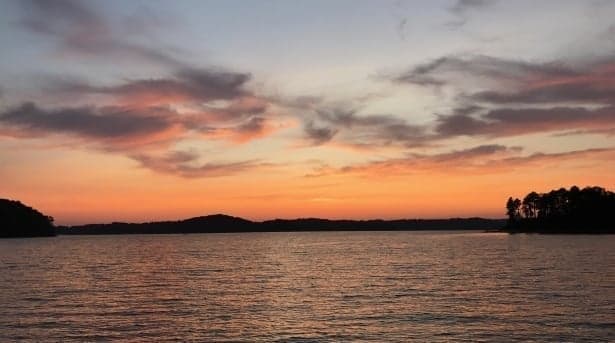
Dawn on Lake Lanier—prime time for topwater bass
Georgia ties the world record for largemouth (22+ lbs). Atlanta has solid bass water within an hour.
Lake Lanier (1 hour)
38,000 acres. Lanier has the highest concentration of fly anglers targeting freshwater stripers in the country. October through May, stripers chase herring in the shallows, perfect for intermediate and sinking lines. Summer shifts to spotted bass schooling on shad.
Where to fish: Brown's Bridge and Six Mile Creek are two of the most consistent areas for fly anglers. Brown's Bridge has rocky points where stripers push bait. Look for birds diving. Six Mile Creek is a protected arm where spotted bass school heavily in summer and fall.
Gear: 8-weight, intermediate/sinking lines, floating line for topwater Flies: Clouser (white/chartreuse), EP Baitfish, foam poppers
Lake Allatoona (45 min)
12,000 acres, rocky shorelines, one of the highest catch rates per hour in Georgia. Don't expect giants, but expect action.
Fish poppers early/late along rocky banks. Spring spawn brings fish shallow. The Etowah Tailwater below the dam holds hybrid stripers, spotted bass, and redeye bass in spring. Underrated fly water.
Flint River
Starts south of downtown, flows to Lake Seminole. Known for shoal bass, which fights like a smallmouth, found only in a few GA/AL rivers. Kayak fishing with poppers and Clousers works.
Paddling the Chattahoochee
Locals call it "shooting the Hooch." The river through metro Atlanta is calm (Class I-II), scenic, and accessible.
Nantahala Outdoor Center runs outposts at Powers Island and Don White Memorial Park. Kayak, canoe, SUP, and tube rentals plus guided trips.
Check dam releases. Wear a PFD. The water is cold (48°F) even in summer.
Licensing and Regulations
Georgia fishing license + trout stamp required for trout. Buy at GoOutdoorsGeorgia.com.
Artificial Only: Chattahoochee (upper), Coleman River, Conasauga, Mountaintown Creek, Noontootla Creek, others
Delayed Harvest (C&R Nov 1 - May 14): Chattahoochee, Toccoa, Amicalola Creek, Smith Creek, Chattooga River
Georgia stocks ~160 streams March through October. Check the Trout Stocking Map for schedules.
When to Go
| Season | Conditions | Where |
|---|---|---|
| Winter | Browns spawning, light pressure | Chattahoochee tailwater |
| Spring | Hatches start, stocking begins | Mountain streams, Toccoa, bass lakes |
| Summer | Freestones warm | Tailwaters only after 10 AM |
| Fall | Prime everywhere | Best overall season |
The counter-intuitive move: fish the Chattahoochee in winter. Browns are aggressive, crowds are gone, and the stable water temps keep fish active.
Planning Your Trip
Day Trip Checklist
- Check RiverReports flows
- Call Buford Dam (770-945-1466) for releases
- License + trout stamp
- Stream thermometer (summer)
- Pack lunch
Weekend Itinerary
Day 1: Blue Ridge. Wade Tammen Park early, float the dam-to-Curtis section if flows allow.
Day 2: Mountain streams. Noontootla for the Slam, or book Dukes Creek if you reserved ahead.
Day 3: Chattahoochee tailwater on the way home. Check releases, fish Bowman's Island or Settles Bridge for browns.
Where to Stay
Blue Ridge: Cabin rentals everywhere. Toccoa River Cabins has waterfront options.
Helen: Touristy but convenient. Cedar Creek Cabin Rentals.
Clarkesville: For Brigadoon. Charming downtown.
Fly Shops
- Unicoi Outfitters - Helen. (706) 878-3083. The hub for north Georgia.
- Cohutta Fishing Company - Blue Ridge. Toccoa specialists.
- Bowman Fly Fishing - Drift boat trips.
- River Through Atlanta - Chattahoochee experts.
The Bottom Line
Atlanta isn't famous for fly fishing, but it should be. Tailwater with wild browns 30 minutes from downtown. Mountain brookies 90 minutes north. Bass lakes and private lodge water if you want them.
The year-round fishery is the real advantage. Summer? Hit the tailwaters. Blown out mountain streams? Fish the Hooch. There's almost always somewhere productive within driving distance.
Check Georgia flows on RiverReports. Call the dam hotline (770-945-1466) if you're hitting the Chattahoochee. Stop at a fly shop. And don't sleep on winter. January on the Hooch, when browns are spawning and no one else is fishing, might be the best day you'll have all year.
First trip? License and trout stamp at GoOutdoorsGeorgia.com. Check the stocking map. Track flows on RiverReports.
Get River Intel Weekly
Flow updates and fishing intel delivered every Thursday.
River Intel Weekly
Weekly flow updates and fishing intel.
© 2026 RiverReports, Inc.