
Hunting for Fly-Tying Materials: From Field to Vise
How to harvest, preserve, and use feathers and fur from game birds and big game for your fly tying
Greg Lamp
December 19, 2025
12 min read
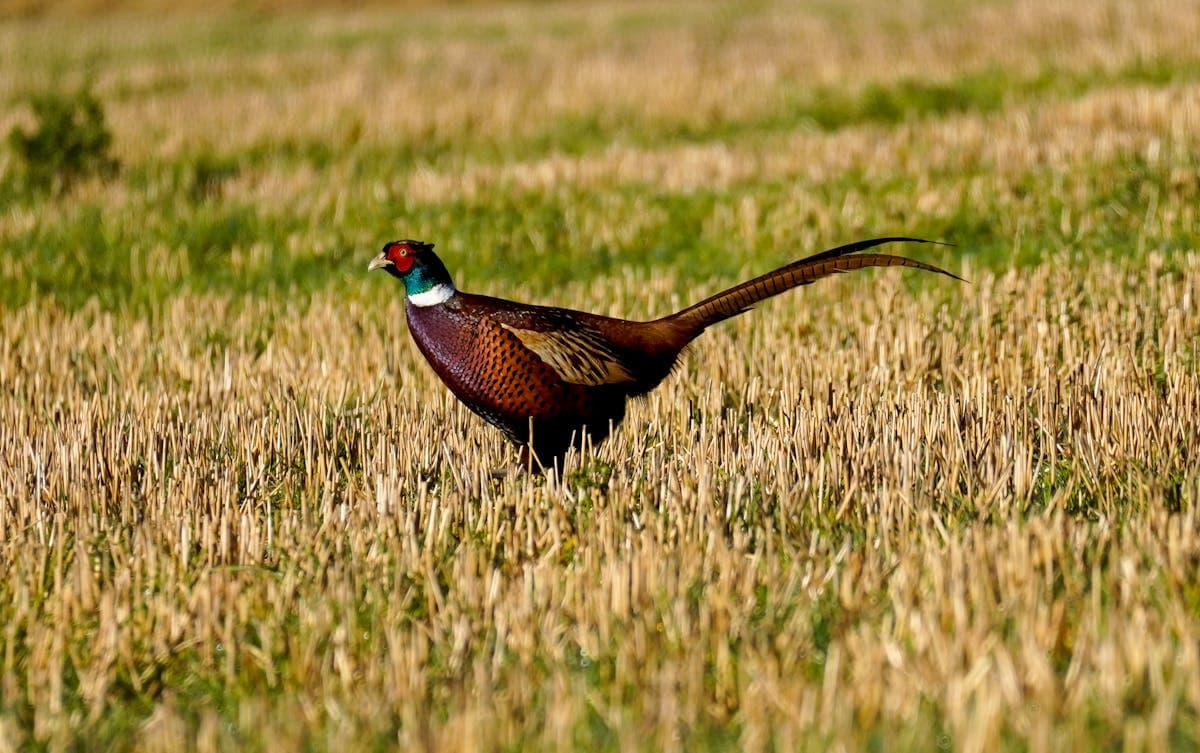
Ring-necked pheasants offer some of the most versatile fly-tying materials, from tail fibers to pheasabou
TLDR
Hunting and fly fishing often go hand-in-hand, and collecting your own fly-tying materials from harvested game adds another rewarding dimension to both pursuits. Pheasant tail fibers, waterfowl CDC, elk hair, and deer fur are expensive at fly shops, but free if you're willing to hunt, harvest, and preserve them yourself.
Before you head out, understand the regulations. Waterfowl and most upland game birds require hunting licenses and federal duck stamps. Invasive species like European starlings typically have no bag limits or closed seasons, making them perfect for summer material collection when everything else is off-limits.
Preservation is simple: skin the bird, flesh the cape, apply borax liberally, and freeze for a week to kill mites. For big game hides, a salt-borax-alum mixture keeps hair intact for years. The result: a lifetime supply of materials and bragging rights when you catch fish on flies tied from animals you harvested yourself.
Why Hunt Your Own Fly-Tying Materials?
People say it's rewarding to catch a fish on a fly you tied yourself. Catching one on a fly tied from materials you harvested from game you hunted takes that satisfaction to another level entirely.
There are practical reasons beyond the connection:
Cost savings: Pheasant tail fibers, CDC feathers, and elk hair aren't cheap at fly shops. A single preserved pheasant cape can provide materials for hundreds of flies. Quality feathers are increasingly hard to find, making hunter-harvested materials particularly valuable.
Material quality: You control the preservation process, ensuring feathers stay supple and hair doesn't slip. Commercial materials vary in quality. Yours won't.
Combining hobbies: If you already hunt, this adds purpose to your harvest. If you already tie flies, it gives you a reason to hunt. Either way, you're spending more time engaged with nature. Many of the best hunting states (Montana, Colorado, Idaho) also have excellent trout fishing. You can check flows while you're scouting elk, or plan a duck hunt around low-water fishing windows on tailwaters.
Hunting and fishing combined: more time outdoors, deeper connection to your gear
Legal Requirements: Know Before You Go
Before you harvest any wild animal for fly-tying materials, you need to follow federal and state regulations.
Federal Requirements for Waterfowl
To hunt ducks, geese, or other migratory waterfowl, all hunters must have:
- A valid state hunting license
- A Federal Migratory Bird (Duck) Stamp, validated with your signature in ink ($25 physical, $30.75 electronic)
- A Migratory Bird (HIP) permit
The Migratory Bird Treaty Act protects waterfowl and most game birds. Seasons, bag limits, and shooting hours (typically half-hour before sunrise to sunset) are set annually by the US Fish & Wildlife Service in cooperation with states.
State Requirements for Upland Birds
Pheasant, chukar, partridge, and grouse hunting regulations vary by state. Most require:
- State hunting license
- Upland game bird stamp or validation
- Hunter education certificate (varies by state and age)
Check your state's fish and wildlife agency for specific seasons and bag limits.
Wild Turkey Requirements
Wild turkey is not classified as an upland bird and has separate hunting regulations. Spring and fall turkey seasons require:
- State hunting license
- Turkey stamp or permit (varies by state)
- Some states limit harvest by tag allocation or lottery systems
Turkey regulations are highly state-specific, so verify your local requirements before hunting.
Invasive Species: The Exception
European starlings are not protected by the Migratory Bird Treaty Act because they're an invasive species. Originally introduced to Central Park in the 1890s by a thespian society, they've spread across the lower 48 and wreak havoc on native bird populations.
Because starlings are invasive, federal regulations don't apply, and most states have no bag limits or closed seasons. This means when all other hunting seasons are closed in summer, you can legally harvest starlings for their excellent soft-hackle feathers.
Always verify state and local laws before hunting any species, as some areas may have restrictions even on invasive species.
Game Birds: The Best Materials for Fly Tying
Pheasant: The Most Versatile Bird
Ring-necked pheasant is the king of fly-tying birds. Every part of the bird offers usable materials:
Tail fibers: The long, olive-brown tail fibers are the most famous. Pheasant Tail Nymphs are one of the most effective patterns ever developed. The iridescent barring creates lifelike nymph bodies, tails, and legs.
Pheasabou: Soft, marabou-like feathers from the flanks and vent. Perfect for streamer collars, nymph tails, and damselfly bodies.
Rump feathers: Mottled brown feathers ideal for soft hackles and thorax wraps on nymphs.
Church window feathers: Distinctive back feathers with dark centers surrounded by copper and tan. Great for wings on dry flies and wing cases on larger nymphs.
A single rooster pheasant provides enough materials to last multiple tying seasons. Hens have subtler coloring useful for more natural-looking patterns.
Waterfowl: CDC and Flank Feathers
Ducks and geese offer premium materials that are expensive to buy but abundant on harvested birds.
CDC (Cul de Canard): The small, wispy feathers around the preen gland near the tail are naturally waterproofed and incredibly buoyant. CDC from wood ducks, mallards, and teal is perfect for emergers, dry flies, and dubbing. You get a surprising amount from each bird, enough to tie dozens of flies.
Don't pluck CDC in the field if the bird is wet or muddy. Wait until you get home, clean the area around the preen gland first, then carefully pluck the feathers to avoid matted, dirty material.
Flank feathers: The finely mottled barring on mallard and wood duck flanks makes ideal soft-hackle wings, nymph legs, and dry fly wings. Wood duck flank is particularly prized for its vibrant colors and fine barring.
Primary wing quills: Mallard wing quills work for nymph wing cases and quill-bodied dry flies. Canada goose primary biots make excellent tails and segmented bodies on larger flies.
Goose biots: From the leading edge of primary wing feathers, these stiff fibers create segmented nymph bodies and tails on everything from midges to stoneflies.
No special treatment needed for CDC. Just pluck it from the bird and store it in a zip-lock bag. The natural oils remain intact.
Upland Birds: Grouse, Partridge, Chukar
Hungarian partridge, ruffed grouse, and chukar are staples for soft-hackle flies, a deadly technique for trout.
Partridge: Breast feathers are heavily speckled and perfect for soft hackles on wet flies. The mottling imitates insect legs and creates enticing movement in the water.
Grouse: Slightly larger feathers than partridge, grouse work well for larger soft hackles and nymph legs. Ruffed grouse tail feathers have dramatic barring useful for larger fly wings.
Chukar: Similar to partridge but with reddish-brown tones. Excellent for varying your soft-hackle color palette.
Because these feathers are increasingly hard to find commercially, preserved skins from hunted birds are particularly valuable to fly tiers.
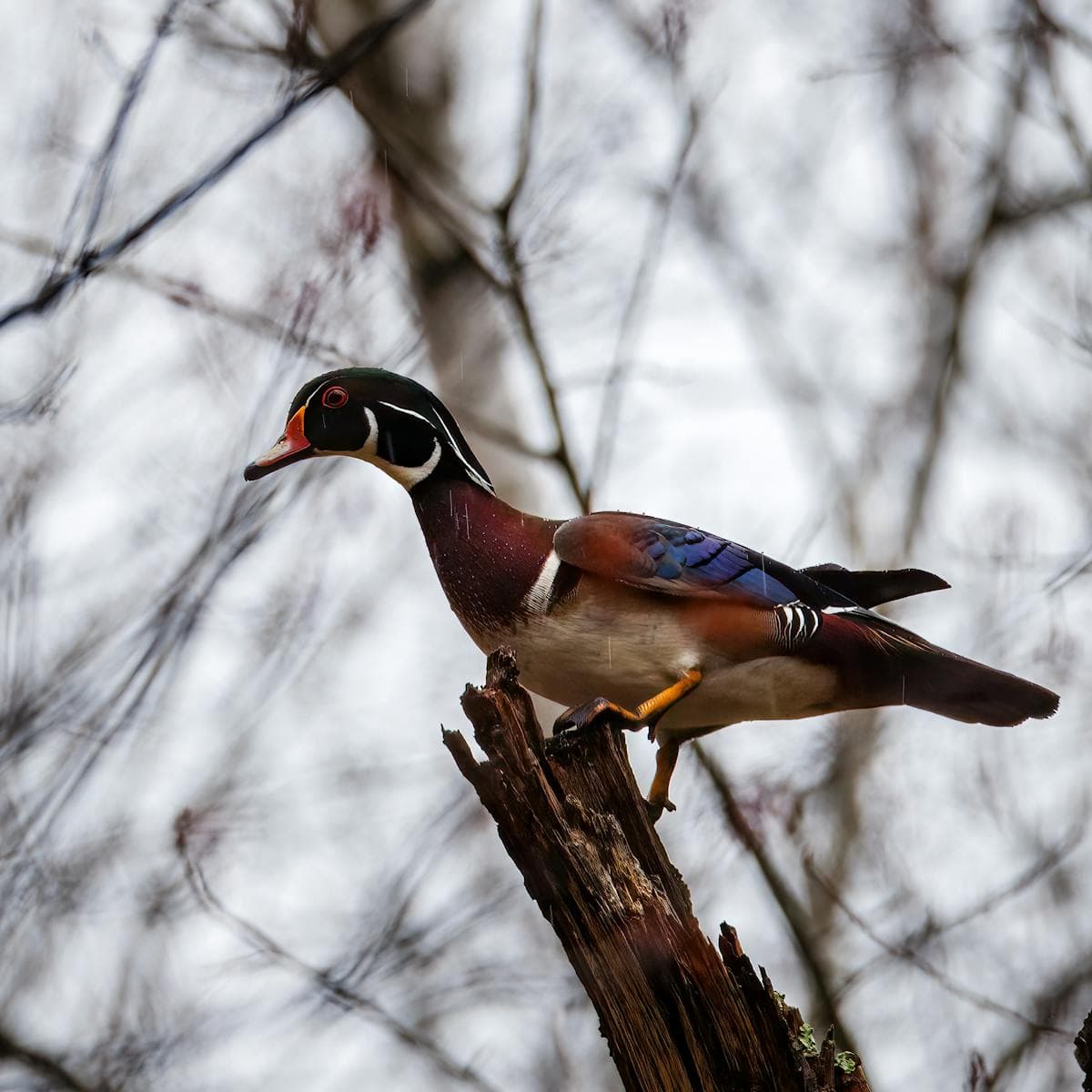
Waterfowl provide premium CDC feathers and beautifully mottled flank feathers
Wild Turkey: Biots and Wing Quills
Wild turkey feathers offer larger materials for streamers and bigger dry flies:
Wing quills: Used for nymph wing cases, streamer wings, and dry fly wings on larger terrestrial patterns.
Biots: Similar to goose biots but larger and stiffer. Excellent for stonefly tails and hopper legs.
Body feathers: Mottled brown and tan feathers work for soft hackles and streamer collars.
Big Game: Elk, Deer, and Moose Hair
Big game hunting provides materials for some of the most effective dry flies ever designed.
Elk Hair
Elk hair is coarser and flares less than deer, making it ideal for wings on larger dry flies:
Elk Hair Caddis: One of the most effective dry fly patterns ever developed. Elk hair creates the perfect floating wing.
Stimulators and Humpies: Larger attractor patterns that ride high in fast water.
Hopper patterns: The stiff hair creates durable, visible terrestrial imitations.
Different parts of the hide serve different purposes. Body hair works for most dry flies, while rump hair is longer and better for larger streamers and bass bugs.
Deer Hair
Deer hair is more versatile than elk due to its hollow structure and tendency to flare when thread is wrapped tightly:
Comparaduns and Sparkle Duns: Mask hair (short, fine) creates delicate wings on smaller mayfly imitations.
Muddler Minnows: Body and rump hair (medium to long) spins and flares to create the iconic muddler head.
Bass bugs and mice: Long rump hair stacks and spins to create floating bugs and mouse patterns.
Zonker strips: Cut from tanned hides with a sharp blade, these create wiggling streamer bodies.
Moose and Caribou
Moose body hair is thick and kinked, perfect for extended bodies on large dry flies and legs on hoppers. Caribou hair is similar to deer but with unique coloring useful for varying your pattern selection.
Preservation: Salt, Borax, and Alum
For big game hides, a simple preservation method works well:
- Stretch the hide fur-side down on plywood using finishing nails
- Remove obvious fat and meat
- Apply a heavy mixture of salt, borax, and alum (50/25/25)
- Let sit for 24 hours, reapply mixture
- Allow to air dry for a week
The borax keeps bugs away. The alum helps preserve the hide (though it won't fully tan it). Properly preserved patches stored in drawers with mothballs will last for years.
Some tiers simply salt the hide and freeze it, then thaw and use as needed. For fly-tying purposes (not taxidermy), this simpler method often works fine.
Skinning and Preserving Game Birds
Basic Skinning Process
Skinning upland birds for fly tying takes practice but isn't complicated:
-
Cool the bird: Refrigerate for 24 hours after harvest. This makes skinning easier and reduces feather damage.
-
Make the initial cut: Start at the breast and make a shallow cut along the keel, working carefully to avoid cutting feathers.
-
Work the skin free: Gently pull the skin away from the breast meat, using your fingers to separate connective tissue.
-
Handle wings carefully: Make an incision along the inside of each wing, following the bone. Work carefully because wing skin is thin and tears easily. Snap the wing joints toward the wingtips and remove the bone, tendons, and muscle.
-
Separate at the tail: Use kitchen shears to cut the tail muscles from the body near the anus. This is usually the last firmly connected point.
Fleshing and Cleaning
Once the cape is free:
-
Remove as much fat and meat as possible (this is called "fleshing"). Hungarian partridge are fattier than grouse, so more fleshing is required. Take your time on this step, as inadequate fleshing is the most common cause of cape rot. A butter knife works well to scrape fat from the skin side.
-
Wash the cape in warm water with dish soap to remove blood and dirt from feathers.
Preservation with Borax
The key to long-lasting bird capes:
- Flip the cape skin-side up
- Pour liberal amounts of 20 Mule Team Borax on the skin
- Work it into all nooks and crannies: neck, wings, legs, tail
- Freeze for at least one week to kill mites and other bugs
Store finished capes in zip-lock bags with a bit of borax and mothballs. Properly preserved capes last for decades.
Putting It All Together
Harvesting your own fly-tying materials creates a direct connection between hunting and fishing that deepens both pursuits. The cycle is simple: hunt the animal, preserve the materials, tie the fly, catch the fish.
Instead of buying materials from a catalog, you're participating in a tradition that connects seasons and outdoor activities. A fall pheasant hunt becomes next spring's Pheasant Tail Nymphs. An elk harvest yields Elk Hair Caddis materials for years of fishing trips.
Where Hunting Meets Fishing
Here's what most people miss: hunting and fishing seasons overlap more than you'd think.
South Dakota's pheasant opener is mid-October, right when the tailwaters are fishing their best. Montana's rifle elk season runs through Thanksgiving, prime time for dry fly fishing on spring creeks and low-flow tailwaters. Even duck hunting, which peaks in November and December, coincides with some of the year's best nymphing.
You can check river conditions on RiverReports while you're planning your hunt. Or plan your hunt around fishing windows. Either way, you're spending more days in the field.
Getting Started: Start Simple
If you've never preserved your own materials, start with these approachable options:
Start with pheasants: They're abundant in most states, relatively easy to skin, and the materials are incredibly versatile. The learning curve is manageable, and one bird provides enough material for dozens of flies.
Try invasive starlings in summer: When other hunting seasons are closed, starlings offer practice with no regulations and no bag limits. Their soft-hackle feathers are excellent for wet flies.
Save your next deer hide: Even occasional deer hunters can benefit from saving hides. Small patches preserved properly will provide deer hair for years of tying.
The first fish caught on a fly tied from materials you harvested yourself provides a unique satisfaction that connects both outdoor pursuits in a meaningful way.
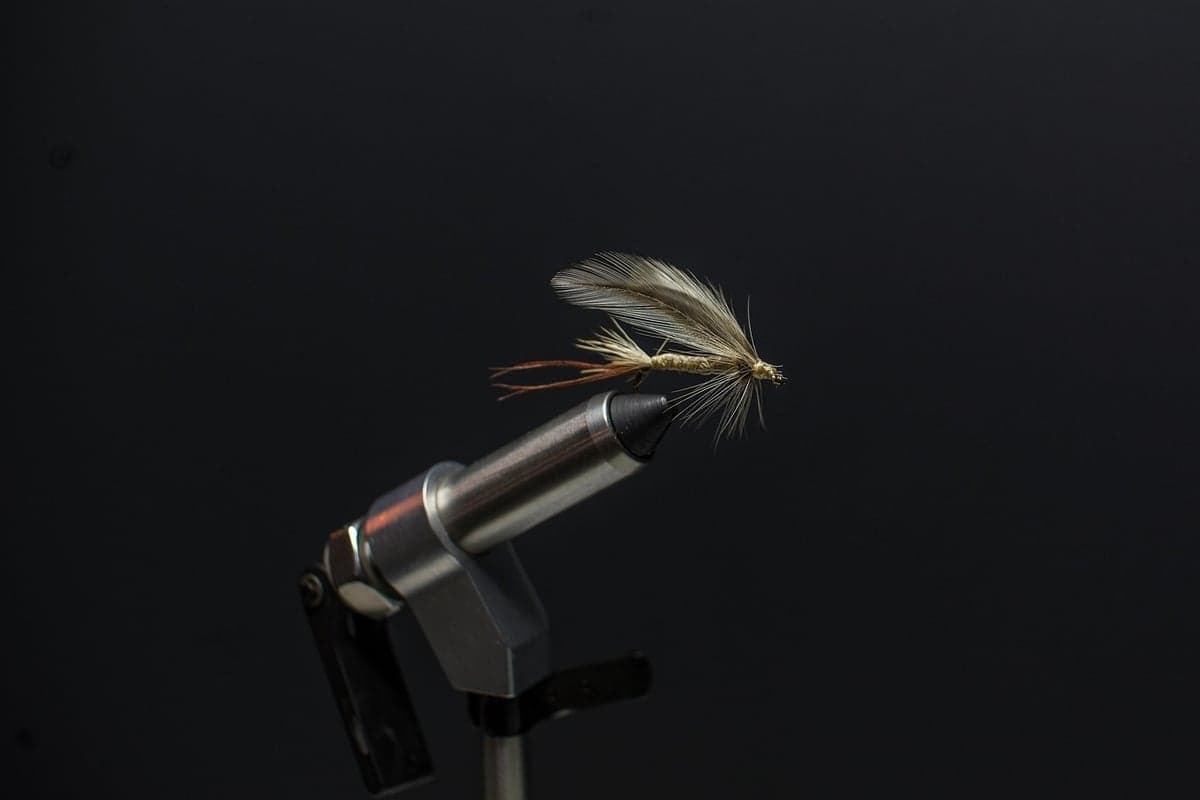
From the field to the vise to the river—the complete cycle of hunting and fishing
Important: Always follow federal, state, and local hunting regulations. Ensure you have proper licensing and education before hunting any species. The US Fish & Wildlife Service provides comprehensive information on migratory bird hunting regulations, and your state fish and wildlife agency has details on upland game and big game seasons.
Get River Intel Weekly
Flow updates and fishing intel delivered every Thursday.
River Intel Weekly
Weekly flow updates and fishing intel.
© 2026 RiverReports, Inc.