Smallmouth Bass on the Fly: How to Read River Flows
The best gamefish in America, and every good day starts with a CFS number
Greg Lamp
August 27, 2026
9 min read
Smallmouth bass are the best gamefish in America that people drive past on the way to trout water. They eat on top, they pull harder than a trout twice their size, they live within an hour of tens of millions of people, and almost nobody fly fishes for them seriously.
The other thing about river smallmouth: a good day is almost entirely a flow decision. You don't need a hatch chart. You need a gauge and a sense of what your river looks like at a given CFS.
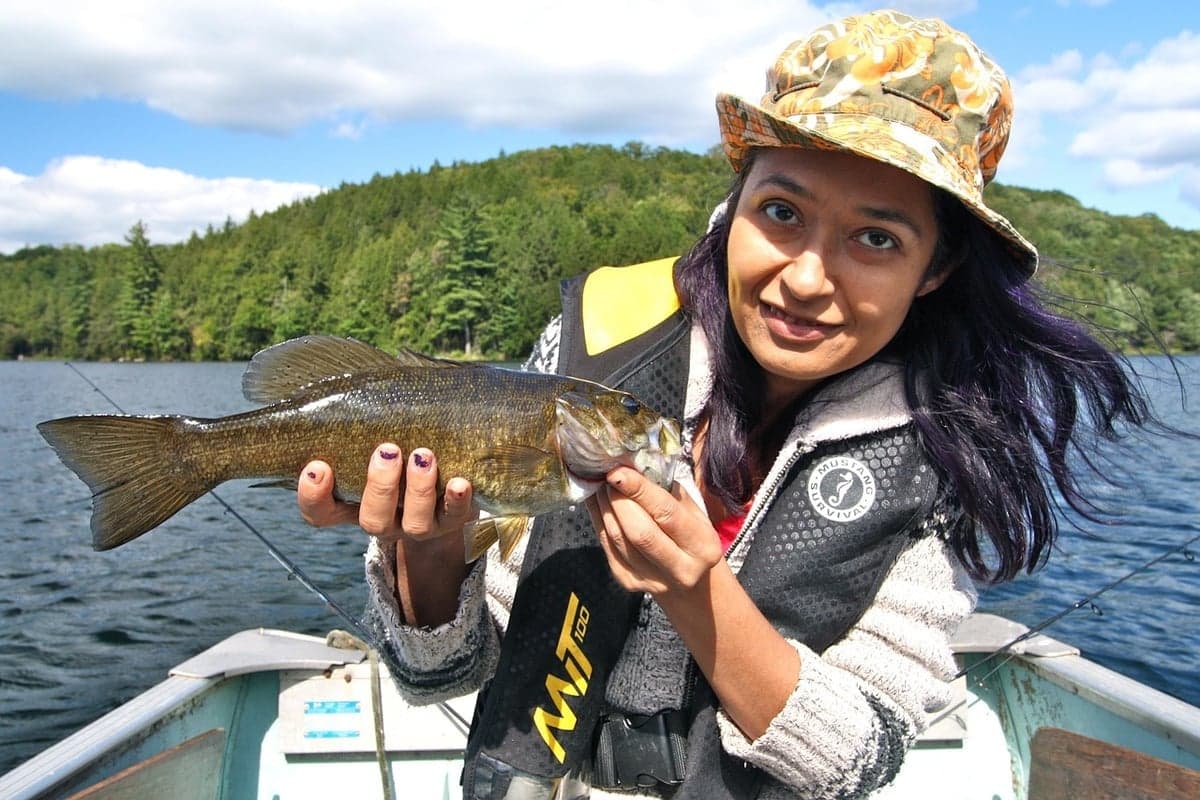
A river smallmouth. Pound for pound, nothing in fresh water fights harder.
Why smallmouth fishing is a flow problem
Trout anglers obsess over bugs because trout eat bugs on a schedule. Smallmouth eat crayfish, baitfish and anything else that moves, all day, in whatever water they can hold in. What changes is where they can hold and whether you can get to them.
Flow controls all of it. Too much water pins fish to the bank and turns your float into a shuttle ride. Too little turns the same float into two miles of dragging a boat over gravel. In between there's a window where the fish spread out across the river and everything works.
That window is different on every river, and different again on every section of every river. What follows are real numbers off real gauges so you've got somewhere to start.
One note on the numbers: every CFS figure below is the long-term median flow for that date at that gauge, so it's what a normal year looks like, not what today looks like.
Too high: when the river wins
After a big rain, an Eastern smallmouth river goes the color of chocolate milk and comes up fast. Fish stop moving and tuck into the softest water they can find, usually right against the bank behind whatever breaks current.
You can sometimes catch them in that seam with a heavy fly, but the float is the real problem. Strainers move, ramps flood, and the current doesn't care how good your rowing is.
On the Susquehanna at Harrisburg, the mid-August median is around 8,600 CFS. A summer thunderstorm system can shove that past 30,000 in a couple of days, which isn't a fishing flow, it's a stay-home flow. The French Broad is smaller and reacts faster: French Broad Outfitters puts their high-water cutoff for float trips and rental boats around 3,000 CFS at Asheville, against a normal August median near 1,190.
The habit worth building is watching direction, not just the number. A river at 4,000 CFS and falling is a completely different animal from the same river at 4,000 and climbing.
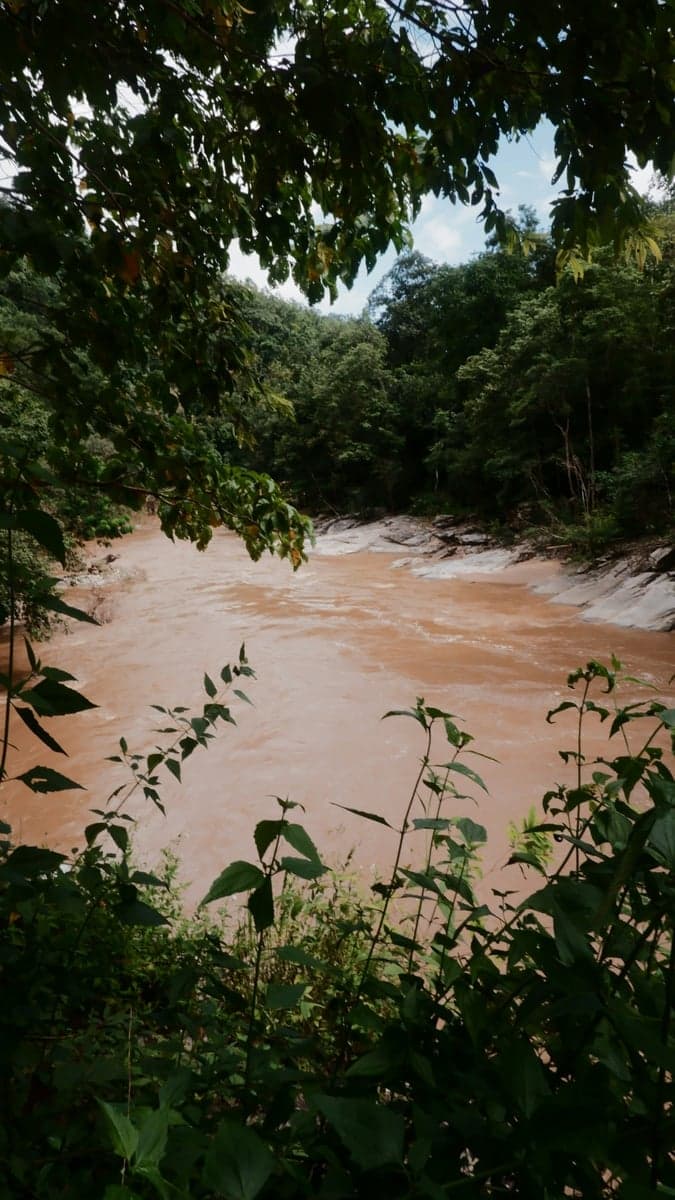
Blown out. Two days of this and the same stretch can be the best fishing of the year.
The money window: dropping and clearing
The best smallmouth days of the year come on the back side of a rise. The river is a foot or two above its summer baseline, still carrying a little color, and dropping.
Fish that were pinned to the bank push back out onto the flats and behind boulders. There's enough current to move food and enough stain that a bass will commit to a fly it'd inspect and refuse on a bright low day. Crayfish get knocked loose. Everything eats.
On the New River at Radford, summer baseline sits around 2,200 CFS in mid-August. The window I'd drive for is roughly 2,500 to 4,000 and falling. On the James at Cartersville, the August median is about 2,270, and it fishes beautifully in that same dropping-from-4,000 range.
Timing matters more than precision. Depending on the size of the watershed, that window can last three days or six hours. Big rivers like the Susquehanna and the Potomac clear slowly and give you a long shot at it. Small ones like the South Fork of the Shenandoah come up and go back down inside a day, so you'd better already be packed.
Too low: late-summer reality
By late August most of these rivers are at or below their seasonal median, the water is clear, and the fish have stacked into the deepest holes and the fastest riffles because those are the only places with oxygen and cover.
The South Fork Shenandoah at Front Royal runs a mid-August median around 524 CFS, and in a dry year it sits closer to 325. At that level a canoe float is a walking tour. The Juniata at Newport sits near 1,100 CFS in mid-August and gets skinny fast below that.
Low water isn't a lost cause, it just changes the plan. Fish first light and the last hour, when the fish move up onto flats to hunt. Go smaller and lighter. And seriously consider leaving the boat home and wading, because at these levels wading catches more fish and you aren't fighting the river for every hundred yards.
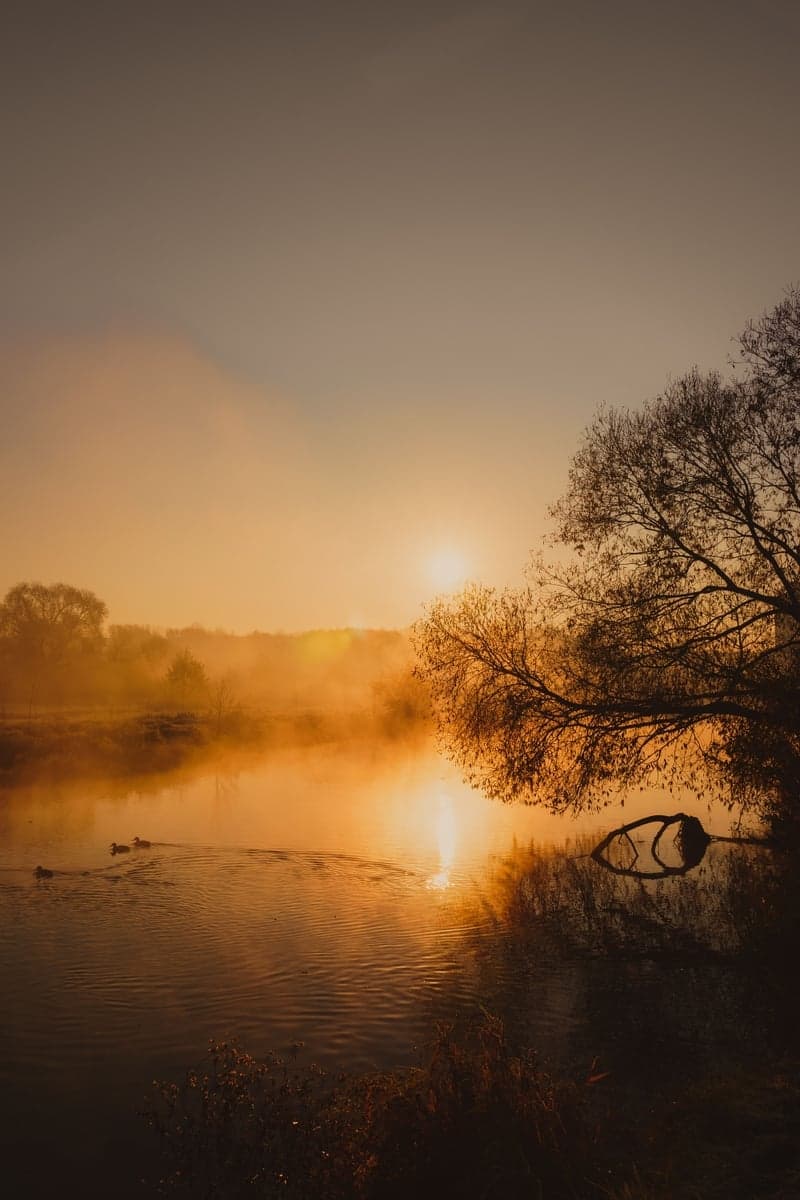
Low and clear means early. The first hour of light is worth the whole afternoon.
Pennsylvania: the Susquehanna and the Juniata
The Susquehanna is the flagship. Wide, shallow, boulder-strewn, and full of smallmouth for a hundred-plus miles above and below Harrisburg. It's also the most misunderstood river on this list, because the flow numbers look enormous next to a trout stream.
At 8,000 to 12,000 CFS at Harrisburg the river is wide open and floatable through classic island-and-ledge water. Down near 4,000 it turns into a wade fishery, which plenty of locals prefer anyway. Above 20,000, stay home.
The Juniata is the Susquehanna in miniature and worth knowing for exactly that reason. When the main stem is too big, the Juniata is often perfect.
One thing to check before you go: Pennsylvania has a statewide no-harvest period for bass in spring, plus special regulations on the big-river smallmouth stretches that have changed more than once in the last decade. Read the current PA Fish and Boat Commission regulations rather than trusting a forum post.
Virginia and the Mid-Atlantic
The New River is the big-fish water. It flows north out of North Carolina through Virginia into West Virginia, and it's one of the oldest rivers in North America, with age estimates ranging from tens of millions to several hundred million years. Virginia DWR calls March through May the top months for trophy smallmouth, with good numbers of big fish also coming in July, August and September. From Fields Dam to the state line, bass between 14 and 22 inches must be released.
The James is the one you can fish through a city. Virginia manages it as a trophy smallmouth fishery with the same 14-to-22-inch protected slot, and it floats all the way through Richmond.
The South Fork of the Shenandoah holds some of the highest smallmouth densities in the state and is the easiest river here to mistime, because it drops so fast after a rain that a great forecast turns into 300 CFS by the time you get the truck loaded.
On the Potomac, Maryland DNR stocks smallmouth fingerlings at Point of Rocks, Brunswick, Nolands Ferry, Whites Ferry and Edwards Ferry, plus the upper ramps around Shepherdstown. Mid-August median at Point of Rocks is around 2,740 CFS. Wade anglers there want it low: District Angling puts the best wading from Point of Rocks to Whites Ferry around 0.7 feet on that gauge, well under the summer norm.
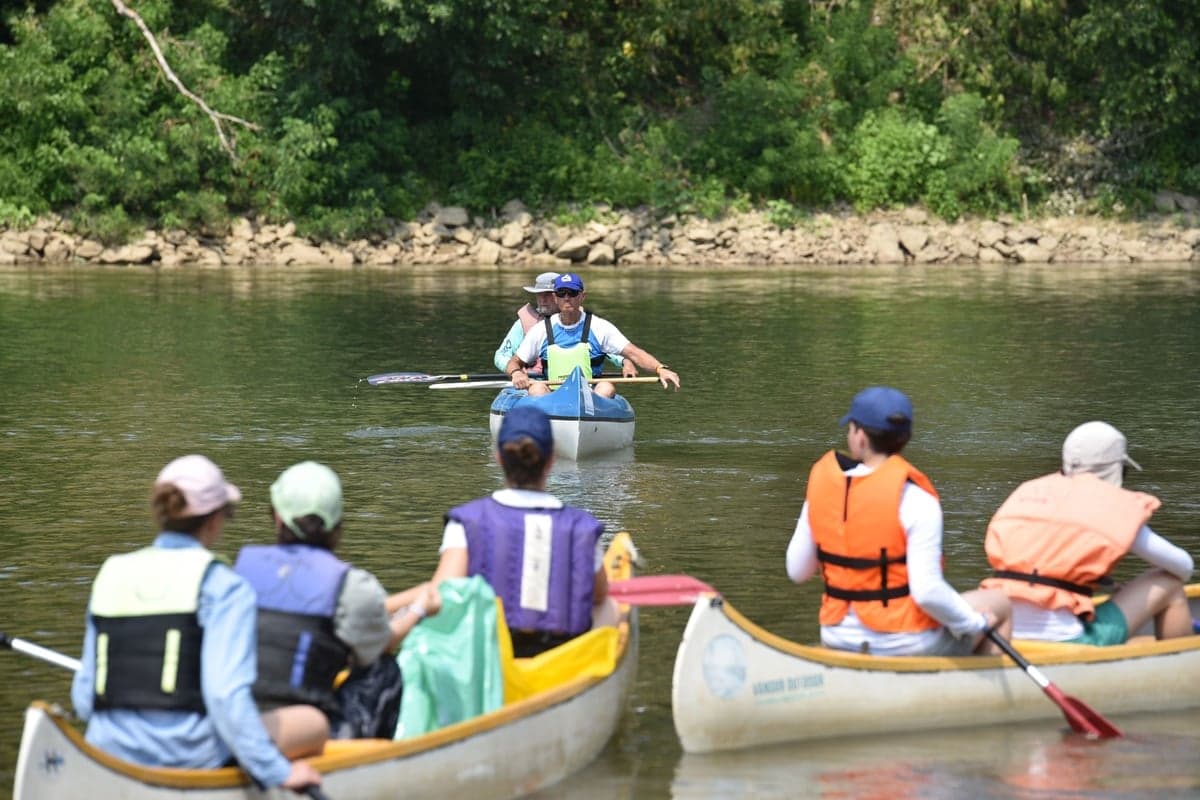
You don't need a drift boat. A canoe, a kayak, or an old johnboat covers most smallmouth water.
The seasonal arc
Spring is the pre-spawn window, and it's when the biggest fish of the year get caught. Males move onto beds once water temperatures climb into the low 60s, and spawning generally runs between about 58 and 70 degrees. Fish the weeks before that, then leave the beds alone. Nobody needs you standing on a spawning male.
Summer is topwater season. TCO Fly Shop puts the sweet spot at 65 to 75 degrees, with the most aggressive surface eats early and late, and overcast days stretching that window into the middle of the day. A popper works because smallmouth hunt up in shallow current and a bug making noise on the surface is exactly what a stunned minnow or a struggling hopper looks like. I don't think there's anything more fun in fly fishing.
Fall is the feed. As water cools through the 60s and into the 50s, bass move onto bigger baitfish and get careless. Bigger streamers, slower retrieves, and nobody else on the water.
Flies, rods, and getting on the water
Keep the fly box simple. A crayfish pattern in olive and rust, a white and chartreuse baitfish streamer, and a popper or two. That covers most of it. Smallmouth are opportunists, and they aren't grading your tying.
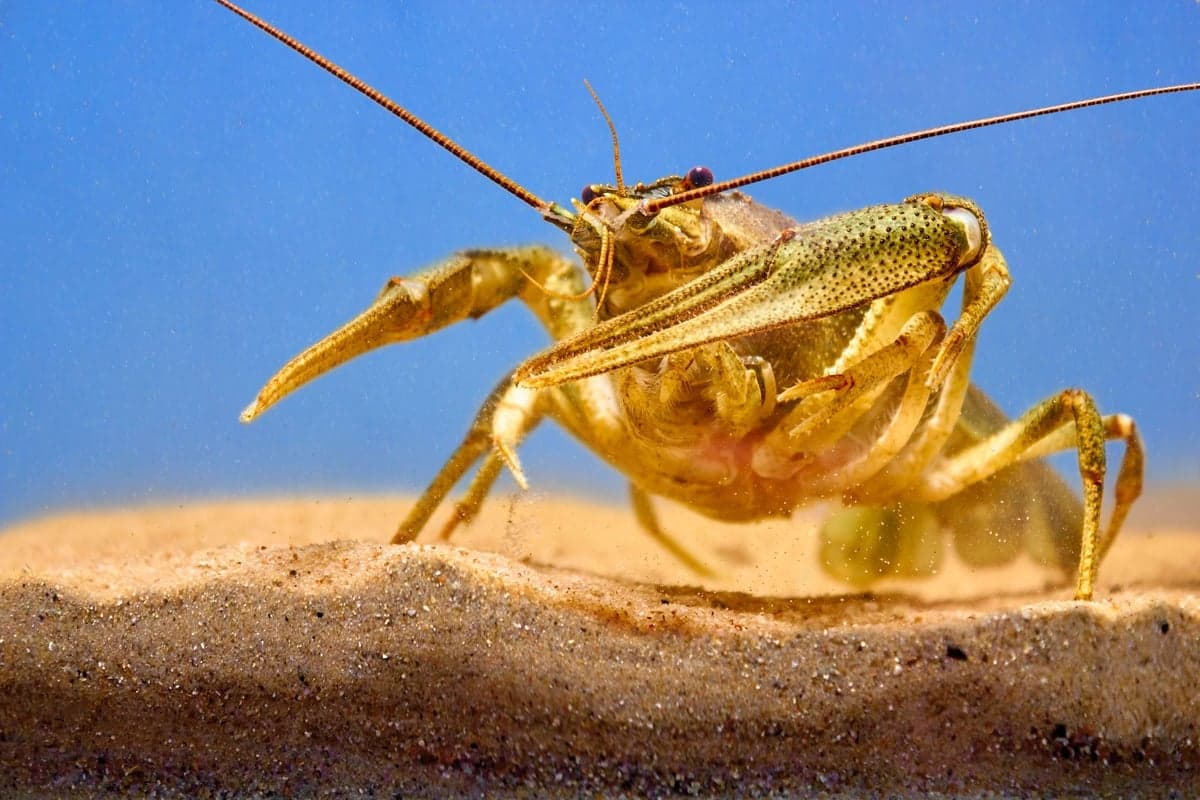
Crayfish are the staple. If you only tie one smallmouth fly, tie this one.
A 7-weight is the right rod for almost everyone, because it turns over a wind-resistant popper and still casts a weighted crayfish without feeling like a broomstick. A 6-weight works fine if you stay with smaller bugs. Anything lighter and you'll spend the day fighting your own line.
If you own a canoe or a kayak, you own a smallmouth boat. Float when the water supports it, wade when it doesn't, and use ramp-to-ramp distance plus the gauge to decide how long the day will actually take.
Worth knowing: the Midwest and the Ozarks have this too. Missouri's Current, Meramec and Big Piney are spring-fed and stuffed with crayfish, and the Wisconsin River and St. Croix hold under-fished populations of big fish, as do Minnesota's river systems.
Learn your river's number
The ranges above are starting points, not gospel. Your section has its own window, and the only way to find it is to write down the CFS every time you have a good day and every time you get skunked. After one season you'll know your number better than any article can tell you.
RiverReports tracks gauges on all of these rivers. Pull up Pennsylvania, Virginia, Maryland or North Carolina, find the gauge nearest your put-in, and watch it for a few weeks before you commit to a trip. If flow numbers are new to you, start with our guide to understanding river CFS.
The trout will still be there in October. Go catch a bass.
Get River Intel Weekly
Flow updates and fishing intel delivered every Thursday.
River Intel Weekly
Weekly flow updates and fishing intel.
© 2026 RiverReports, Inc.