⭐ Clinch River
Best Bet
Flowgeneration-dependent, conservative schedules continuing with good wading windows
Trendstable
Clarityclear
Temp46-54°F
Zebra Midges #18-22Light Green Midges #20-22Rojo Midges #16-20Trico Spinners #20-24
| What | When | Key Numbers |
|---|---|---|
| South Holston (dry fly) | May - September; sulfur hatch peaks June-Aug | 7,000-10,000 trout/mile; slot limit 16-22" |
| Clinch River (year-round) | Best March - November | 4,000+ trout/mile; 300-600 CFS ideal wading |
| Watauga River | April - October | Trophy Trout Water; 14" minimum, 2 per day |
| Hiwassee River | March - October | Best beginner tailwater; Delayed Harvest section |
| Caney Fork | Year-round; sulfurs May-Jul | Middle TN's only tailwater; 300-500 CFS wading |
| Smokies (freestone) | March - October | 800+ miles of stream; brook, brown, rainbow trout |
| Guided trips | Book 4-6 weeks ahead for peak | $300-450 half-day; $400-600 full-day (drift boat) |
| Fly shop | South Holston River Fly Shop | (423) 878-0502, Bristol TN |
Tennessee is a tailwater state. Five dam-release rivers (the South Holston, Clinch, Watauga, Hiwassee, and Caney Fork) rank among the best trout fisheries east of the Rocky Mountains. The cold, nutrient-rich water pouring from TVA dam bottoms creates year-round trout habitat in a state where summer air temperatures regularly hit the 90s. That combination produces trout densities that rival any water in the country: the South Holston averages 7,000 to 10,000 trout per mile, and the Clinch holds more than 4,000 per mile in its best sections.
But Tennessee isn't only tailwaters. The western slope of the Great Smoky Mountains holds more than 800 miles of fishable freestone streams with wild brook, brown, and rainbow trout. Cherokee National Forest adds another network of mountain streams including the Tellico, Citico, and North River. And warmwater anglers find excellent smallmouth fishing on the Duck River (the most biodiverse river in North America) and the South Fork Cumberland through the Big South Fork National River and Recreation Area.
For detailed coverage of the Smokies' freestone streams, see our Great Smoky Mountains National Park guide. This guide focuses on the tailwaters and supporting waters that make Tennessee a destination worth planning around.
Every Tennessee tailwater angler needs to understand one thing above all else: TVA generation schedules control your fishing. The Tennessee Valley Authority operates the dams that create these fisheries, and when turbines run, water levels can rise several feet in minutes. A wadeable riffle at 200 CFS becomes a dangerous, unfishable torrent at 3,000 CFS.
TVA publishes daily generation schedules for each dam, typically updated by 6:00 AM. The schedules show planned turbine operation in hourly blocks. Here's how to interpret them:
Check schedules at TVA Lake Info, call the automated TVA lake information line at (800) 238-2264, or use the TVA Lake Info app (iOS and Android) which sends push notifications for generation changes on saved dams. Many fly shops also post daily schedules on their social media pages and websites.
Tennessee tailwaters create two distinct fishing opportunities:
Wading windows occur during zero or minimal generation. On a good day you might get a 6-8 hour window. On bad days, generation runs all day and wading is impossible. Weekend generation schedules are generally less favorable than weekday schedules because TVA runs turbines to meet peak power demand.
Float windows require enough water to safely drift a boat but not so much that the river becomes dangerous. One-unit generation on most tailwaters provides ideal drift boat conditions. Experienced guides float during generation that would be dangerous for wading anglers.
The golden rule: Always check generation before you leave the house, and keep checking. Schedules can change with short notice during extreme weather or high power demand.
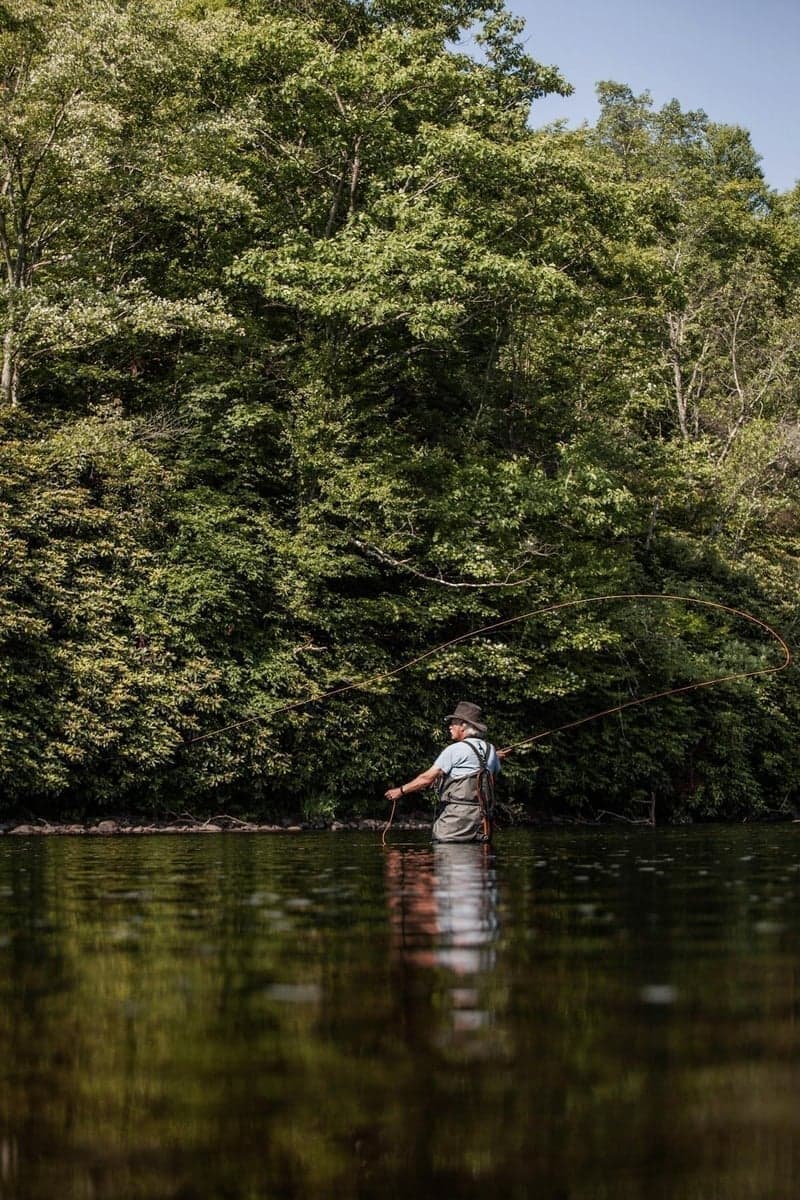
Fly fishing on an East Tennessee river - timing your trip around TVA generation schedules is the key to success on Tennessee tailwaters
The South Holston, locals call it the SoHo, is the river most Tennessee fly anglers build a trip around. Below South Holston Dam near Bristol, the river holds an estimated 7,000 to 10,000 trout per mile, with 80-85% being wild brown trout. The remaining fish are a mix of stocked and holdover rainbows. Browns exceeding 20 inches are caught regularly, and fish over 24 inches are taken every season.
What draws anglers from across the Southeast is the sulfur hatch. From mid-May through August, Ephemerella dorothea (sulfur mayflies) blanket the river in densities rarely seen on eastern waters. On peak evenings, the hatch is so thick that selective feeding becomes the primary challenge; your fly is one among thousands of naturals. Size 16-18 sulfur patterns are the standard, but matching the exact shade of yellow and the drift matters more than on most rivers. That said, the SoHo's reputation means it gets pressure, especially the upper mile below the weir during sulfur season. If you're visiting June through August, fish weekdays when possible or plan to walk further from the parking areas.
Access and Regulations
The South Holston has approximately 8 miles of quality trout water from the dam to the Bluff City area. Key access points:
Special regulations apply to the South Holston. A slot limit protects fish between 16 and 22 inches, these must be released. You may keep one trout under 16" or over 22" per day. The river is closed to fishing from the dam downstream to the weir (approximately 0.3 miles) from October 15 through January 1 to protect spawning brown trout.
Fly Patterns for the South Holston
| Season | Primary Hatch | Fly Pattern | Size |
|---|---|---|---|
| Mar-Apr | Blue-winged olives | Parachute BWO, RS2 | 18-20 |
| May-Aug | Sulfurs | Sulfur Parachute, Sulfur Comparadun, Sulfur Sparkle Dun | 16-18 |
| May-Aug | Sulfur emergers (evening) | Sulfur CDC Emerger, Barr Emerger | 16-18 |
| Year-round | Midges | Zebra Midge, Griffith's Gnat, Top Secret Midge | 18-22 |
| Fall | Blue-winged olives | Parachute BWO, CDC BWO | 18-22 |
Flow and Water Temperature: The South Holston has no USGS gauge in the RiverReports system. Check TVA generation schedules for South Holston Dam directly. Base flow (no generation) is approximately 80-100 CFS and provides the best wading and dry-fly conditions. Water temperatures typically run 46-52°F near the dam, warming to the mid-50s in the lower river. That cold, consistent temperature is what keeps the sulfur hatch going through August when most eastern rivers are too warm.
Fly Shops and Guides
The Watauga is the South Holston's sister tailwater, flowing from Wilbur Dam through Elizabethton. It fishes differently than the SoHo: the Watauga is a broader, more powerful river with bigger water and a stronger current. The trout population is a more even mix of browns and rainbows, with stockers supplementing wild fish.
The Watauga is designated Trophy Trout Water from Wilbur Dam downstream to the Smalling Bridge area (approximately 4 miles). Trophy regulations require a 14-inch minimum size and a 2-trout-per-day creel limit. These regulations have built a population of large, healthy fish.
Best Tactics
The Watauga doesn't have the South Holston's legendary sulfur hatch, but it has excellent midge, BWO, and caddis hatches. Nymphing with a tandem rig (stonefly/pheasant tail combo) is productive year-round. The river's stronger current means heavier nymph rigs and split shot are necessary compared to the SoHo.
Streamers work well on the Watauga, especially during generation edges, the rising and falling water as turbines turn on and off. A Woolly Bugger, Clouser Minnow, or sculpin pattern swung through deeper runs produces the Watauga's biggest browns.
Access: The best public access is at the Wilbur Dam tailwater area and along Siam Road. The Wilbur Dam lot is smaller than the SoHo's Weir Dam area, so it fills faster on weekends. The river parallels Highway 19E through Elizabethton, but much of the bank is private, stick to marked access points and respect posted property boundaries.
Check current flows on RiverReports.
The Clinch below Norris Dam is Tennessee's most accessible premium tailwater. Knoxville anglers can reach it in 30 minutes. The river holds more than 4,000 trout per mile in its best sections and produces some of the biggest brown trout in the state. Fish over 10 pounds are landed every year.
The Clinch has approximately 13 miles of quality trout water from Norris Dam to the Highway 61 bridge. The upper 4 miles from the dam to Miller Island are the most productive and receive the most pressure. This section has a series of defined pools, runs, and riffles that make wading straightforward when generation is off.
The Clinch Advantage
What sets the Clinch apart is its accessibility and consistency. The river has reliable hatches including:
The Clinch also has an excellent sculpin population, making streamer fishing productive. A size 4-6 sculpin pattern swung through deeper runs is one of the best big-fish tactics on the river.
Access Points
Water Temperature: The Clinch runs 48-54°F near Norris Dam year-round, warming as you move downstream. Trout habitat extends approximately 13 miles before temperatures climb above the trout comfort zone.
Regulations: Standard statewide trout regulations (7 per day, no minimum size) apply to most of the Clinch. Check current TWRA regulations for any special regulation areas.
Check current flows on RiverReports.
The Hiwassee below Apalachia Dam in Reliance is Tennessee's best tailwater for beginners and sight-fishing enthusiasts. The river runs exceptionally clear; you can often see fish at 10 feet, and the trout are less pressured than on the SoHo or Clinch. It's also the state's most scenic tailwater, flowing through the Cherokee National Forest with mountain views in every direction.
The Hiwassee has a Delayed Harvest section from the powerhouse downstream approximately 4 miles to the US 411 bridge. From November 1 through the last day of February, this section is catch-and-release only with single-hook artificial lures. During this window, TWRA stocks the river heavily with large rainbow trout (many 14-18 inches), and the absence of harvest means fish stack up in fishable numbers. It's the best place in Tennessee for a beginner to catch trout on a fly rod.
Fishing the Hiwassee
Outside the Delayed Harvest window, the Hiwassee fishes like a classic tailwater. Water temperatures run 50-55°F near the dam year-round, warming slightly downstream. Nymphing with Pheasant Tails, Princes, and Hare's Ears is productive. The river has good caddis and BWO hatches in spring and fall. Dry-dropper rigs work well in the riffles during hatch activity.
The Hiwassee has a strong population of rainbow trout with some browns mixed in. The fish aren't as selective as the SoHo's browns; you can fish 4X tippet and standard nymph patterns with confidence, which is part of what makes it beginner-friendly.
Float Fishing
The Hiwassee may be Tennessee's best drift boat tailwater. The approximately 8-mile float from the Apalachia Powerhouse to the US 411 bridge takes a full day and passes through the heart of the trout water with Class I-II rapids adding variety. Guided float trips typically run the powerhouse-to-Big Bend section (roughly 5 miles, half day) or the full run to 411 (full day). The rapids are manageable for experienced rowers but can surprise first-timers: if you're bringing your own boat, scout Big Bend rapid on river left before running it.
Access
The river is bordered by Cherokee National Forest, so bank access is generally good throughout the trout section.
Flow Information: The Hiwassee has no USGS gauge in the RiverReports system. Check TVA generation schedules for Apalachia Dam. Base flow (no generation) is roughly 100-150 CFS, comfortable wading. One-unit generation brings the river up to approximately 1,200 CFS, which is ideal for drift boats but too strong for safe wading in most spots.
The Caney Fork is Middle Tennessee's tailwater, and the only quality trout stream within easy reach of Nashville. Below Center Hill Dam near Smithville, the river holds a strong population of brown and rainbow trout in approximately 16 miles of cold water before it warms enough to transition to smallmouth habitat.
The Caney Fork's character is different from the East Tennessee tailwaters. The valley is wider and more pastoral, rolling farmland rather than mountain gorges. The river itself is broad with long pools, sweeping bends, and gravel bars. It's excellent drift boat water.
Hatches and Tactics
The Caney Fork has surprisingly good hatches for a Middle Tennessee river:
Nymphing with a double-nymph rig (scud/midge or Pheasant Tail/midge) is the most consistent producer. Dry-fly fishing is good during sulfur hatches but generally not as technical as the SoHo.
Access and Float Sections
Flow Information: The Caney Fork has no USGS gauge in the RiverReports system. Check TVA generation schedules for Center Hill Dam. Base flow (no generation) runs roughly 200-400 CFS, good wading in the upper section. One-unit generation pushes the river to approximately 1,500-2,000 CFS, which is ideal drift boat water. Water temperatures hold in the low 50s near the dam and warm gradually downstream, with trout habitat generally ending around the 16-mile mark.
Fly Shops and Guides
Expect a 60-90 minute drive from downtown Nashville to Center Hill Dam.
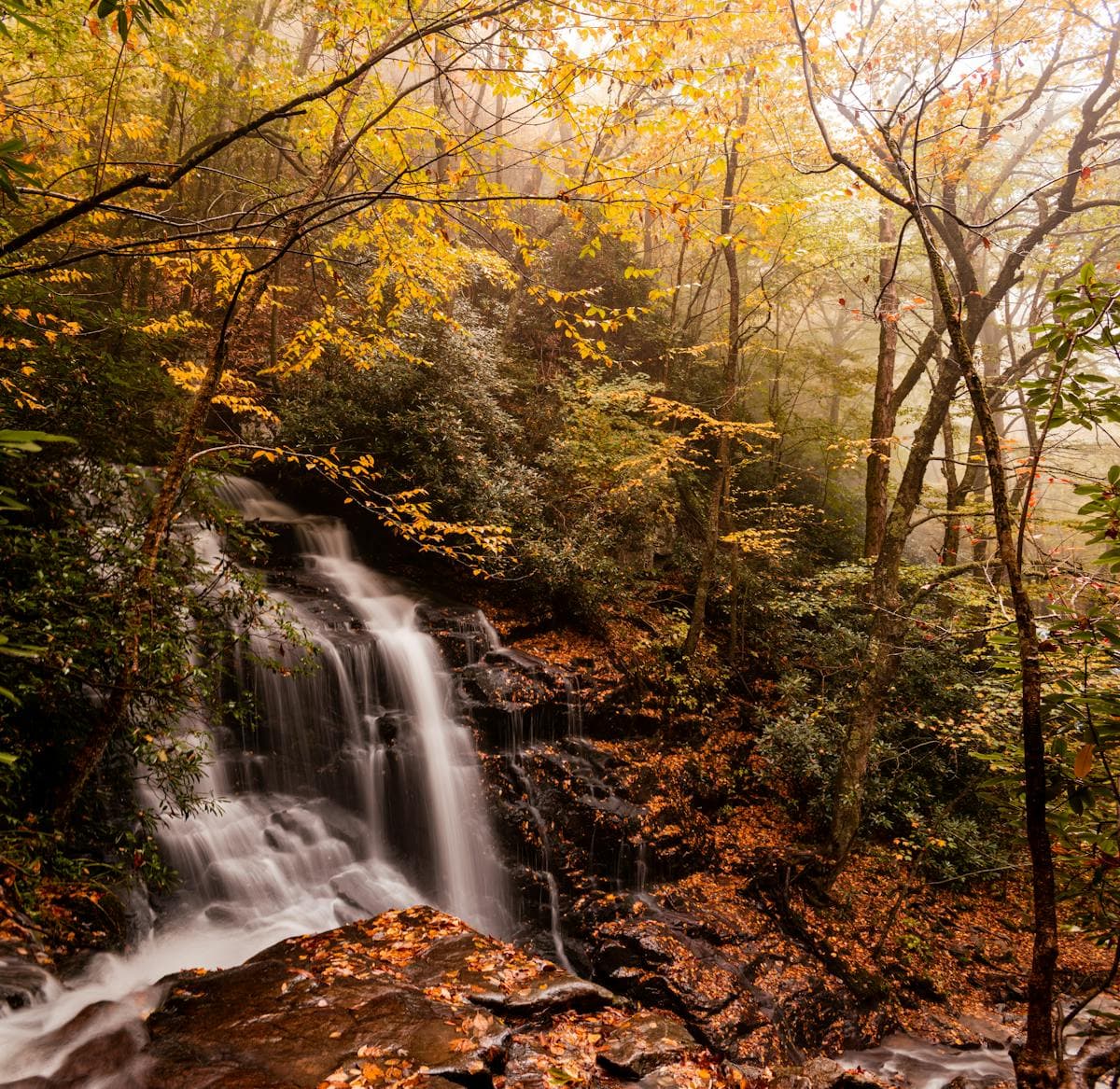
A cascade in the Smoky Mountains surrounded by fall color - Tennessee's freestone streams offer a completely different experience from the tailwaters
The Tellico is the best-known freestone trout stream in Cherokee National Forest. Flowing through the Tellico River corridor south of Tellico Plains, the river holds wild rainbow and brown trout in clear, cold mountain water. The upper Tellico above the confluence with North River is the most productive section, with pools and pocket water holding fish in the 6-12 inch range and occasional browns pushing 16 inches.
The Tellico is classic Appalachian freestone fishing: small water, tight casts, and short drifts. A 7.5-foot 3-weight or 4-weight rod is ideal. Attractor dries (Parachute Adams, Elk Hair Caddis, Stimulator) work throughout the season, and a small Pheasant Tail or Prince nymph dropper adds a second chance.
Access: Forest Road 210 parallels the river for miles, providing excellent access. Several USFS campgrounds along the road make this a great overnight destination. Check flows on RiverReports.
The Nolichucky is a big freestone river flowing from North Carolina through the Unaka Mountains into the Tennessee Valley. It's primarily a smallmouth bass and rock bass fishery, but the upper sections near the state line hold stocked trout in the cooler months. The river's main draw for fly anglers is its scenery and remoteness, the gorge section between Poplar and Erwin offers dramatic mountain views and strong whitewater.
For trout, focus on tributary streams feeding the Nolichucky in the Cherokee National Forest rather than the main river. The main stem fishes best as a warmwater destination for smallmouth on poppers and Clouser Minnows.
Check flows on RiverReports.
The Smokies contain the largest block of wild trout water in the eastern United States, more than 800 miles of fishable streams holding brook, brown, and rainbow trout. We cover this water in detail in our dedicated Great Smoky Mountains National Park guide, including stream-by-stream recommendations, access, regulations, and seasonal tactics.
If you're planning a Tennessee fly fishing trip, combining a day or two on the tailwaters with a day in the Smokies gives you the full range of what the state offers. The park entrance at Townsend is roughly 90 minutes from the Clinch tailwater and 2.5 hours from the South Holston. Little River above Townsend is one of the park's most accessible trout streams, check flows on RiverReports.
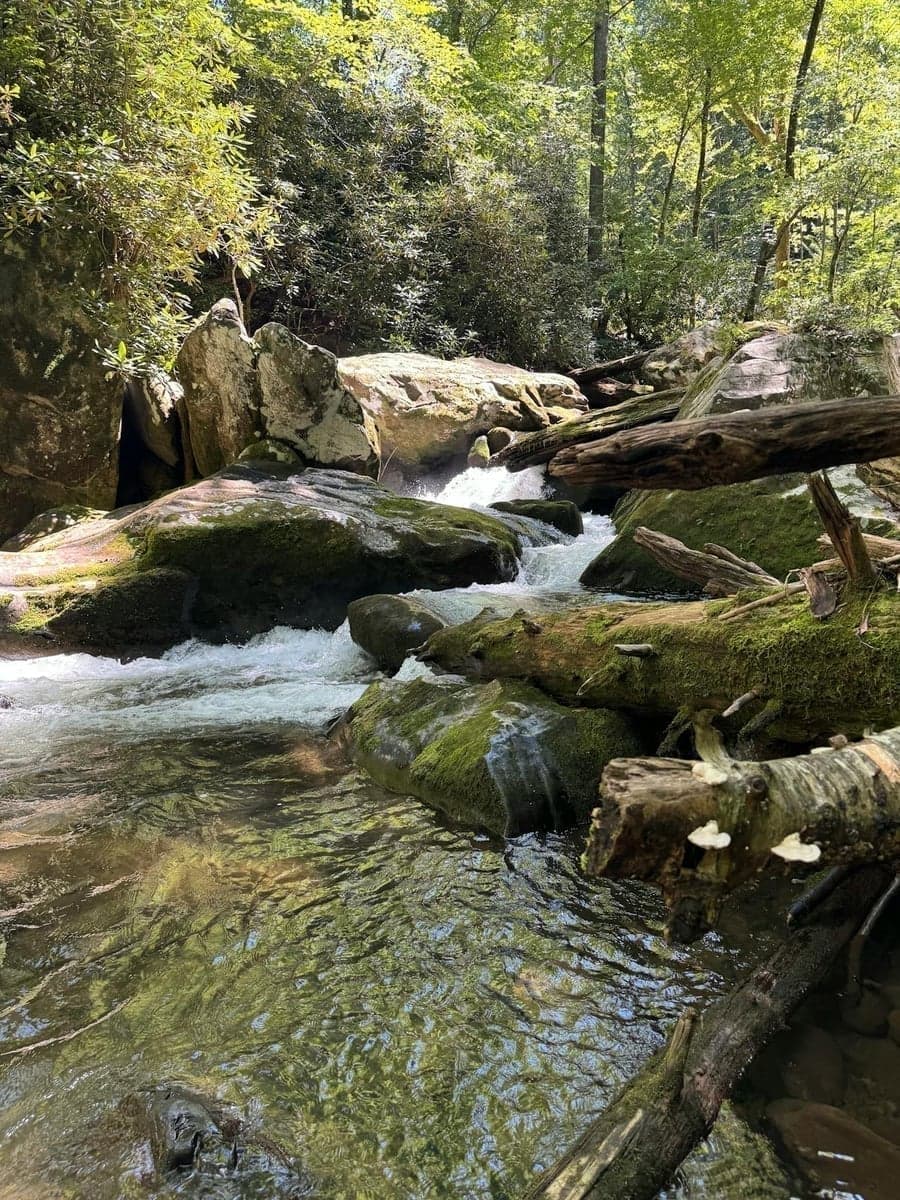
A freestone stream in the Great Smoky Mountains - wild brook trout still inhabit the highest elevation waters
The Duck River at Shelbyville and downstream is the most biodiverse river in North America by species count. It's not a trout stream; it's a warmwater gem. Smallmouth bass, rock bass, and an exceptional variety of native fish species make the Duck a worthy destination for fly anglers who want something different. Topwater poppers and Clouser Minnows in the summer months produce aggressive smallmouth in beautiful limestone-bottomed water.
Check flows on RiverReports.
The South Fork Cumberland flows through the Big South Fork National River and Recreation Area (NRRA), a spectacular gorge system on the Tennessee-Kentucky border. This is primarily smallmouth water, with excellent topwater fishing from May through October. The gorge scenery is some of the best in the Southeast, and the river is remote enough that fishing pressure is light.
The NRRA also holds stocked trout in some tributary streams. Access requires planning, many sections involve significant hiking or paddling.
Check flows on RiverReports.
The Elk River in southern Middle Tennessee is spring-fed and runs cooler than surrounding waters. It holds some trout near its spring sources, but it's primarily a smallmouth bass fishery. Worth a stop if you're already in the area south of Fayetteville, but not worth a dedicated trip for trout when the Caney Fork is within reach.
| Month | Primary Hatches | Key Patterns |
|---|---|---|
| Jan-Feb | Midges | Zebra Midge (18-22), Griffith's Gnat (18-20), Top Secret Midge (20-22) |
| Mar-Apr | BWOs, early midges | Parachute BWO (18-20), RS2 (20-22), Pheasant Tail (16-18) |
| May | Sulfurs begin, caddis, BWOs | Sulfur Comparadun (16-18), Elk Hair Caddis (14-16), Parachute BWO (18) |
| Jun-Jul | Sulfurs peak, terrestrials start | Sulfur Sparkle Dun (16-18), Sulfur CDC Emerger (16-18), beetle/ant (14-16) |
| Aug | Late sulfurs, terrestrials | Sulfur Parachute (18), foam beetle (14), flying ant (16-18) |
| Sep-Oct | BWOs return, fall caddis | Parachute BWO (18-22), October Caddis (12-14) |
| Nov-Dec | Midges, late BWOs | Zebra Midge (20-22), Griffith's Gnat (18-20), Blue Dun (18-20) |
If you're visiting Tennessee for the first time and want to cover the most water with the fewest flies, carry these:
Tennessee fishing licenses are managed by the Tennessee Wildlife Resources Agency (TWRA). Requirements for trout fishing:
Several Tennessee rivers have special regulations that override the statewide rules:
| Water | Special Regulation |
|---|---|
| South Holston River | Slot limit: 16-22" must be released; 1 fish/day outside slot; closed dam to weir Oct 15 - Jan 1 |
| Watauga River (Trophy section) | 14" minimum; 2 per day; Trophy Trout Water designation |
| Hiwassee River (Delayed Harvest) | Catch-and-release only Nov 1 - last day of Feb; single-hook artificial lures only |
| Clinch River | Standard regulations apply (7/day, no minimum) on most sections |
| Great Smoky Mountains NP | Park regulations apply; see Smokies guide |
Always verify current regulations at TWRA Fishing Regulations before your trip. Regulations change, and fines for violations on special regulation waters are steep.
Spring is when Tennessee tailwaters come alive. BWO hatches start in March on warmer afternoons, and sulfurs begin appearing on the South Holston by mid-May. This is the best time to target the Clinch before summer wading pressure builds. Freestone streams in the Smokies clear from spring runoff by late April, and the park's best fishing window opens.
Watch for: High water events from spring storms. Tailwaters are less affected than freestones, but generation schedules may be extended during high reservoir inflows.
Peak season on the tailwaters. The sulfur hatch on the South Holston reaches its height in June and July, drawing dry-fly anglers from across the country. All tailwaters fish well because dam releases keep water temperatures in the low 50s regardless of air temperature. This is the time for evening hatch fishing, long summer evenings mean extended dry-fly windows.
Freestone streams in the Smokies fish best early morning and late evening during summer. Water temperatures climb in the afternoon on lower-elevation streams. High-elevation brook trout streams remain fishable all day.
Watch for: Increased generation on all tailwaters during summer peak power demand. Wading windows may be shorter. Weekdays are significantly better than weekends.
Many locals consider fall the best season overall. The crowds thin dramatically after Labor Day, BWO hatches return on the tailwaters, and brown trout become aggressive as spawning season approaches. Fall color in the Smokies and Cherokee National Forest peaks in mid-October, making this the most scenic time to fish.
The Hiwassee Delayed Harvest section opens November 1 with fresh stockings of large trout, excellent fishing through the holidays.
Watch for: South Holston spawning closure begins October 15 (dam to weir section). Smokies brook trout spawn in October, tread carefully near redds.
Tennessee tailwaters fish year-round, and winter is when experienced anglers often have the best days. Midge hatches on sunny afternoons bring trout to the surface, and the rivers are essentially empty of other anglers. Nymphing with small midge patterns (size 20-22) is the primary technique.
The key to winter tailwater fishing is timing your trip to midday. Fish are sluggish early and late, but a warm afternoon with sunshine can trigger surprisingly active feeding from 11 AM to 3 PM.
Watch for: Reduced generation during winter (lower power demand) often means longer wading windows.
For Smokies-specific shops and guides, see our Great Smoky Mountains National Park guide. The Asheville, NC guide also covers shops that run trips to the SoHo and Watauga from the North Carolina side.
TVA generation releases are the number-one safety hazard on Tennessee tailwaters. Water levels can rise several feet in 15-30 minutes when turbines come online. Anglers have drowned on Tennessee tailwaters after being caught by rising water.
Safety rules:
Tailwater temperatures run 48-56°F year-round. In winter, hypothermia is a real risk for wading anglers. Wear breathable waders with fleece layers, and carry a dry change of clothes in your vehicle.
Smoky Mountain and Cherokee National Forest streams can rise dangerously fast during thunderstorms. If you hear thunder or see darkening skies upstream, get off the water immediately. A stream that was knee-deep an hour ago can become a raging torrent with zero warning.
Black bears are present in the Smokies and Cherokee National Forest. Copperheads and timber rattlesnakes are found along river corridors statewide. Watch your step when walking through tall grass to access rivers.
Your base depends on which water you want to target:
| Target Water | Best Base | Drive Time |
|---|---|---|
| South Holston | Bristol, TN / Abingdon, VA | 15-30 min |
| Watauga | Elizabethton / Johnson City, TN | 10-20 min |
| Clinch | Knoxville / Norris, TN | 20-35 min |
| Hiwassee | Reliance / Copperhill, TN | 5-20 min |
| Caney Fork | Smithville / Cookeville, TN | 15-30 min |
| Smokies (western TN side) | Townsend / Gatlinburg, TN | 5-30 min |
For a multi-river trip, Knoxville is the most central base. From Knoxville you can reach the Clinch (30 min), Smokies (60-90 min), South Holston (2 hr), Watauga (1.5 hr), and Hiwassee (2 hr).
Day 1: Drive to base. Afternoon fish the Clinch River below Norris Dam during no-generation window. Easy access, good evening midge or BWO hatch.
Day 2: Full day on the South Holston. Fish the morning nymph/midge window, break for lunch, return for evening sulfur hatch (May-Aug) or BWO hatch (spring/fall).
Day 3: Morning on the Watauga or a half-day in the Smokies (if based near Knoxville/Townsend). Afternoon drive home.
Is Tennessee good for fly fishing?
Tennessee offers excellent fly fishing, especially on its TVA tailwaters. The South Holston, Clinch, Watauga, Hiwassee, and Caney Fork rivers hold dense populations of brown and rainbow trout with year-round fishing. The Great Smoky Mountains also provide excellent wild brook trout streams. Track current flows on RiverReports.
Why can't you fish on Thursdays in Tennessee?
The Thursday fishing closure applies specifically to certain Cherokee reservation waters in North Carolina near the Tennessee border, not Tennessee state waters. Tennessee tailwaters and streams are open seven days a week, though TVA generation schedules affect when rivers are wadeable. Check TVA schedules before planning your trip.
What are the best trout rivers in Tennessee?
The South Holston River near Bristol is widely considered Tennessee's best trout stream, with prolific sulphur hatches and large browns. The Clinch River below Norris Dam, Watauga River, Hiwassee River, and Caney Fork round out the top five. All are TVA tailwaters with cold, consistent flows year-round.
Track real-time flows for Tennessee rivers on RiverReports. Here are baseline flow ranges for the major waters with USGS gauges:
| River | Ideal Wading (CFS) | High but Fishable (CFS) | Too High (CFS) | RiverReports Link |
|---|---|---|---|---|
| Watauga at Elizabethton | 100-300 | 300-600 | 600+ | View |
| Clinch above Tazewell | 200-500 | 500-1,000 | 1,000+ | View |
| Tellico at Tellico Plains | 50-150 | 150-300 | 300+ | View |
| Little River above Townsend | 50-200 | 200-400 | 400+ | View |
| Duck River at Shelbyville | 100-400 | 400-800 | 800+ | View |
For the South Holston, Hiwassee, and Caney Fork, which lack USGS gauges in our system, check TVA generation schedules directly at TVA Lake Info. Generation status is the primary indicator for these rivers: when turbines are off, the river is wadeable.
Weekly flow updates and fishing intel.
© 2026 RiverReports, Inc.