White River
Fishable
Flow202 CFS
Trendrising
Clarityclear
Temp64-72°F
Trico spinners #20-24BWO dries #18-20Elk Hair Caddis #14-16Pheasant Tail #14-18
| What | When | Key Numbers |
|---|---|---|
| Battenkill (dry fly) | Mid-May through mid-July | 100-250 CFS ideal wading; catch-and-release only on VT side |
| White River (trout) | Late April - October | 200-500 CFS wading; 500-1,200 CFS float trips |
| Small stream brookies | June - September | Green Mountain National Forest; 4-5 wt rod |
| Trophy trout waters | Second Saturday in April - Oct 31 | 2 trout daily limit; 11 designated sections statewide |
| Guided trips | Book by March for peak season | $300-500 half-day; $400-900 full-day |
| Fly shop | Battenkill Outfitters | (802) 379-9887, Manchester VT |
Vermont is where American fly fishing found its footing. The Orvis Company was founded on the banks of the Battenkill in Manchester in 1856, and the river remains one of the most celebrated (and humbling) wild trout streams in the eastern United States. But Vermont offers far more than just the Battenkill. The state holds over 5,000 miles of rivers and streams draining the spine of the Green Mountains, feeding into Lake Champlain to the west and the Connecticut River to the east. (The Connecticut also forms the border with New Hampshire, whose Trophy Stretch tailwater and Androscoggin River offer complementary fishing for a multi-state trip.)
What makes Vermont special for fly fishing is the variety packed into a small state. You can spend a morning working Hendrickson dries to wary Battenkill browns, drive an hour to bounce nymphs through a White River riffle for rainbows, and finish the afternoon chasing native brook trout up a mountain stream in the Green Mountain National Forest. The rivers run clear, the hatches are dependable, and most of the state's best water is publicly accessible.
The trout fishing is freestone-dominated, meaning flows depend on rainfall and snowmelt rather than dam releases. That makes flow monitoring essential. Spring runoff can blow out rivers into May, and late summer can drop smaller streams to dangerous temperatures for trout. Track real-time flows on RiverReports before you drive.
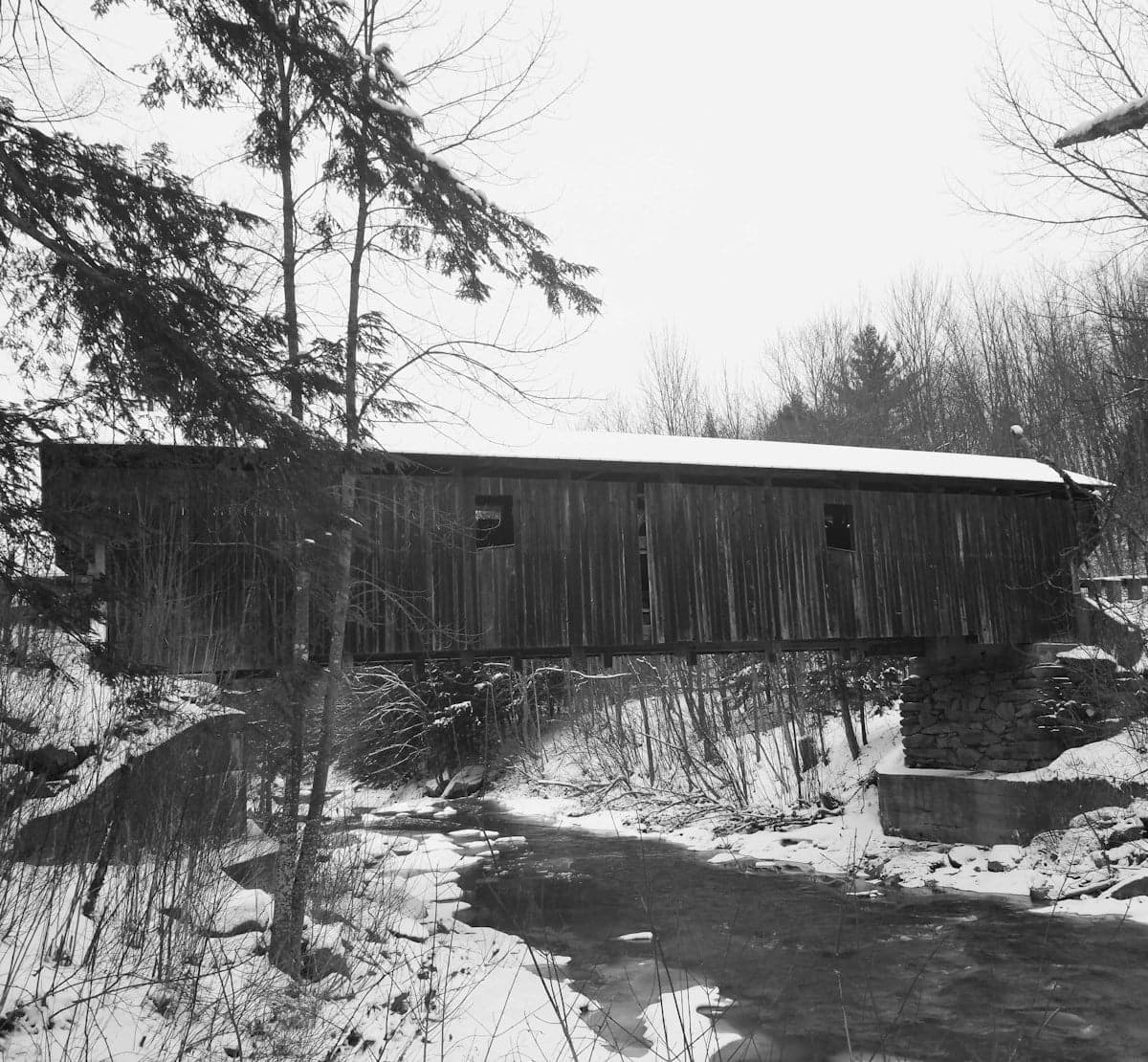
Brewster River Covered Bridge near Burlington - Vermont has more covered bridges per square mile than any other state
The Battenkill is the river most anglers think of when they hear "Vermont fly fishing," and for good reason. This 59-mile freestone stream rises in Dorset, winds through Manchester and Arlington, then crosses into New York before joining the Hudson River. The entire Vermont section is catch-and-release only for trout, which has produced a population of wild brown trout that are famously selective and technically demanding.
Don't come here expecting easy fishing. The Battenkill's browns have seen it all. Long, fine leaders (12 feet, 6X tippet), precise presentations, and accurate fly matching are the price of admission. But the reward is hooking a wild brown trout in one of the most storied rivers in American fly fishing.
Best time: Mid-May through mid-July for dry fly fishing. The Hendrickson hatch (late April through mid-May) kicks off the season, followed by caddis, sulfurs, and Isonychia through summer. Fall brings reliable BWO and midge activity.
Ideal flows: 100-250 CFS for comfortable wading. Above 400 CFS, the river becomes difficult to wade safely. Check flows on RiverReports before heading out.
Access: Waterworks Bridge, Red Mill, and Wagon Wheel are popular access points. VT Route 7A parallels the river through Manchester and Arlington.
Fly shop: Battenkill Outfitters in Manchester specializes in guided trips on the Battenkill and surrounding waters. Half-day wade trips start at $500 for 1-2 anglers with gear included.
The White River is Vermont's most versatile trout stream. It flows 57 miles from Granville to its confluence with the Connecticut River at White River Junction, transforming from a narrow mountain brook into a broad, wadeable river suitable for float trips. Historical creel surveys found approximately 71% rainbow trout, 20% brown trout, and 5% brook trout, with roughly half of all trout being wild fish.
The river divides naturally into three sections:
Ideal flows: 200-500 CFS is optimal for wading. Inexperienced waders should use a wading staff above 300 CFS. Flows between 500-1,200 CFS make for excellent drift trips from Bethel downstream to West Hartford. Under 200 CFS in fall, dry fly fishing can be exceptional with BWO and midge activity.
Access: VT 100 crosses the river six times between Granville and Rochester. Additional access along VT 107 and VT 14. Multiple covered bridge crossings provide parking and river entry.
Guided trips: The Woodstock Inn runs an Orvis-endorsed fly fishing program on the White River and nearby streams. Half-day wade trips start at $300; full-day float trips at $700 for 1-2 anglers. All Orvis gear provided.
The Lamoille stretches 85 miles from Greensboro toward Lake Champlain, starting as a small freestone stream and widening as it picks up tributaries from the northern Green Mountains. The stretch between Johnson and Morrisville is highly productive for brown trout, rainbow trout, and brook trout.
The section between Johnson and Fairfax, known locally as "The Bowling Alley," features fast water and deep pools that hold large brook trout and landlocked salmon. A tailwater section near the Morrisville dam stays cool through summer and attracts larger fish when surrounding water warms.
Best time: Late May through September. Fish the mainstem in spring and fall; move to tributaries in summer when main river temperatures rise. The stretch below Cambridge holds very large wild browns and responds well to streamers, which seem to produce more consistently here than on most Vermont rivers.
Ideal flows: 200-400 CFS is comfortable wading. The river is suitable for drift boat trips in the wider sections below Johnson. Spring average is around 1,200 CFS at the Johnson gauge, so expect high water through April into early May. Below 100 CFS, the river gets thin and fish concentrate in deeper pools.
Hatches: Hendricksons (mid-April to mid-May), caddis (April through October), Hex mayflies (June to mid-July, sizes 6-8), and Golden Drakes (mid-June to mid-August, sizes 10-12). The Hex hatch is the big event here - plan around it if you're fishing in June.
Access: Johnson and Hyde Park provide good public access with parking. The Lamoille River Fishing Access Area (off Route 15) has a concrete boat launch, fishing platform, and open shoreline. The Sears Fishing Access Area, adjacent to the Route 2 bridge, has a shoreline fishing platform and parking. Maple Country Anglers in northern Vermont runs drift boat and wade trips on the Lamoille and can point you to current access conditions.
At roughly 90 miles, the Winooski is Vermont's largest river watershed. It begins near Cabot, flows southwest through Montpelier where it picks up real volume, then continues northwest past Waterbury and into Lake Champlain at Burlington. The character shifts dramatically along its length: long riffles leading to deep pools and runs in the upper and middle sections, with slower water and multi-species fishing near the lake.
The trophy trout section runs from the Bolton Dam in Duxbury upstream to the Route 2 bridge in Waterbury. This stretch holds wild brown trout, rainbow trout, and brook trout, with rainbows being most common. The Winooski fishes differently than the Battenkill - less pressured, bigger water, and streamers produce more consistently here. Nymphing with Zug Bugs, Pheasant Tails, Red Copper Johns, and stonefly patterns is the most productive approach. For dries, try Stimulators, Adams, and Wulffs during hatches.
The Dog River, a major tributary entering at Montpelier, is a notable wild trout stream known for producing large browns. August can be some of the best trout fishing of the year on the Winooski, particularly on dries, if cool weather cooperates. The lower river near Burlington is a corridor for landlocked salmon and steelhead moving between Lake Champlain and spawning tributaries, with fish well over 20 inches possible in spring and fall.
Ideal flows: 200-500 CFS is optimal for wade trips. Above 500 CFS, wading becomes challenging but drift boat fishing opens up through the deeper runs. The river averages around 1,100 CFS in spring runoff, so expect high water through much of April and early May.
Best time: May through October for trout. August dries can be surprisingly good. Spring and fall for salmon and steelhead in the lower river.
Access: River Road runs along the south side of the Winooski through the trophy section between Middlesex and Waterbury, providing multiple pull-offs and river access. The Salmon Hole near downtown Winooski (parking lot off Riverside Avenue/VT Route 7) is a famed multi-species spot minutes from Burlington. State fishing access areas are marked along VT Route 2.
The Deerfield flows from the Green Mountains of southern Vermont into western Massachusetts. Nearly 70 miles long, it's one of the most heavily dammed rivers in New England, with 10 dams along its course. That's actually good news for fishing: the bottom-release dams deliver cold water year-round, making the Deerfield one of the few Vermont rivers that stays fishable through the hottest weeks of summer when freestone rivers warm up.
The Vermont trophy trout section in Searsburg runs 4 miles from the East Branch Trailhead Bridge upstream to the Somerset Road bridge. Trophy brook trout are stocked here from late April through May, typically in two plantings. The Massachusetts sections below Fife Brook Dam hold wild browns to 25 inches in the catch-and-release stretches.
Flows: This river behaves differently than Vermont's freestone streams. Early morning before dam releases, flows typically run around 125 CFS - ideal for wading and dry fly fishing. After mid-morning releases, flows can spike to 700-1,100 CFS within a couple hours. Plan your wading sessions for early morning, or fish the higher flows with heavier nymph rigs and streamers. The release schedule varies by day of week, so check conditions before you go.
Regulations: The Deerfield trophy section has a permanent 2-trout daily limit. Catch-and-release with artificial flies and lures is allowed year-round.
Best time: Reliable hatches make this a strong technical dry fly destination from May through September. The tailwater stays cool enough to fish productively in July and August when other rivers are too warm.
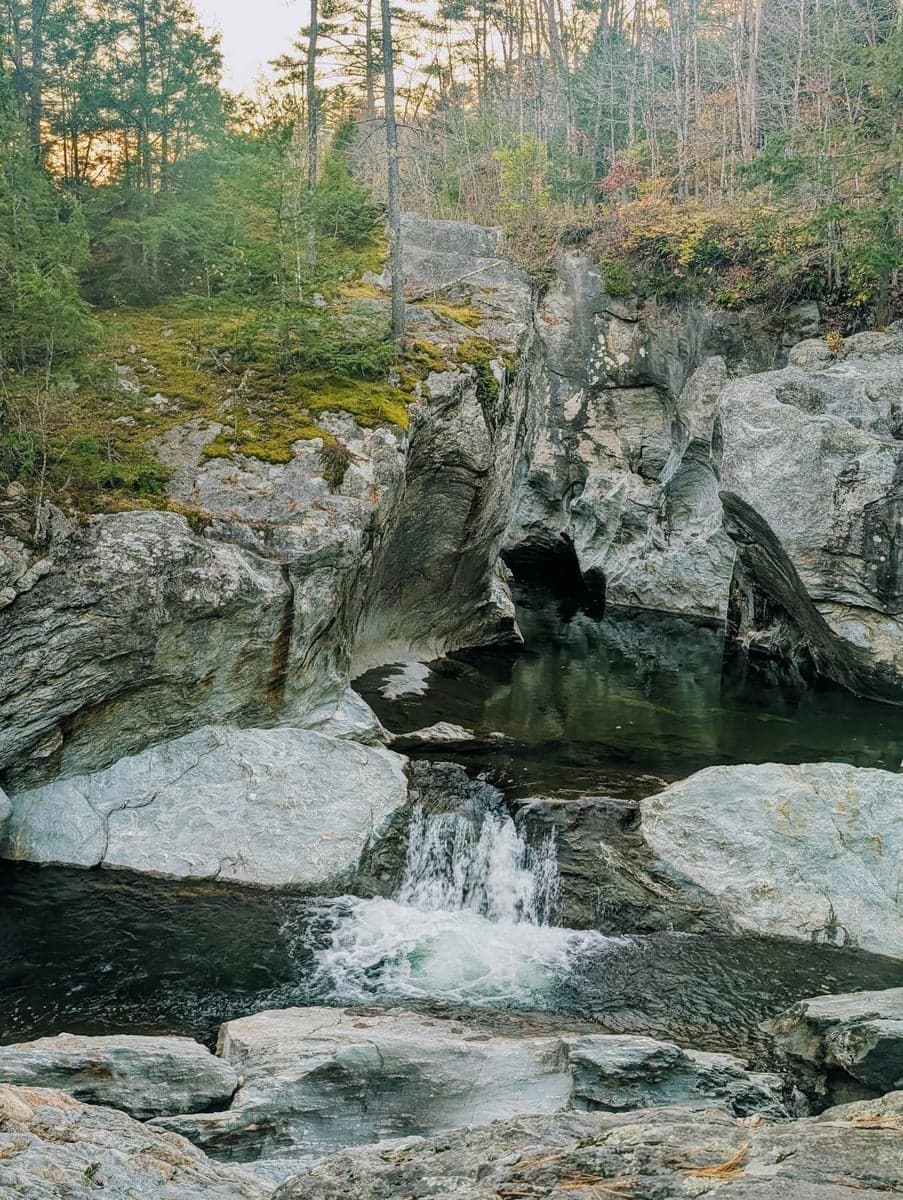
A stream tumbles through Vermont's Green Mountain National Forest — the headwaters of the Deerfield River start in these hills
Vermont's soul lives in its small streams. Hundreds of mountain brooks cascade off the Green Mountains, holding populations of native brook trout that have been there since the last ice age. These fish are small (4-6 inches typical, with an 8-incher being a trophy), wild, and gorgeous.
Where to go: The Green Mountain National Forest offers the most reliable public access. Key streams include:
Gear: A 3-4 weight rod, 7-8 feet long, is ideal. Short leaders (7.5 feet, 4X-5X). Overhead casting is often impossible under forest canopy, so practice roll casts and bow-and-arrow casts.
Flies: Attractor patterns work well. An Ausable Wulff (#12-14) or Yellow Adams Wulff (#12-16) is visible in pocket water. Smaller Elk Hair Caddis (#14-16) and Royal Wulffs work all summer.
Ethics: These are fragile populations in small habitat. Wet your hands before handling fish, use barbless hooks, and limit your time with fish out of water. Consider fishing only catch-and-release even where harvest is permitted.
Vermont's hatches follow a predictable New England progression. Knowing when to expect what saves you from staring at rising fish with the wrong fly.
| Season | Insect | Hook Size | Fly Pattern |
|---|---|---|---|
| Late April - mid-May | Hendrickson | 12-14 | Flick Hendrickson Nymph, Rusty Usual Compradun |
| Late April - May | Quill Gordon | 12-14 | Quill Gordon dry, Pheasant Tail nymph |
| May - June | March Brown | 10-12 | Flick March Brown Nymph, Classic Light Cahill |
| May - October | Caddis (various) | 12-16 | Deerhair Caddis Dry, No Hackle Caddis, Meatball Caddis Larva |
| Late May - July | Sulfurs / Light Cahill | 12-16 | Classic Light Cahill, Cream Usual Compradun |
| June - mid-July | Hex (Lamoille drainage) | 6-8 | Extended body dun, large spinner |
| July - October | BWO (Blue Wing Olive) | 16-20 | Blue Wing Olive CDC Dun, Olive Usual Compradun |
| August - September | Isonychia | 12 | Isonymph, Dun Variant |
| July - October | Tricos | 20-24 | Trico spinner, RS2 |
Headed to a Vermont shop with limited time? Grab these and you can fish any water in the state:
Based on recommendations from Vermont Fishing Trips and local guide shops:
Nymphs (sizes 8-16): Walt's Worm (cased caddis imitation), WMD, Meatball Caddis Larva, Hide-a-Bead Nymph, Pheasant Tail, Dark Squirrel Nymph
Dry flies (sizes 12-20): Ausable Wulff (spring search pattern), Deerhair Caddis, Classic Light Cahill, Blue Wing Olive CDC Dun, Rusty Spinner, No Hackle Caddis
Wets/emergers (sizes 10-16): Hatching Pupa Soft Hackle, Ugly Bug caddis emerger, Flick Hendrickson Nymph
Streamers (sizes 6-10): Cone Head Olive Woolly Bugger, Weighted Muddler Minnow, Black Ghost
A dozen nymphs, a dozen dries, and a handful of streamers will cover most situations on Vermont water.
Vermont's fishing regulations changed in 2026 with some important updates. The key rules for trout anglers:
Season: Stream trout season opens the second Saturday in April (typically around April 12) and closes the last Sunday in October. Catch-and-release with artificial flies and lures is allowed year-round on trophy trout waters.
Daily limits: Combined trout limit of 6 fish per day across brook, brown, and rainbow species on standard waters. Trophy trout waters have a 2-trout daily limit.
Battenkill: The entire Vermont section is catch-and-release only for trout. This is the regulation most visitors need to know.
Trophy trout waters: Vermont designates 11 special stream sections across the state, including the Deerfield River (Searsburg), Walloomsac River (Bennington), Winooski River (Waterbury), Lamoille River (Fairfax), and Black River (Cavendish). These sections have a 2-trout limit and year-round catch-and-release with artificial lures.
License: Required for anglers 15 and older. Resident annual: $28. Non-resident annual: $54. A free fishing day is typically held in mid-June. Purchase at the Vermont Fish & Wildlife Department website.
Lake trout: New regulation limits harvest to 1 lake trout per day with a 24-inch minimum length.
Opening day in mid-April can be hit-or-miss. Water is cold (40s F), flows are often high from snowmelt, and trout are sluggish. Finding a low-elevation stream that's not too murky is the key challenge. Nymph deep with small patterns and give fish time to respond.
By early May, things improve considerably. Water warms into the 50s, the Hendrickson hatch fires on the Battenkill and most other rivers, and trout start actively feeding on the surface. Mid-May through early June is arguably the best dry fly fishing of the year.
June through mid-July is prime time for dry fly fishing on larger rivers. Caddis, sulfurs, March Browns, and Light Cahills keep trout looking up. The Hex hatch on the Lamoille can produce explosive evening fishing in June.
By late July, mainstem water temperatures climb on some rivers. When temperatures push above 68 F, trout become stressed. Move to small mountain streams, spring-fed tributaries, or the upper reaches of rivers that stay cool. The upper White River above Rochester and the Deerfield tailwater remain fishable through the hottest weeks.
Vermont's most underrated season. Flows drop, BWO and midge hatches become consistent, fall foliage turns the landscape spectacular, and brown trout become aggressive ahead of spawning. The Battenkill sees strong hatches in fall with fewer anglers than spring. Brook trout in mountain streams show spawning colors.
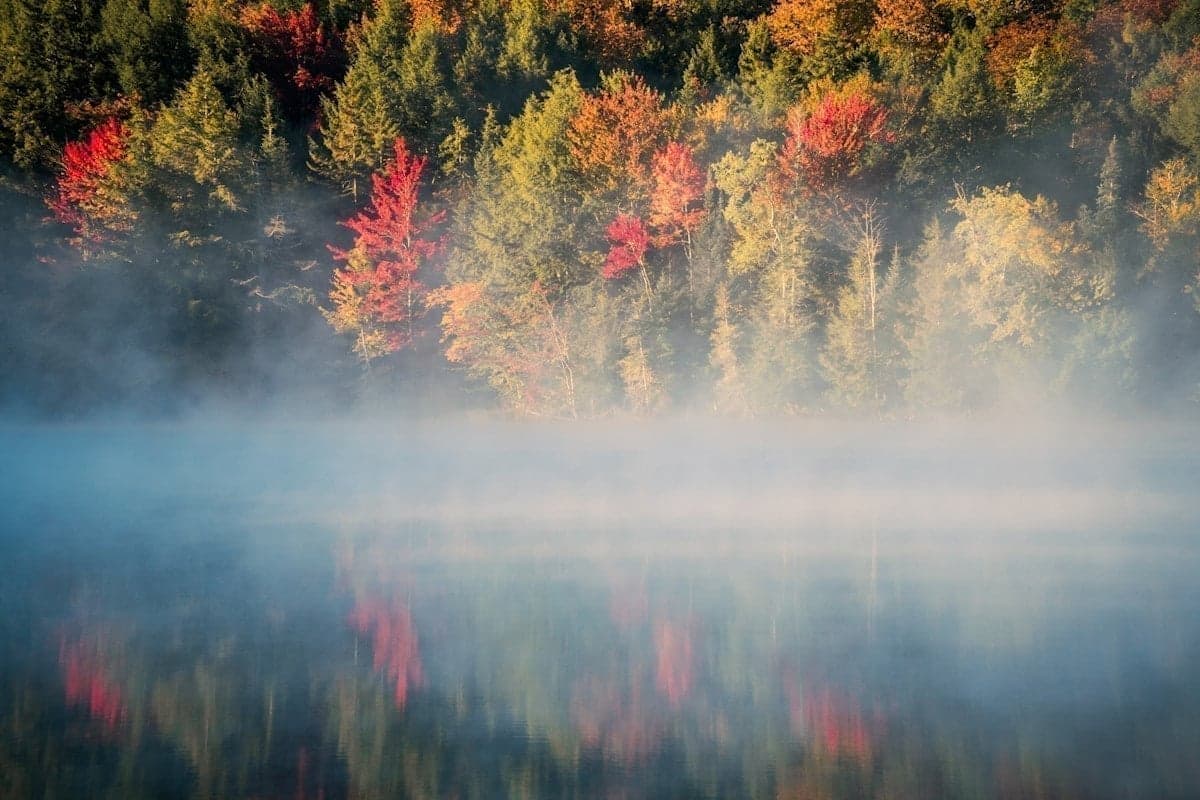
A Vermont country road in peak fall color — September and October bring the best combination of uncrowded water and consistent hatches
September and October are also when a small number of Atlantic salmon from ongoing restoration efforts may appear in the White River and certain tributaries. The program has had limited success, but watch for special regulations on salmon spawning areas.
Most stream fishing is closed. Ice fishing on lakes and ponds is permitted January 1 through March 15, with some restrictions. Certain trophy trout waters allow year-round catch-and-release with artificial flies and lures, but water temperatures in the 30s make for very slow fishing.
Vermont has a strong network of local guides and fly shops. Here are the most established operations:
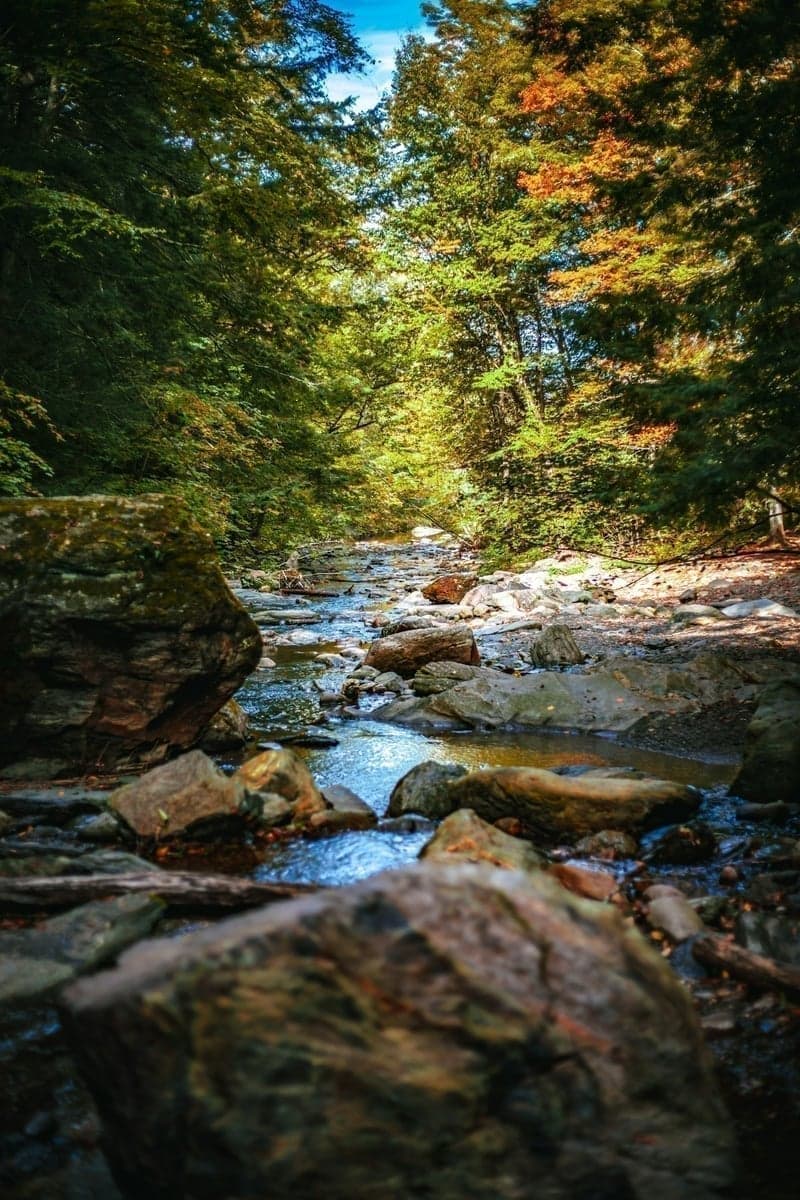
A small Vermont stream winding through fall foliage - the kind of water where native brook trout have lived since the last ice age
Vermont isn't known as a whitewater destination, but the state offers good floating opportunities that combine well with fishing trips.
White River: Vermont's longest undammed river has a developing paddlers' trail. The lower sections (Royalton to White River Junction) are suitable for canoe fishing at moderate flows (300-600 CFS). Drift boats work well from Bethel downstream at 500-1,200 CFS.
Lamoille River: An emerging paddlers' trail is developing along this river. Flat to Class I sections are suitable for canoe fishing through Johnson and Fairfax.
West River: Popular for whitewater kayaking with scheduled dam releases. Not a fishing float, but worth knowing if your group includes paddlers.
Green River: Thanks to work by American Whitewater and the local boating community, recreational releases have made this a notable whitewater run. Class III-IV at release flows.
Mad River: The lower section from the 1st Hydro Dam to the Winooski confluence is 2 miles of Class II-III whitewater. Not for fishing, but Creek VT catalogs over 50 whitewater runs across the state for paddlers.
Vermont rivers are generally forgiving compared to big Western rivers, but they still demand respect.
Spring runoff: April and May can produce dangerously high flows on all rivers. Snow from the Green Mountains melts fast during warm spells. Never wade in water you can't see the bottom of, and always check flows on RiverReports before entering any river.
Cold water: Even in June, Vermont river water is cold enough to cause hypothermia if you take a swim. Wear waders with a wading belt cinched tight. In spring, a wading staff is essential on the White River and Winooski above 300 CFS.
Summer heat stress: When water temperatures exceed 68 F, trout become physiologically stressed. Catch-and-release mortality increases significantly above this threshold. Stop fishing for trout or move to cold tributaries and spring-fed sections.
Private land: Vermont is a mix of public and private land. Most access points are clearly marked, but rivers flowing through farmland may cross private property. Stay in the river channel and use designated access points. When in doubt, ask.
Flash flooding: Small mountain streams can rise quickly during thunderstorms. If the water starts rising or turning muddy while you're fishing, get out.
Vermont fly fishing doesn't require a guide, and that's part of its appeal. Most rivers have good public access, clear regulations, and well-marked trails. Buy a license online, stop at a local fly shop for current intel and a dozen flies, and spend a week exploring. Save the guided trip for the Battenkill if you want help cracking its notoriously difficult brown trout.
Base yourself strategically: Manchester puts you on the Battenkill, Walloomsac, Hoosic, and Mettawee within 30 minutes. Woodstock covers the White River and Ottauquechee. Waterbury or Stowe gives you the Winooski. Johnson or Morrisville for the Lamoille. If you have a full week, split between southern and central Vermont. Anglers based in the Upper Valley (White River Junction, Hanover) are also within striking distance of New Hampshire's fly-fishing-only waters -- the Mascoma River and Sugar River are both under 30 minutes away.
Lodging with fishing access: The Equinox Resort in Manchester offers Orvis experiences on-site. Battenkill Outfitters rents the Battenkill Hollow Cottage directly on the river. The Woodstock Inn runs an Orvis-endorsed fly fishing program with guided trips departing from the hotel.
Gear to pack:
Track real-time flows for Vermont rivers on RiverReports. The Vermont state page shows current conditions for the Battenkill, White River, Ottauquechee, Lamoille, Winooski, and other monitored streams.
Before your trip: Check flows a few days in advance to spot trends. Rising flows after rain may mean muddy water for a day or two. Falling flows after a spike often produce the best fishing.
Flow benchmarks to remember:
| River | Low (fishable) | Ideal wading | High (float) | Too high |
|---|---|---|---|---|
| Battenkill | 50-100 CFS | 100-250 CFS | N/A (not a float river) | 400+ CFS |
| White River | Under 200 CFS | 200-500 CFS | 500-1,200 CFS | 1,500+ CFS |
| Winooski | Under 150 CFS | 200-500 CFS | 500-800 CFS (drift boat) | 1,000+ CFS |
| Lamoille | Under 100 CFS | 200-400 CFS | 400-800 CFS (drift boat) | 1,000+ CFS |
| Ottauquechee | Under 50 CFS | 75-200 CFS | N/A (wade only) | 400+ CFS |
| Deerfield (VT) | ~125 CFS (pre-release) | 125-300 CFS | N/A | 700+ CFS (dam release) |
During your trip: Check flows each morning before driving to a river. Vermont's freestone rivers can change significantly overnight after rain.
Weekly flow updates and fishing intel.
© 2026 RiverReports, Inc.