West Branch Delaware
Fishable
Flow450 CFS
Trendstable
Clarityclear
Temp52-58F
Isonychia Comparadun #12White Fly Spinner #14Trico Spinner #22-24Slate Drake #14
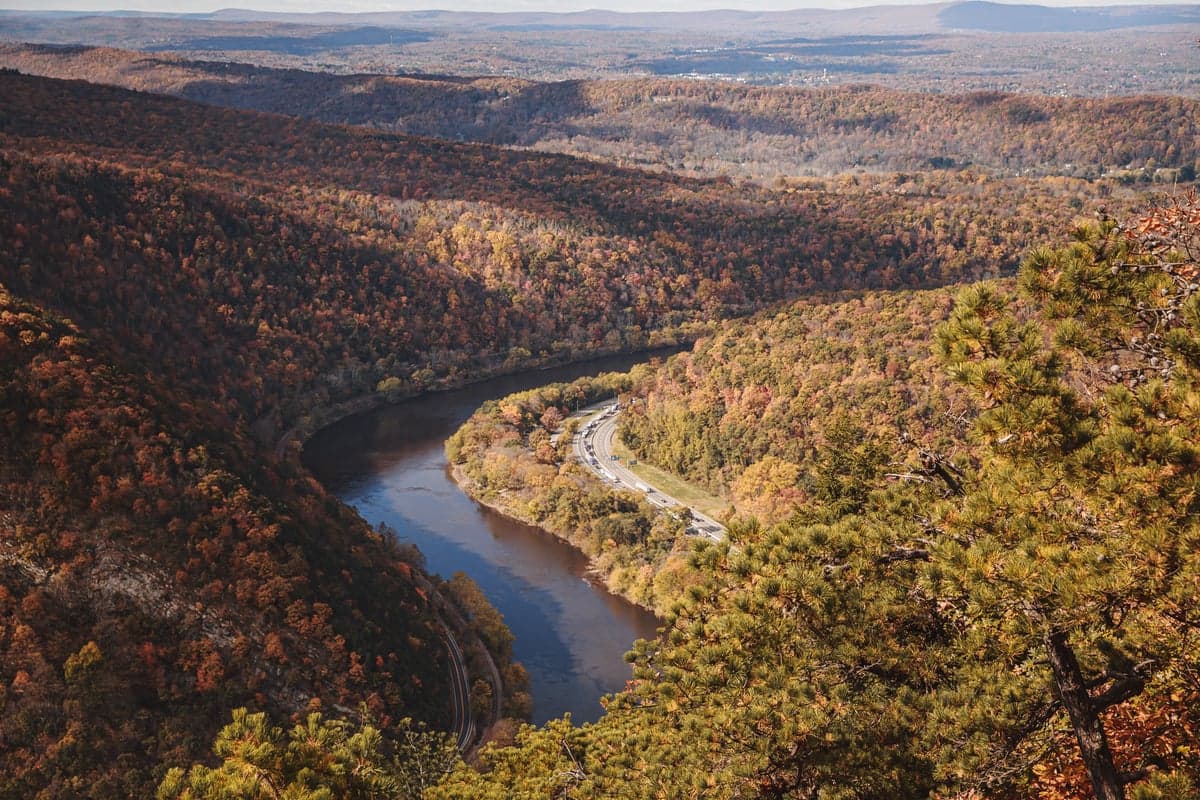
The upper Delaware River system is where American dry fly fishing began. In the late 1800s, Theodore Gordon took the English dry fly tradition, reworked it for faster American currents, and created the Catskill style of fly tying on the streams that feed this river. More than a century later, the West Branch, East Branch, and main stem Delaware still hold wild brown and rainbow trout in water cold enough to fish through summer, thanks to bottom-release dams on Cannonsville and Pepacton reservoirs. The fishing is technical and the hatches are long-studied. This is not a place that hands you easy fish: you will spend real time watching a rise before you have any business casting at it.
| What | When | Key Numbers |
|---|---|---|
| Dry fly fishing | April through October | West Branch: 375-800 CFS ideal wading; East Branch: 250-600 CFS |
| Green Drake hatch | Late May through mid-June | Size 8-10; 4-7 days of fishable numbers per year |
| Hendrickson hatch | Late April through mid-May | Water temps hitting 50F triggers emergence |
| Guided drift boat trips | Book by March for May-June | $500-700/day for 1-2 anglers, lunch included |
| Fly shop | Dette Flies | Livingston Manor, NY; oldest family-run fly shop in the world (est. 1928) |
| Fly shop | Cross Current Outfitters | Shehawken, PA; Orvis-endorsed guide service |
| Regulations | NY license required; sections are catch-and-release, artificial only | Check NYS DEC for current rules |
The upper Delaware sits roughly 150 miles northwest of New York City, making it the closest world-class trout fishery to the largest city in the country. From Manhattan, take I-80 West to Route 17 (future I-86) through the Southern Tier. Hancock is about a 2.5-3 hour drive depending on traffic. From Philly, it is about 2.5 hours via I-476 and I-84.
The key gateway towns:
Lodging ranges from the full-service Delaware River Club in Starlight, PA to Airbnbs, motels along Route 17, and camping at Beaverkill State Park. Book well ahead for May and June weekends.
The upper Delaware is not one river. It is three distinct fisheries that converge at Hancock, New York. Understanding which branch to fish on any given day is half the battle.
The West Branch flows about 40 miles from Cannonsville Dam near Deposit, NY, south to its confluence with the East Branch at Hancock. This is the most celebrated section of the system and the one that draws anglers from across the country. Cold bottom releases from Cannonsville Reservoir create a tailwater that holds trout year-round, even through the hottest weeks of July and August when freestone streams across the Catskills become too warm.
The upper West Branch, from the dam down to the hamlet of Hale Eddy, runs through a narrow valley with good roadside access along Winterdale Road. The water here is consistently cold (often 48-54F in summer) and supports dense populations of wild brown trout averaging 14-18 inches, with fish over 20 inches taken regularly by skilled anglers. The stretch between Deposit and Hale Eddy is where most wade fishers concentrate. Look for rising fish in the long, flat pools during hatches, and do not overlook the riffle-to-pool transitions where nymphing can be productive all day.
A practical tip: arrive early for parking during hatch season. The pull-offs along Winterdale Road fill up fast on May and June weekends, and walking a quarter mile to open water is common. Weekday fishing avoids this problem entirely.
Below Hale Eddy, the river widens and warms gradually as it approaches Hancock.
The Delaware River Club sits on the West Branch near Starlight, PA, offering lodging, guided trips, and a fly shop right on the water. Their guides know the release patterns and hatch timing as well as anyone on the system. You can reach them at (570) 635-5880.
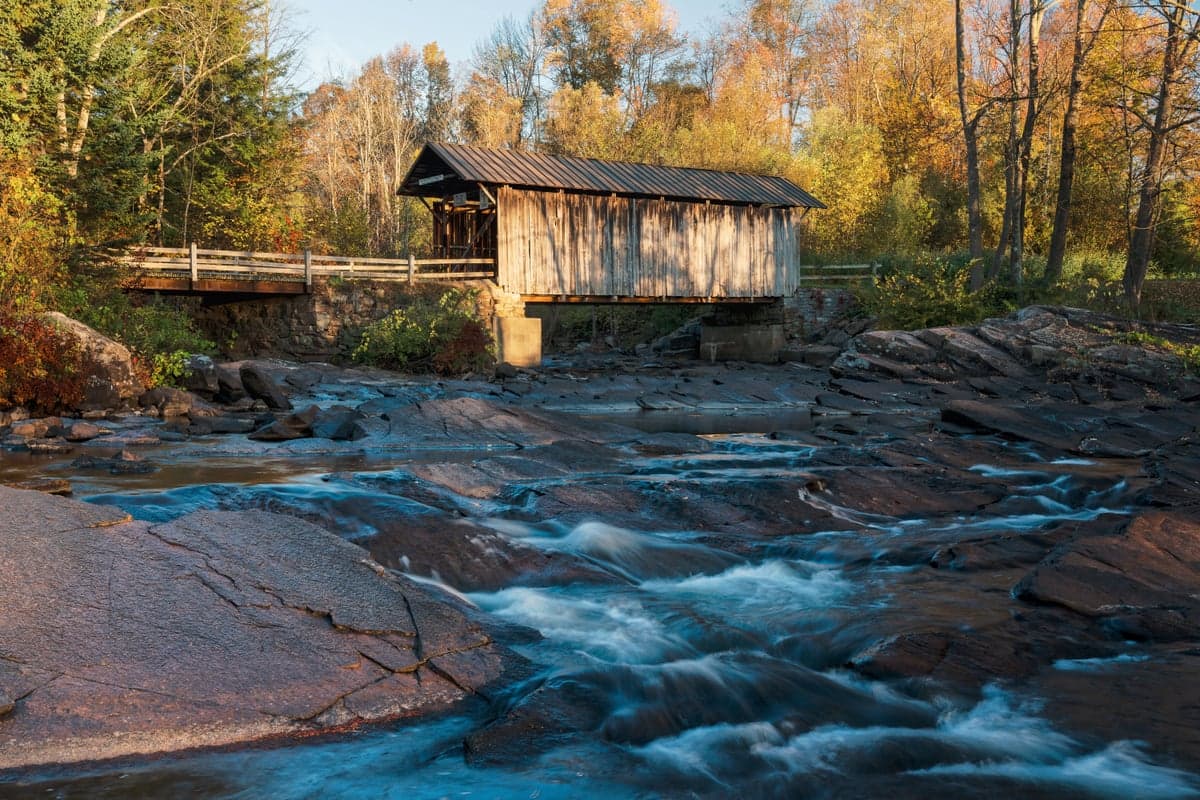
A covered bridge over a Catskills brook in autumn. The region's covered bridges and forested valleys define the landscape of the upper Delaware watershed.
The East Branch runs from Pepacton Dam near Downsville, NY, south through the hamlet of East Branch to join the West Branch at Hancock. It is a smaller, more intimate river than the West Branch, and the tailwater effect from Pepacton Reservoir keeps water temperatures fishable well into summer.
Route 30 parallels much of the upper East Branch, providing good pull-off access. The water below the dam tends to run colder and lower than the West Branch, making it excellent wade fishing at flows between 250-600 CFS. Above 800 CFS, wading becomes difficult. The East Branch is managed as a year-round trout fishery below Pepacton Dam, with catch-and-release, artificial-only regulations in the upper sections.
The East Branch does not get as much pressure as the West Branch or the main stem, which is part of its appeal. On a weekday in June, you might have a half mile of water to yourself.
Where the two branches meet at Hancock is the famous Junction Pool, one of the most storied spots in American fly fishing. From here, the main stem flows roughly 25-27 miles of cold-water trout habitat downstream through Lordville, Long Eddy, and Callicoon before the water warms beyond trout range.
The main stem is a big river, often 300-500 feet wide and too deep to wade in many places. Most anglers fish it from drift boats, targeting rising trout along banks and in slack water during hatches. When a Green Drake or Sulphur hatch is on at the Junction Pool, it is one of the great spectacles in Eastern fly fishing: dozens of anglers lined up, trout rising freely, and the kind of focused concentration you see nowhere else.
Access points on the main stem include Hancock (river mile 330), Long Eddy (river mile 315), and Callicoon (river mile 304). The National Park Service manages the Upper Delaware Scenic and Recreational River and maintains several public launches.
For beginners, the main stem during a hatch can be simultaneously the best and most frustrating introduction to Delaware fishing. The fish are visible and actively feeding, but they can be incredibly selective. If you are new to the system, consider starting on the upper East Branch at lower flows (250-400 CFS), where the wading is easier, the water is more manageable in size, and you can learn to read the currents without feeling overwhelmed by the river's scale.
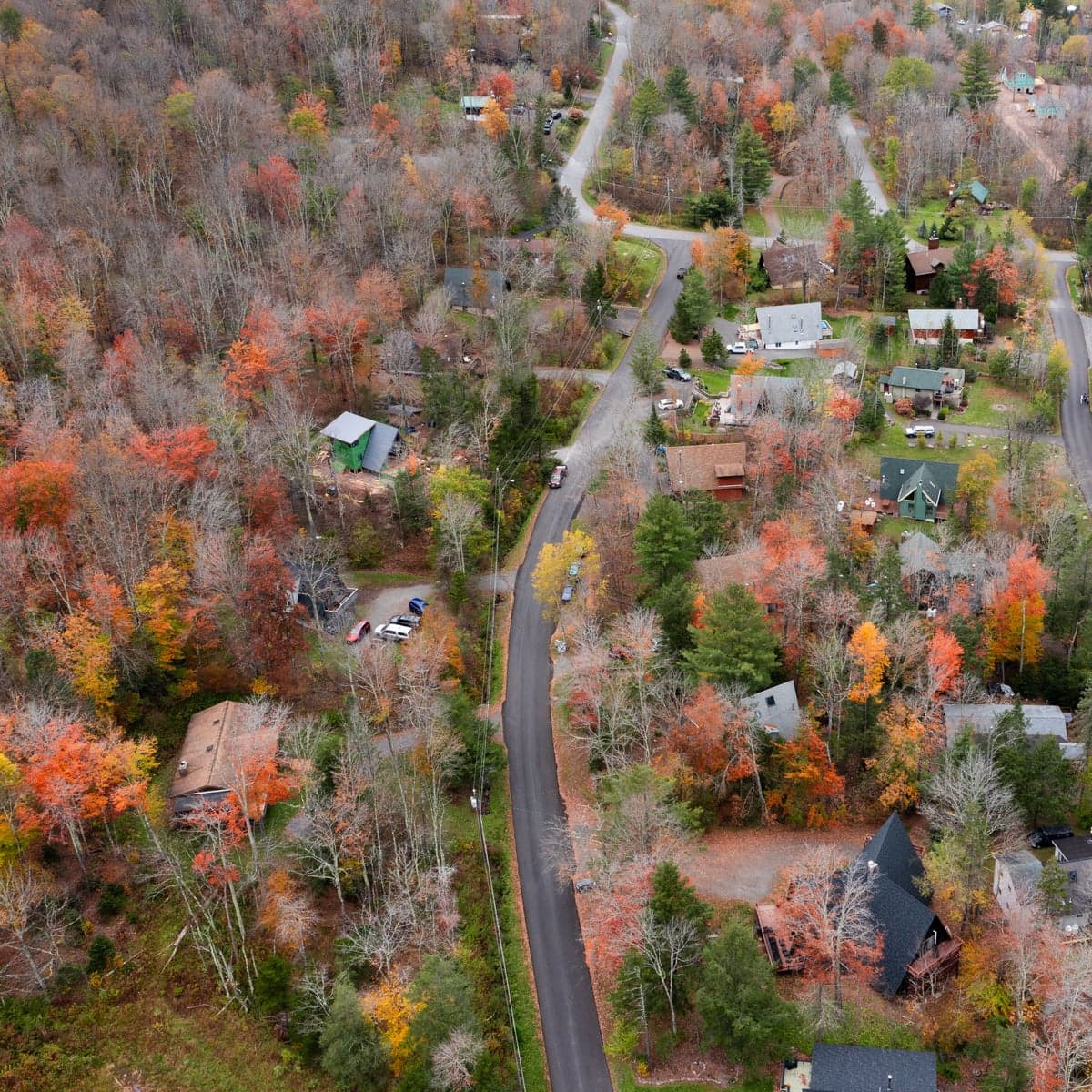
Aerial view of a Catskill village in autumn. Towns like Roscoe, Livingston Manor, and Hancock serve as base camps for Delaware River anglers.
The Delaware system produces some of the most diverse and prolific mayfly hatches east of the Mississippi. Matching the hatch matters here more than on most rivers. These trout see a lot of flies, both natural and artificial, and they can be brutally selective. Here is what to expect, roughly in order of appearance through the season.
The Hendrickson hatch is the first major event of the season and the one that signals spring has truly arrived on the Delaware. Emergence begins when water temperatures reach a sustained 50F, typically in late April. The bugs come off in the afternoon, usually between 1pm and 4pm, and the fishing can be outstanding.
You need to distinguish between the smaller, darker males ("Dark Hendrickson," size 14) and the larger females with a pinkish body ("Light Hendrickson," size 12). The trout often key on one or the other. Classic Catskill-style dressings work well: a dark pink body with teal-gray wings.
Large, clumsy mayflies (size 10-14) that emerge sporadically throughout the day. March Browns are clinger nymphs, and their awkward efforts to break through the surface film make them easy, high-calorie targets. When they are on the water, expect aggressive midday strikes, something unusual on the Delaware.
The workhorse hatch of the Delaware system. Sulphurs (Ephemerella dorothea, size 16-18) come off in the evening and can produce fishable activity for weeks. On the West Branch tailwater, the cold reservoir releases extend the Sulphur hatch well into July, long after it has ended on warmer freestone streams. Evening spinner falls can be spectacular.
The Green Drake (Ephemera guttulata, size 8-10) is the marquee hatch on the Delaware, and arguably in all of Eastern fly fishing. These are enormous mayflies, cream-bodied with dark markings, and they hatch in fishable numbers for roughly four to seven days per year. That narrow window draws anglers from across the Northeast.
Green Drakes prefer overcast, humid afternoons with stable barometric pressure. When conditions are right, the hatch can be dense enough to bring every trout in the pool to the surface. When conditions are wrong, you might wait for days and see nothing. That uncertainty is part of the appeal. Carry Coffin Flies (the Green Drake spinner) for the evening.
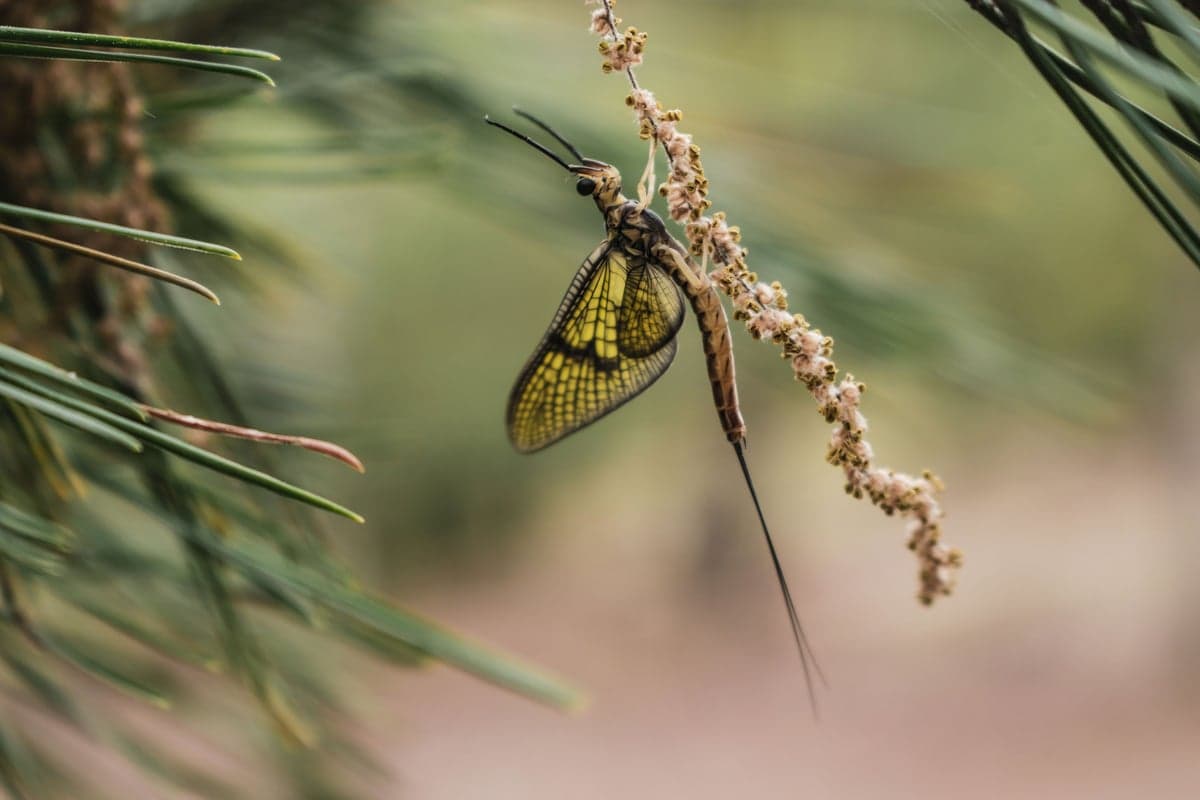
A mayfly resting on pine foliage. The Delaware system's dense insect populations drive the technical dry fly fishing the river is known for.
The Isonychia, or Slate Drake, is a large (size 10-14), dark mayfly that hatches through the summer months, often in the evening. Unlike most mayflies, Isonychia nymphs are strong swimmers and often crawl out on rocks to emerge, meaning the dun fishing can be less productive than fishing an Isonychia nymph swung through faster water. Evening spinner falls, however, can bring fish to the surface reliably.
Tiny (size 22-24) mayflies that produce morning spinner falls on flat water. Trico fishing on the Delaware is graduate-level dry fly work: 7X tippet, 12-15 foot leaders, and delicate presentations to fish sipping spent spinners in glassy currents. The window is early, typically 7-10am, and the fish can be maddeningly selective. This is the hatch that separates casual anglers from obsessives.
The White Fly (Ephoron leukon, size 14) is a late-summer event that produces brief but intense evening hatches, particularly on the main stem between Lordville and Long Eddy. White Flies emerge after dark on warm evenings, and the spinner fall at dusk can trigger aggressive surface feeding in the failing light. Fish a White Fly spinner pattern in the last 30 minutes of daylight.
BWOs bookend the season, appearing in spring and then returning strongly in fall. Size 18-22 patterns fished on overcast, drizzly afternoons can produce some of the best fishing of the year. The fall BWO hatch often coincides with October browns getting aggressive ahead of the spawn.
The Delaware system is controlled by releases from New York City's reservoir system. Cannonsville feeds the West Branch, Pepacton feeds the East Branch. The NYC Department of Environmental Protection determines release volumes under the Flexible Flow Management Program (FFMP), and those releases dictate fishing quality.
More cold water release equals better fishing. In dry years with low releases, the tailwater effect shrinks and downstream reaches warm beyond trout tolerance. In high-release years, the cold water extends further down the system and hatches last longer.
The politics behind the releases are complicated. A 1954 US Supreme Court decree established flow targets at the Montague, NJ gauge (1,750 CFS minimum) to balance NYC's water supply needs against downstream water quality and fishery health. The current Flexible Flow Management Program (FFMP) governs how and when reservoirs release water, including "directed releases" of cold water specifically to support the trout fishery. When directed releases are flowing, the fishing improves dramatically. When they are cut, things deteriorate quickly.
The practical takeaway: you cannot control the releases. What you can do is check flows before you drive.
| Flow (CFS) | Wading Conditions |
|---|---|
| 375-475 | Very wadeable. Easy access to most of the river. Best for beginners. |
| 475-800 | Wadeable with care. Moving water, productive hatches. Ideal fishing flows. |
| 800-1,000 | Challenging wading. Only experienced anglers should enter. Use a wading staff. |
| 1,000-1,500 | Difficult and risky. Very experienced and physically fit anglers only. |
| Above 1,500 | Do not wade. Drift boat fishing only, and only with experienced oarsmen. |
| Flow (CFS) | Wading Conditions |
|---|---|
| 200-400 | Low and clear. Excellent wading, but fish are spooky. Long leaders and stealth. |
| 400-600 | Ideal. Good mix of wadeable water and productive flow. |
| 600-800 | Getting pushy. Choose your crossings carefully. |
| Above 800 | Drift boat or bank fishing recommended. |
These are dam-controlled rivers. Releases can raise water levels quickly and without much warning. Never wade water you would not want to be standing in if the flow doubled in the next twenty minutes. A wading staff is not optional on the Delaware. The river bottom is a mix of cobble and bedrock that gets slick with algae, particularly in summer.
Cold water is a year-round hazard on the West Branch. Even in July, tailwater temperatures near the dam can be in the upper 40s. Hypothermia is a real risk if you take a swim. Wear a wading belt, and consider a PFD if you are fishing higher flows.
Track real-time flows on RiverReports before every trip. The difference between 400 CFS and 800 CFS on the West Branch is the difference between a pleasant day of wading and a survival situation for an unprepared angler.
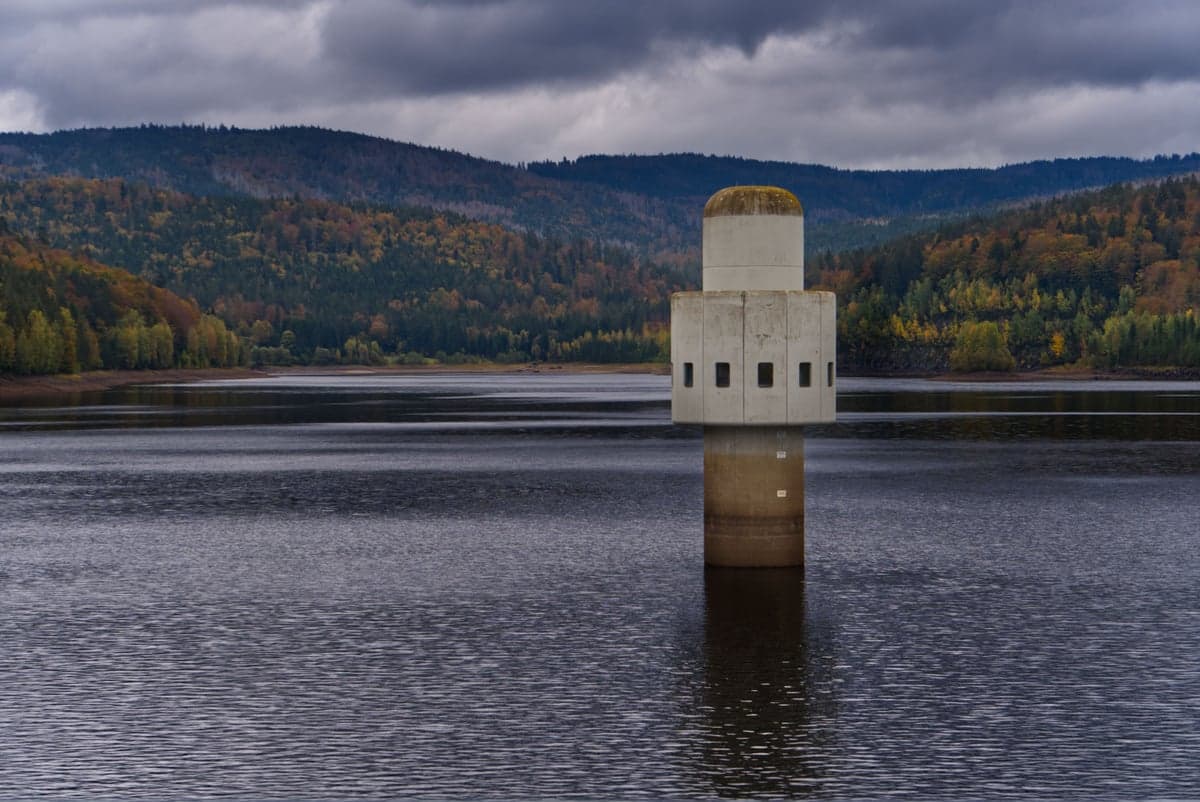
A reservoir intake tower surrounded by autumn forest. Bottom releases from NYC's Cannonsville and Pepacton reservoirs keep the Delaware's tailwaters cold enough for trout year-round.
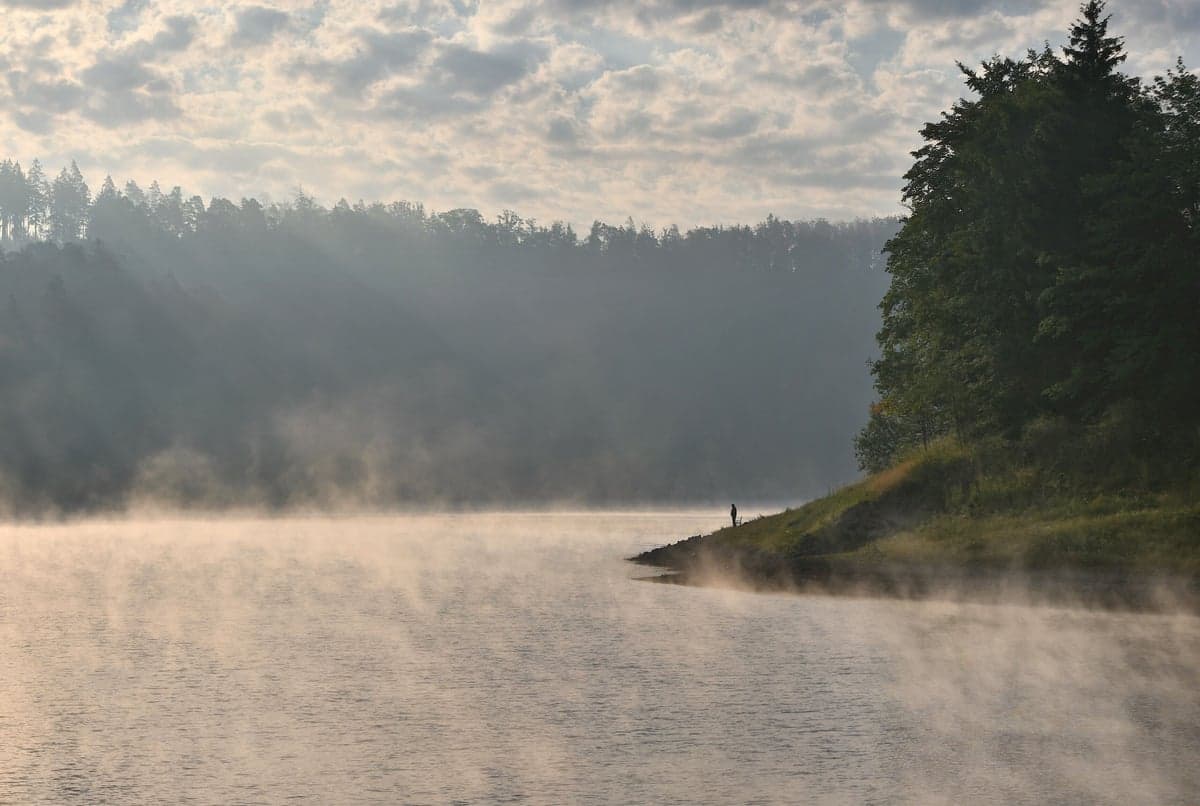
Morning fog on the river. On the Delaware, early Trico spinner falls from July through September reward anglers willing to be on the water at first light.
The season opens with BWOs in April, followed by the Hendrickson hatch that typically kicks off in late April when water hits 50F. May brings March Browns, the start of Sulphurs, and if you time it right, the first Green Drakes at the end of the month. Spring fishing can be outstanding, but snowmelt and rain events can push flows up quickly. Check conditions before driving.
This is the busiest time on the river. The Green Drake hatch in particular draws crowds. If solitude matters to you, fish midweek.
Summer fishing on the Delaware depends heavily on reservoir releases. When NYC is releasing cold water, the West Branch stays fishable through the hottest weeks. Sulphurs extend into July, Isonychia and Tricos carry the summer, and evening caddis hatches provide consistent surface action.
When releases are cut back in dry years, the cold-water section shrinks, water temperatures climb, and fishing quality drops. In extreme cases, thermal stress can become a concern for the fish. If water temps push above 68F, consider fishing early morning and evening only, or switch to a different river.
Terrestrials (hoppers, ants, beetles) produce well from mid-June through September, particularly along shaded banks. A size 14-16 ant pattern fished tight to overhanging vegetation can be deadly during the midday lull.
Many experienced Delaware anglers consider fall the best season. The crowds thin out, BWOs return in force, and brown trout begin staging for the spawn. October and November bring aggressive fish that will chase streamers and eat attractor dries with less hesitation than during the technical summer months.
The fall catch-and-release season runs from October 16 through March 31, with artificial-lures-only regulations across New York trout streams. This is a great time to fish if you do not mind shorter days and cooler temperatures.
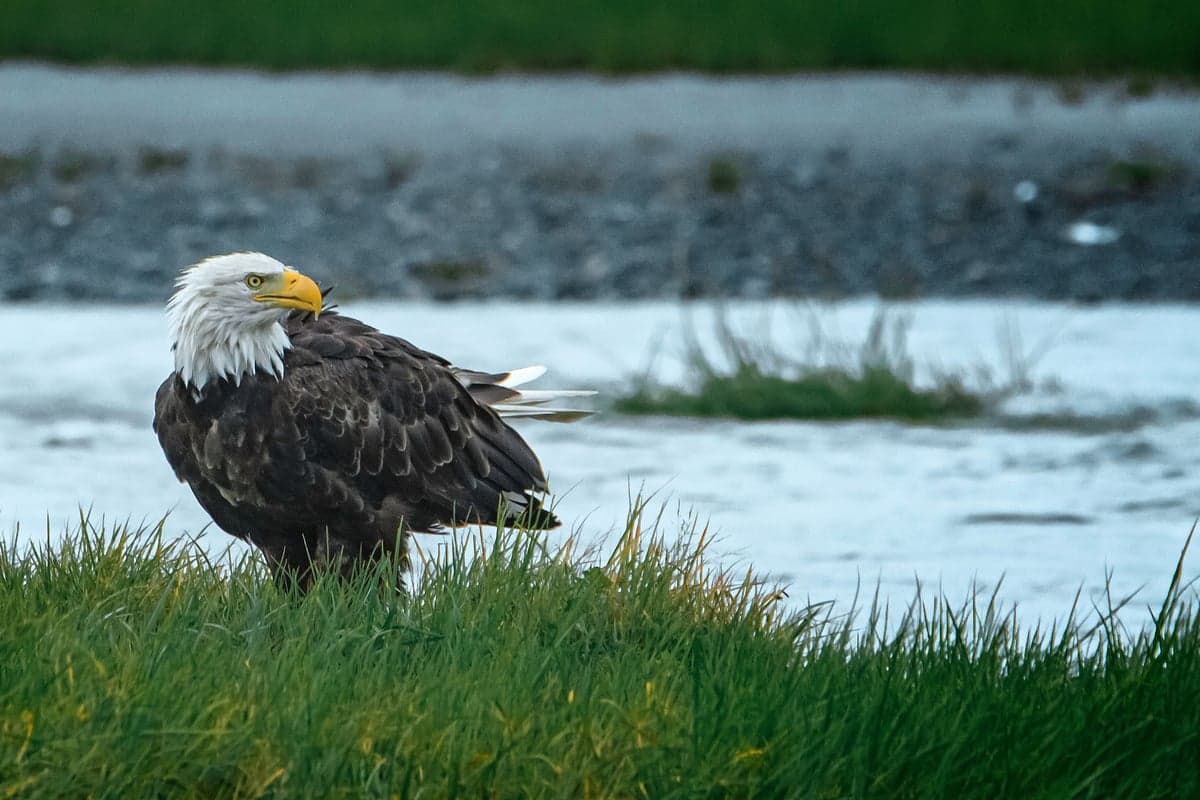
A bald eagle perched along the river. The upper Delaware corridor supports a thriving eagle population, and sightings are common while floating the main stem.
Winter fishing on the Delaware is a solitary pursuit. Midge hatches on sunny afternoons provide occasional surface activity, but most fish are caught on small nymphs (Zebra Midge #20-22, RS2 #22-24) drifted through slow pools. Water temperatures hover near freezing, ice shelves line the banks, and the window of productive fishing is narrow, typically 11am to 2pm on sunny days.
Dress warmly, use fluorocarbon tippet (it is less affected by cold than nylon), and keep your expectations modest. The reward is having one of the East Coast's best trout rivers entirely to yourself.
The Delaware rewards precision over power. Here is what to bring:
Fly fishing on the Delaware is inseparable from the broader Catskill fly fishing tradition. Theodore Gordon, who fished these waters in the late 1800s, adapted English chalk stream techniques for American freestones and is widely considered the father of American dry fly fishing. He developed the Catskill style: sparse hackle, upright divided wings, slim bodies, all designed to float high and ride fast water cleanly.
That tradition lives on through institutions like Dette Flies in Livingston Manor, founded by Walt and Winnie Dette in 1928 and now in its 98th year of operation under Mary Dette and her grandson Joe Fox. It is the oldest family-run fly shop in the world, with a direct lineage to the flies of Theodore Gordon. Down the road in Roscoe, self-proclaimed "Trout Town USA," the Beaverkill and Willowemoc rivers join at the famous Junction Pool, the spiritual home of Catskill fly fishing.
The Catskill Fly Fishing Center and Museum in Livingston Manor preserves this history and is worth a visit if you are in the area. The collection includes original Gordon flies and the tying benches of the Dette and Darbee families.
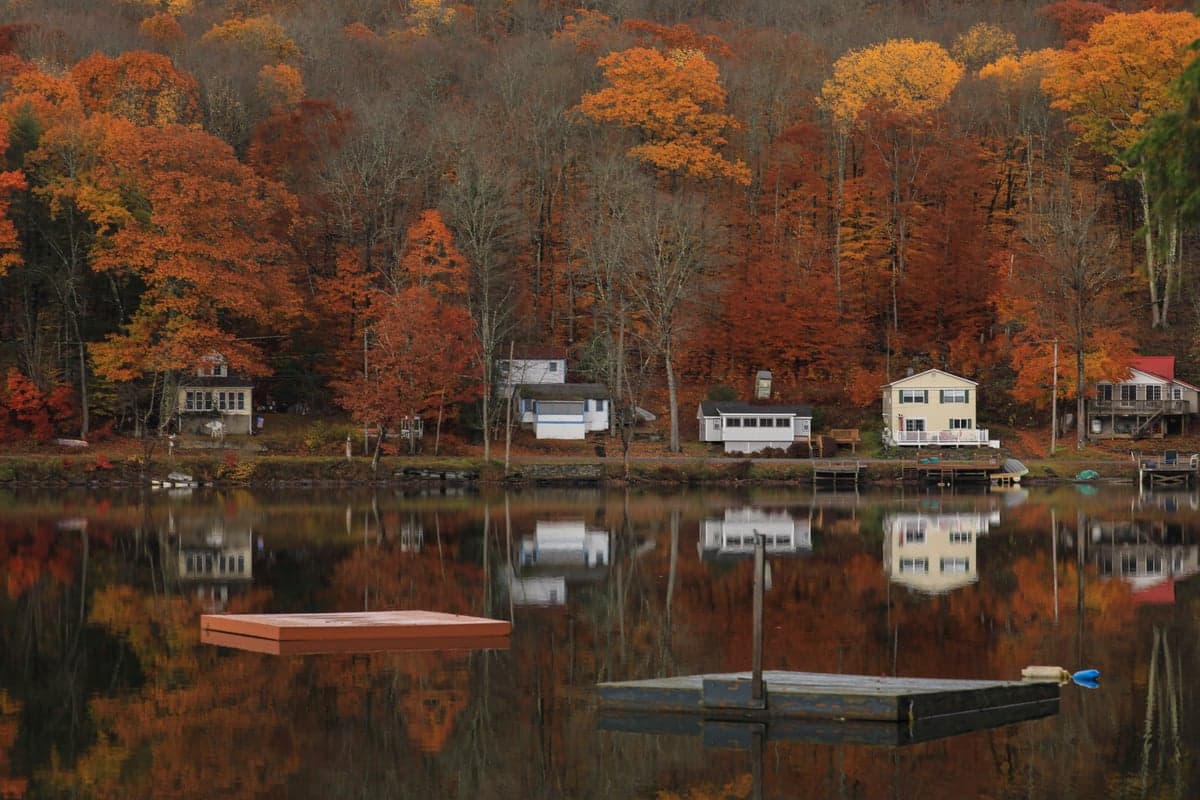
A Catskill village reflected in a lake during autumn. The towns along the Delaware offer lodging, dining, and a deep connection to fly fishing history.
When the Delaware is blown out, too warm, or just too crowded, several excellent Catskill streams fish well as alternatives.
The Delaware system supports a strong network of local fly shops and guide services. Booking a guided drift boat trip is the best way to learn the river quickly, particularly on the main stem, where bank access is limited.
Most full-day guided drift boat trips run $500-700 for one or two anglers, with lunch included. Walk-wade trips are typically $400-550. Book early for May and June, as the Green Drake and Hendrickson windows fill up months in advance.
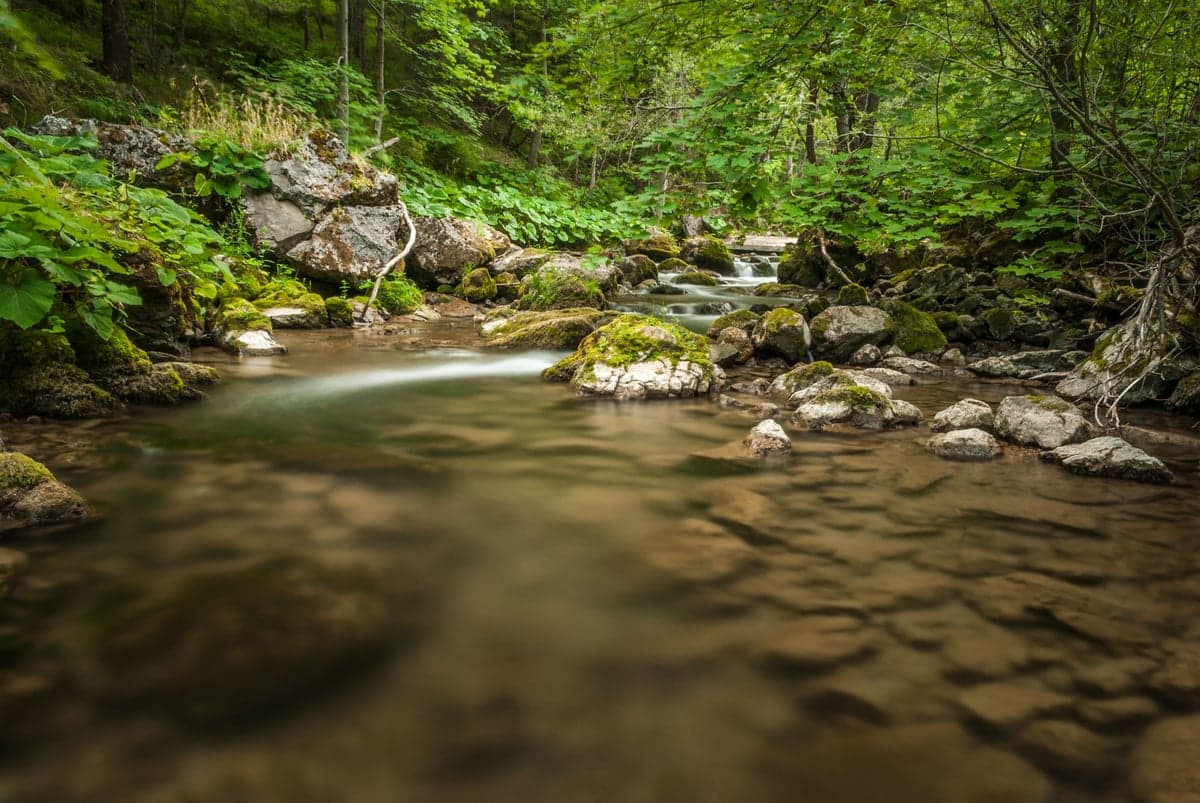
A forested Catskill stream flowing through moss-covered boulders. Tributaries like the Beaverkill and Willowemoc offer excellent alternatives when the main Delaware is high or crowded.
The Delaware is not just a fishing river. The Upper Delaware Scenic and Recreational River, managed by the National Park Service, draws thousands of canoeists, kayakers, and tubers each summer.
The boating season runs from mid-April through October. Most of the upper Delaware is Class I-II water, suitable for novice to intermediate paddlers in canoes or kayaks. A few notable rapids add interest:
Public access points are plentiful. Kittatinny Canoes and several other outfitters offer canoe, kayak, and raft rentals with shuttle service.
If you are floating and fishing simultaneously, a drift boat is the best option on the main stem. The wide, deep runs are difficult to fish effectively from a canoe.
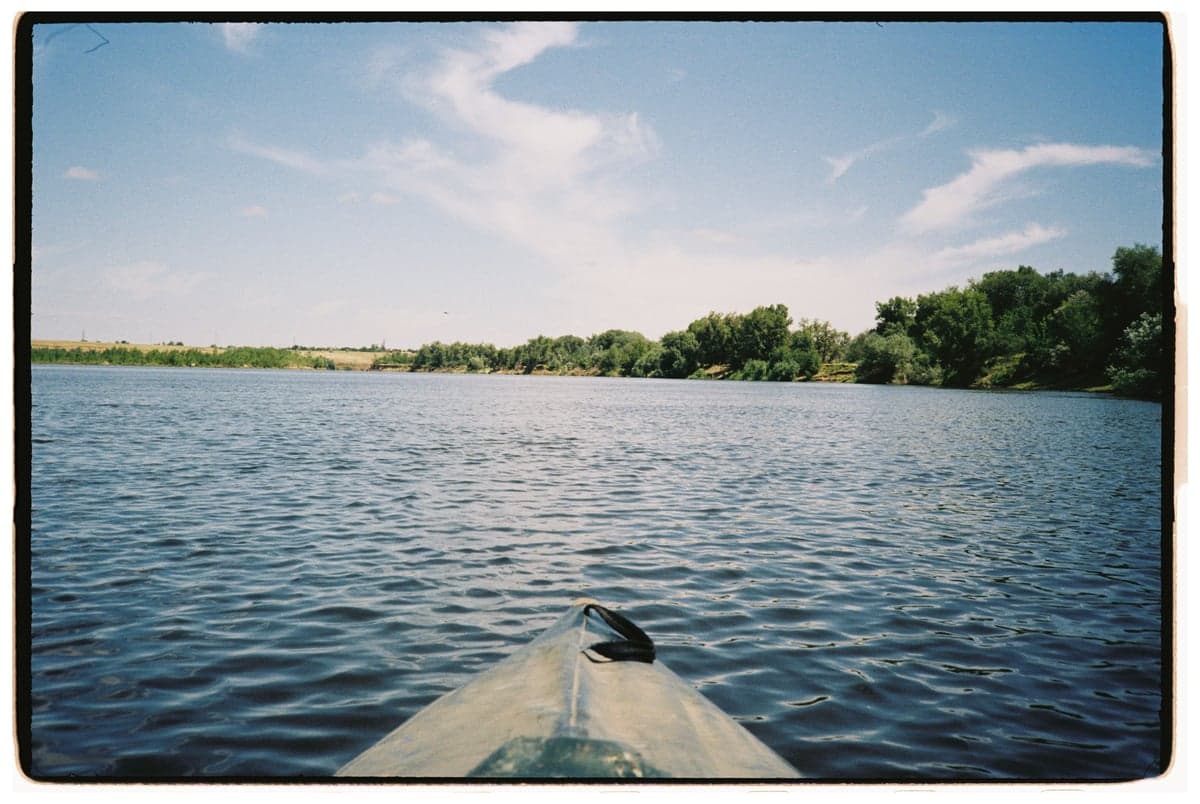
Canoeing on a calm stretch of river in summer. The upper Delaware is a popular destination for paddlers, with Class I-II water and plentiful public access.
Fishing regulations on the Delaware can be confusing because the river crosses state lines and includes waters managed under different frameworks. Here is the simplified version:
The regulations change periodically. Always verify current rules through the NYS DEC fishing regulations guide before your trip.
Track real-time conditions on the Delaware system through RiverReports. The two key gauges to monitor:
Check flows the morning of your trip and again before you wade in. Reservoir releases can change during the day, and a comfortable 500 CFS morning can become a dangerous 1,200 CFS afternoon. Set up flow alerts on RiverReports so you know when conditions shift into your target window.
For Pennsylvania side conditions, check RiverReports PA.
Weekly flow updates and fishing intel.
© 2026 RiverReports, Inc.