Cheesman Canyon
Marginal
Flow103-115 CFS
Trendstable
Claritygin clear
TempCool at dawn, warming quickly after midday
Black Beauty #20-24Zebra Midge #18-22RS2 #20-24UV Scud Olive #16-18
| What | When | Key Numbers |
|---|---|---|
| Midge fishing | Year-round, best Nov-Mar | 80-200 CFS ideal; sizes #20-26 |
| BWO/Baetis | Mar-May, Sep-Nov | Overcast afternoons; sizes #18-22 |
| Trico hatch | Late Jun-Aug | Deckers water; early morning; sizes #20-24 |
| Summer dries | Jun-Sep (PMDs, caddis, hoppers) | 200-400 CFS ideal; sizes #14-18 |
| Guided trips | Book by February for summer | $365-650/day depending on party size |
| Fly shop | South Platte Fly Shop | Woodland Park; guided trips available |
| Fly shop | Angler's Covey | (719) 471-2984, Colorado Springs |
The South Platte is not one fishery. It is four distinct ones strung along a chain of reservoirs, each with its own regulations, flow behavior, and character. Pick the section before you pick the day.
| Section | Where | Character | Guide |
|---|---|---|---|
| Eleven Mile Canyon | Below Elevenmile Reservoir toward Lake George | Scenic canyon with excellent road access. The most forgiving of the four | Eleven Mile Canyon guide |
| Dream Stream | Between Spinney Mountain and Elevenmile reservoirs | Open meadow spring creek. Big migratory fish, brutal wind, no cover | Dream Stream guide |
| Cheesman Canyon | Cheesman Dam to the Wigwam Club boundary | Granite canyon, 1.5-mile hike in, catch and release, hardest fish in the state | Cheesman Canyon guide |
| Deckers | Wigwam Club boundary downstream to Scraggy View | Roadside, riffles and pocket water, 2-fish 16-inch limit, heavy pressure | Deckers guide |
The South Platte rises in South Park, passes through a series of reservoirs, and drops through granite canyon country southwest of Denver before turning out onto the plains. The stretches anglers care about are the tailwaters below those dams, where cold, stable releases produce dense trout populations and small, technical bugs.
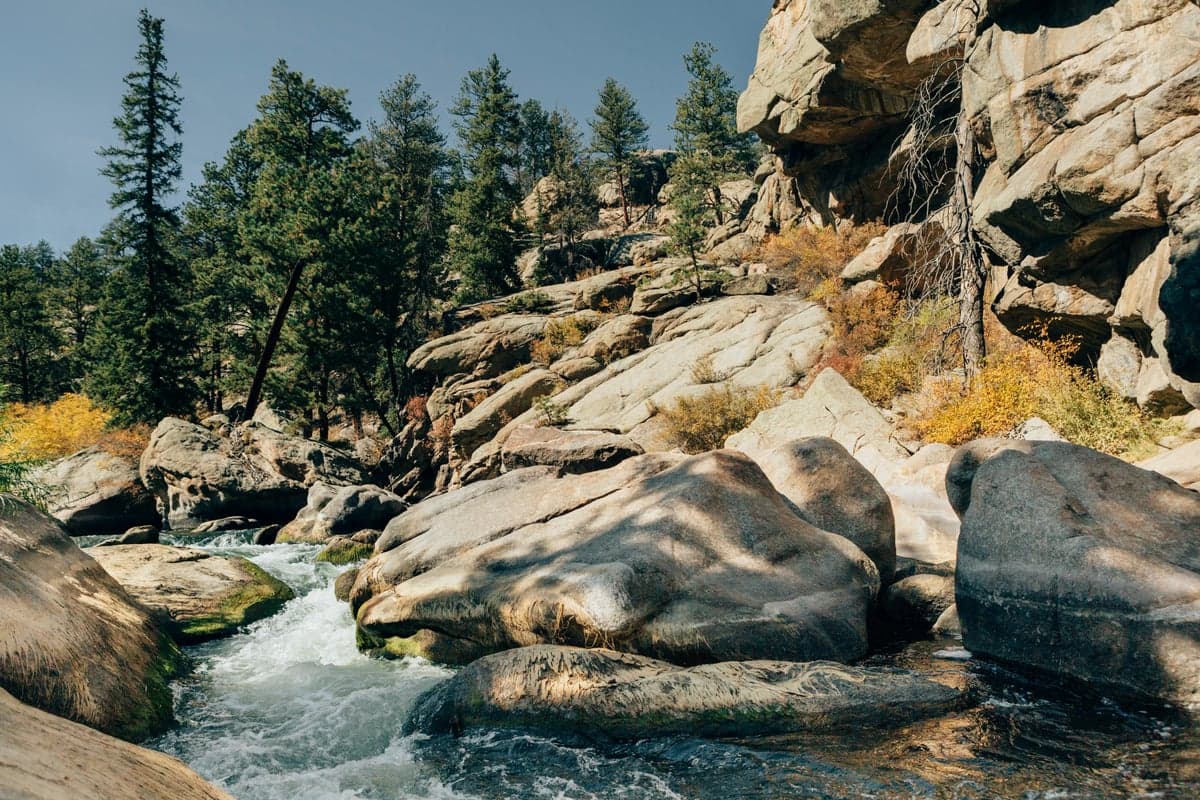
Granite and conifer country of the sort the South Platte runs through on its way out of the Front Range. Most of the fishable water sits below one of the drainage's reservoirs.
Several reaches carry Colorado's Gold Medal designation, which requires at least 60 pounds of trout per acre and at least 12 trout over 14 inches per acre. Brown and rainbow trout dominate, with cutbows throughout and cutthroats occasionally.
The defining trait across all four sections is difficulty. These are pressured fish in clear water eating small insects. If you can consistently catch trout here, you can catch trout anywhere. If you are new to nymphing, start on a freestone and come back.
Two practical consequences of the tailwater character are worth internalizing before your first trip. First, flows track reservoir operations rather than snowmelt, so a cold spring does not mean low water and a hot July does not mean the river is blown. Second, the river is fishable in every month of the year, which is unusual in Colorado and is the main reason the parking lots stay full.
The two clusters of water are about 90 minutes apart by road and feel like different rivers.
Below Cheesman Reservoir (Cheesman Canyon and Deckers) sits in Pike National Forest, roughly an hour southwest of Denver and 55 minutes from Colorado Springs. From Denver, take US-285 south to Pine Junction, then CO-126 south through the forest. From Colorado Springs, take CO-67 northwest through Woodland Park. The road is paved but narrow and winding, and it ices up November through March.
Above Elevenmile Reservoir (the Dream Stream and Eleven Mile Canyon) sits in South Park off US-24 and CO-9, roughly two hours from Denver. Higher, more open, windier, and colder in winter.
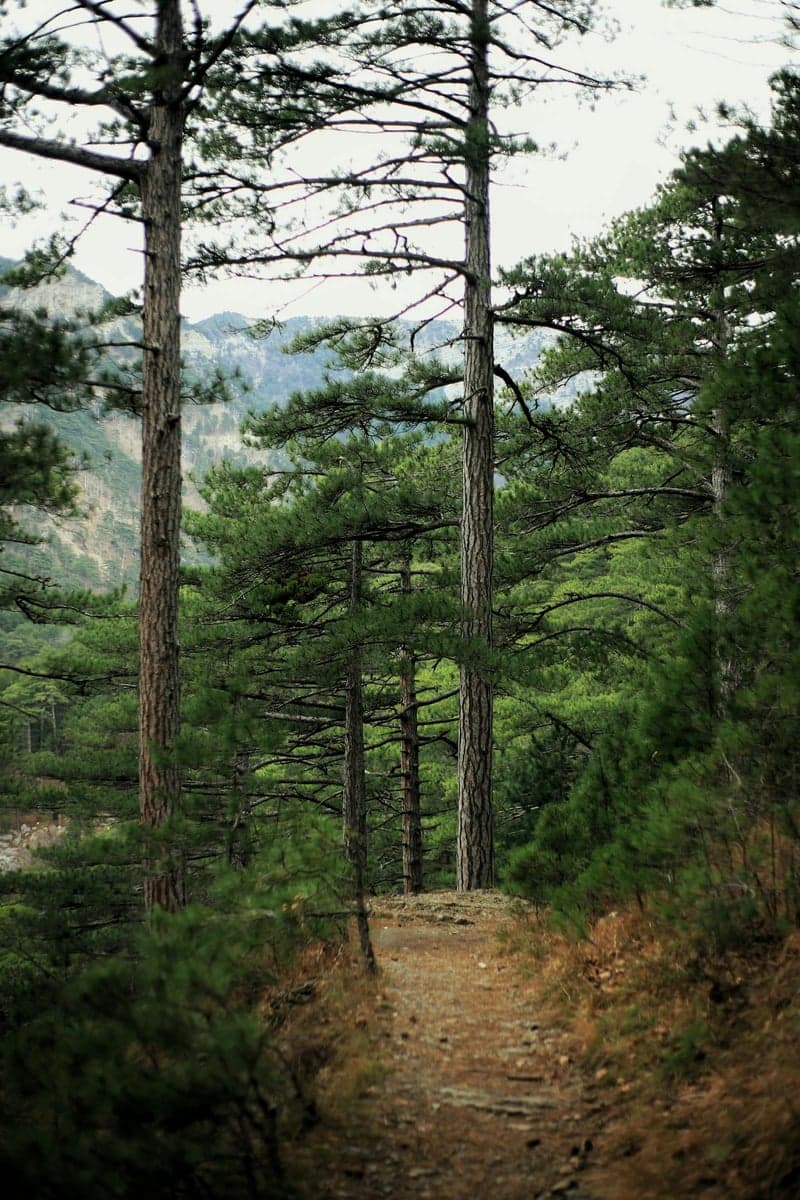
A forest trail dropping toward a canyon. Cheesman Canyon is the only section of the South Platte that requires a real hike in. Everything else on this river is roadside.
The Gill Trail trailhead sits on CO-126 about four miles southwest of Deckers. Parking is small and fills by 7 or 8am on summer weekends. It is a 1.5-mile hike down to the water, with high and low routes reaching different points along the fishable stretch. There is no vehicle access to the river inside the canyon. Full detail, including which runs are worth the walk, is on the Cheesman Canyon guide.
Deckers is the opposite: pullouts line CO-67 and CR-126, and you can be fishing four minutes after you park. Deckers Bridge, Trumbull and Scraggy View are the named access points, with public parking signs along the corridor and a few clearly posted private inholdings. The Wigwam Club water between Cheesman Canyon and Deckers is private and people trespass into it regularly. Access detail, the private boundaries, and the crowd patterns are covered on the Deckers guide.
Eleven Mile Canyon is a fee area with a road following the river through the canyon and campgrounds along the way. The Dream Stream runs through the Charlie Meyers State Wildlife Area between the two reservoirs, with parking at both ends and at the county road crossing. See the Eleven Mile Canyon guide and the Dream Stream guide.
Regulations change several times along this river, and the boundaries are close together. Know which water you are standing in.
The two most-fished reaches below Cheesman are both Gold Medal water and both restricted to artificial flies and lures, but they differ on harvest:
Sections in South Park carry their own rules, including catch and release water below Elevenmile Dam. A valid Colorado fishing license is required, plus a Habitat Stamp for anglers in the covered age range.
Check the current Colorado Parks and Wildlife regulations before every trip. Rules change year to year and the section-by-section boundaries are not intuitive from the road.
The South Platte is a chain of tailwaters, so flows reflect release schedules rather than runoff. That gives it more stability than a freestone, but releases can step up or down by a hundred CFS overnight with no warning.
| Condition | CFS Range | What to expect |
|---|---|---|
| Low/technical | 60-100 | Ultra-clear, spooky fish. Long leaders (12+ ft) and 6X-7X tippet |
| Ideal wading | 100-250 | Sweet spot for most anglers. Good wading, fishable clarity, active trout |
| Prime | 250-400 | Historically ideal. More forgiving presentations, fish spread out |
| High but fishable | 400-600 | Wading gets tricky. Target edges and softer water. Bigger nymphs produce |
| Caution | 600+ | Wading is hazardous in many spots. Fish from the bank or pick protected side channels |
Recent seasons have run lower than the historical norm, with the water below Cheesman often sitting at 100-150 CFS rather than the 250-400 range that used to be routine in summer. Low flows concentrate fish and make them pickier. Track conditions on RiverReports before you drive, and see understanding river CFS flows if you want the general mechanics.
The South Platte is a midge-and-mayfly river. If you are not comfortable fishing #20 and below, this river will push you to learn.
Midges hatch every month, and on many winter days they are the only thing happening.
Key patterns: Black Beauty (#22-26), Zebra Midge (#20-24), RS2 (#20-24), Griffith's Gnat (#20-24), Mercury Midge (#20-22), Top Secret Midge (#20-24).
Blue-winged olives are the second pillar. They come off most reliably on overcast, drizzly days from March through May and again September through November.
Key patterns: JuJu Baetis (#20-22), Stalcup's Baetis (#20-22), Barr's Emerger BWO (#20-22), Parachute BWO (#18-22), WD-40 (#18-22).
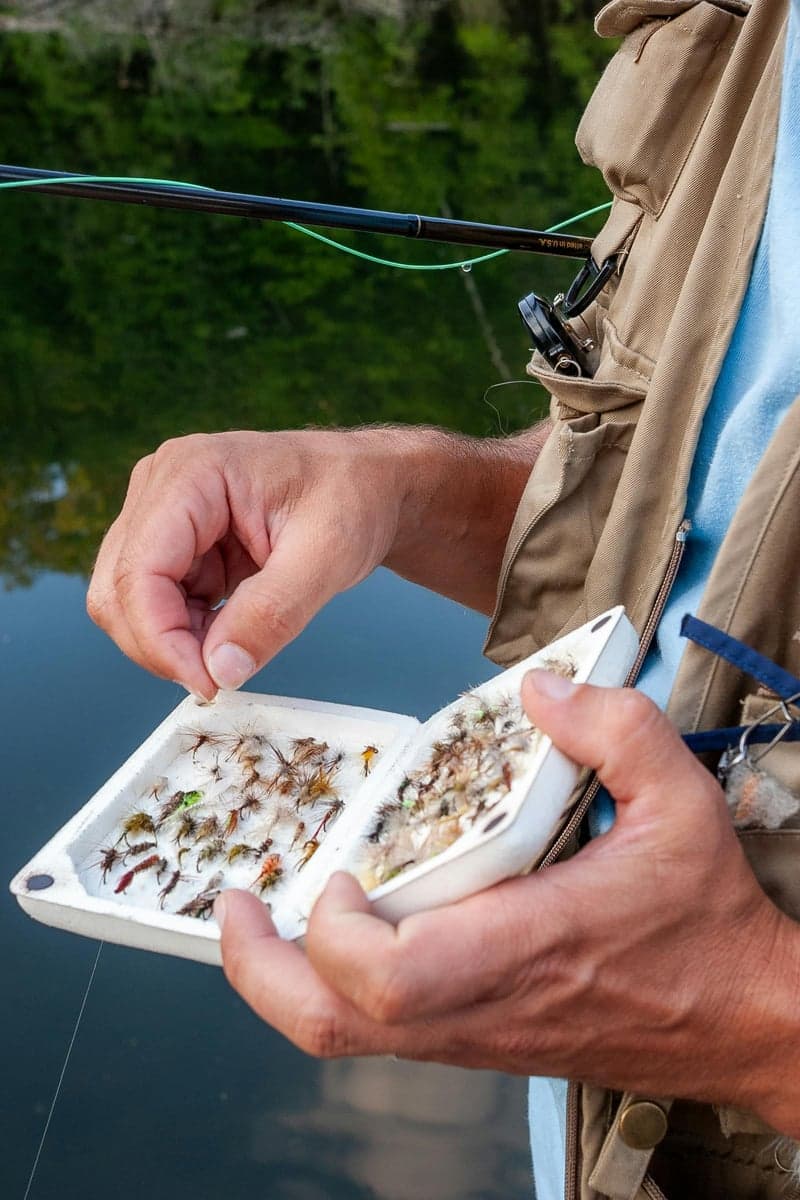
Picking a fly streamside. A South Platte box leans small: midges and Baetis in #20-26 cover most of the year across every section.
Summer opens the menu. Trico spinner falls peak from late June through August, strongest in the Deckers water at dawn. PMDs and caddis come off midday to evening. By July, hopper-dropper rigs work along grassy banks.
Key patterns: Trico Spinner (#20-24), Pheasant Tail (#18-22), Elk Hair Caddis (#16-18), Yellow Sally (#12-16), hoppers (#10-14), Copper John (#14-16).
Brown trout spawn in October and November, and the weeks before it bring the most aggressive streamer eating of the year. Woolly Bugger (#6-8), Thin Mint (#6-8), micro eggs (#18), blood midges (#20). Please read our fall spawn and redd guide and stay off the gravel.
A UV Scud (#14-18) in olive produces year-round, particularly where aquatic vegetation supports a scud population. It is one of the few larger patterns that consistently works on this river.
The most underrated season on this river. Bottom-release water keeps the tailwater sections largely ice-free, midges hatch every month, and the crowds thin dramatically. Fish feed most actively between roughly 10am and 3pm, when water temperature climbs a few degrees.
Dress in layers, bring hand warmers, and watch for ice shelves along shaded banks. Access roads can be snowpacked. See our January winter fly fishing rivers roundup for context on how this river compares.
Baetis hatches intensify through April and May and the daily fishing window widens. The dams buffer the South Platte from the runoff spikes that blow out freestone rivers, which makes this one of the better places in Colorado to fish during runoff season. Expect release increases and occasionally off-color water by late May.
Peak season and peak pressure. Tricos at dawn, PMDs and caddis midday, terrestrials along the banks. The trade is crowds, especially on the roadside sections on weekends. Summer also brings the real risk on this river: at low flows, afternoon water temperatures climb toward the point where playing a fish kills it. Carry a thermometer and stop at 67F. Our water temperature guide explains the thresholds.
Many regulars call fall the best time here. Crowds thin after Labor Day, BWO hatches return, brown trout stage for the spawn, and streamer fishing picks up in October.
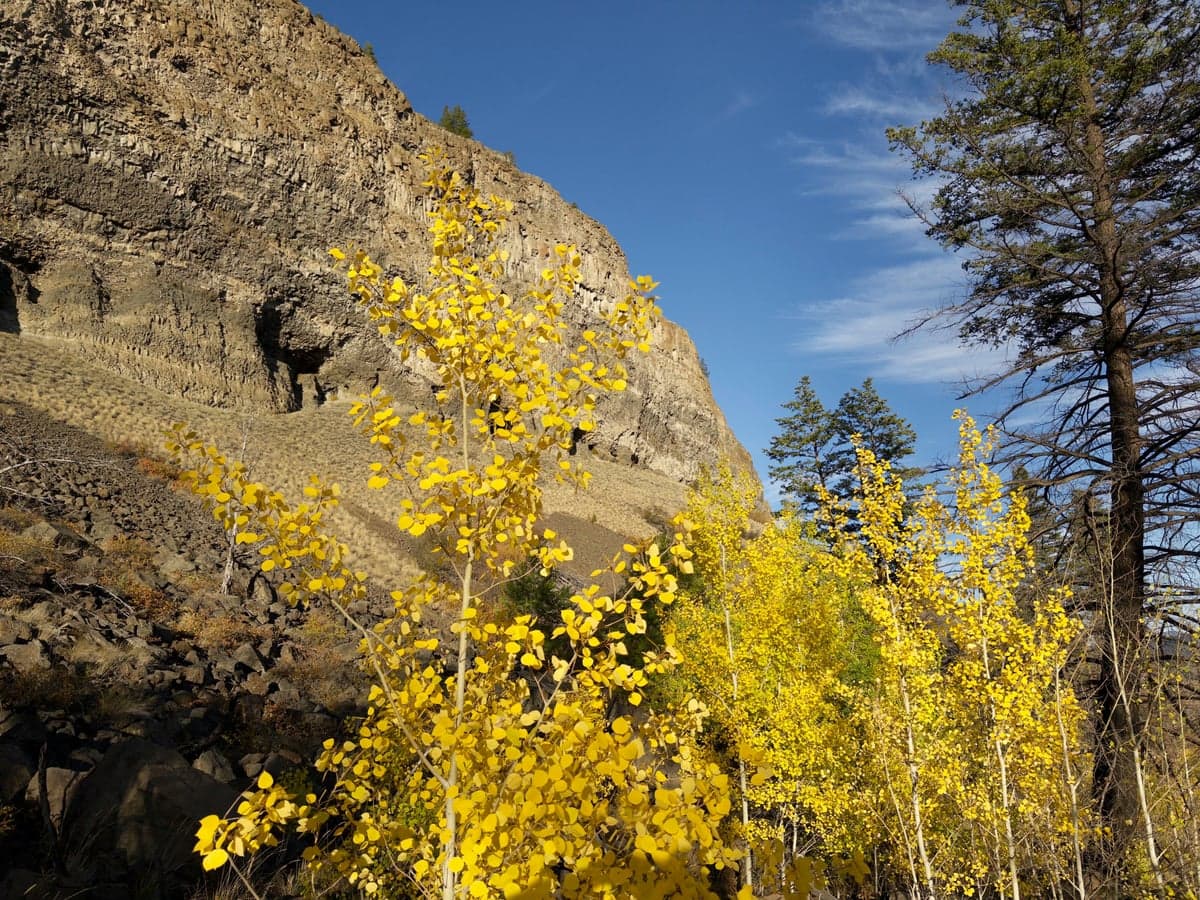
Aspens turn from late September through mid-October, which is also when the fishing peaks and the crowds finally break.
Rod. A 9-foot 4 or 5 weight is the standard setup. Some anglers drop to a 3 weight for dry fly and midge work.
Leader and tippet. Long leaders of 9 to 12 feet, tapering to 5X, 6X or 7X fluorocarbon. The clear water punishes heavy tippet more than it punishes fly choice.
Line. Floating weight-forward covers almost everything.
Wading. Felt soles grip best on granite, but check current Colorado rules before relying on them. A wading staff is smart insurance where the rocks are slick and the current deceptive.
Optics. Polarized amber or copper lenses. Sight fishing is a core technique here and you cannot do it through glare.
Net. Rubber mesh, and keep the fish wet.
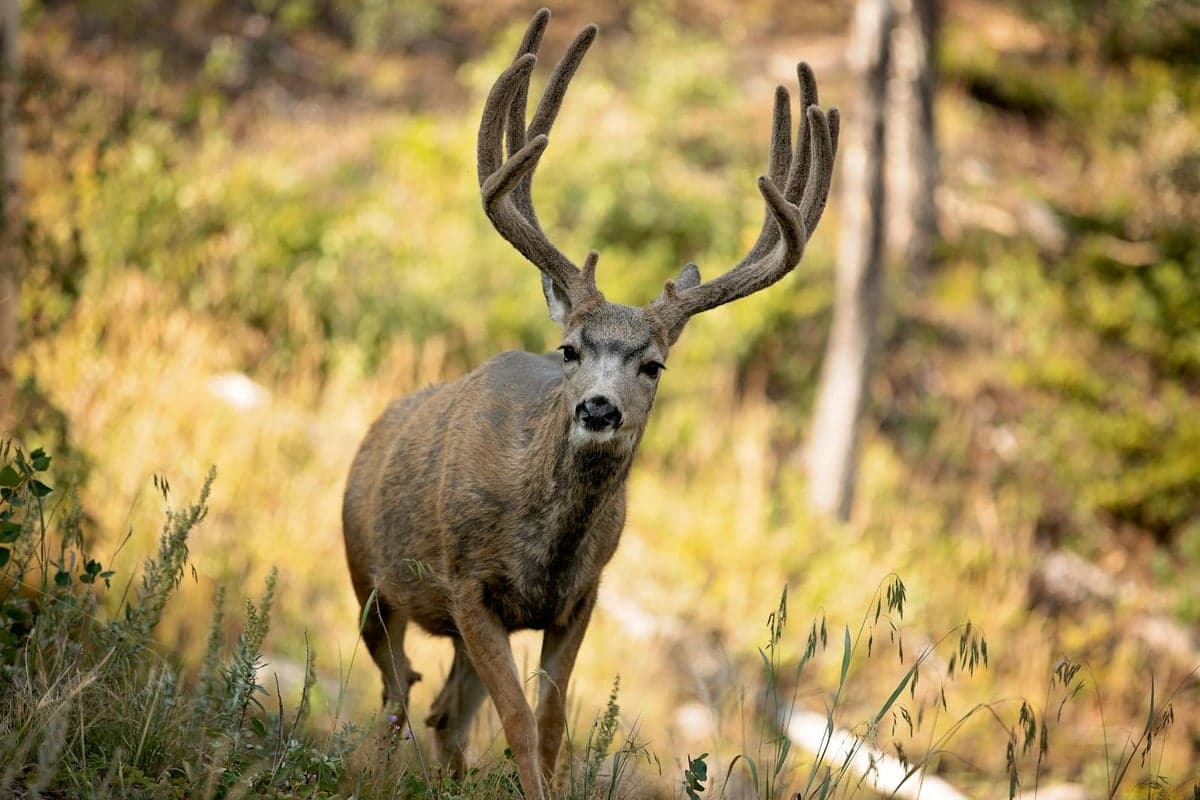
Mule deer are common along the corridor. Black bears, mountain lions, and rattlesnakes also use this country.
Wading. Granite is slick and the current is stronger than it looks at higher flows. Use a staff, and never cross water you are not confident about. A fall in January is a hypothermia emergency. Our how much CFS is too high to wade guide is a useful check.
Post-fire runoff. The 2002 Hayman Fire burned roughly 138,000 acres above the Cheesman and Deckers water, and intense thunderstorms over that burn scar can still push sediment into the river within an hour. A clear gauge reading in July does not guarantee clear water in the afternoon. The Deckers guide covers what to check before you drive.
Thermal stress on fish. The genuine summer risk here is not to you. Fish early, check the water temperature, and stop at 67F.
Wildlife. Mule deer, black bears, mountain lions, and rattlesnakes on warm rock in summer.
Roads. CO-67 and CO-126 can be icy November through March. The South Park approaches are higher and colder still.
Crowding. The roadside sections get genuinely crowded on summer weekends. Give other anglers space and do not wade through water someone else is fishing.
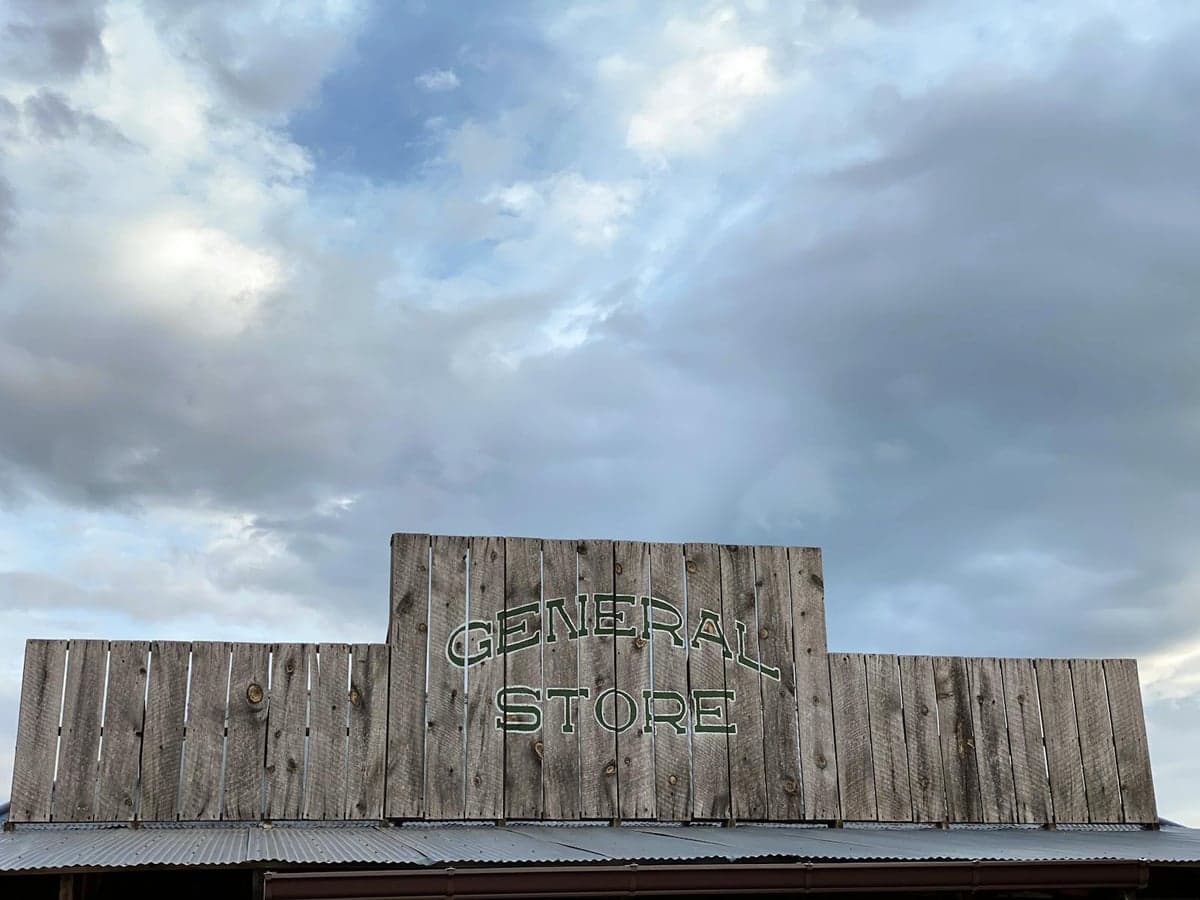
Services along this river are minimal. Deckers itself is a general store, a fly shop, and some cabins, with no restaurant, gas station, or hotel in town.
Services along the river are thin. Pack food and water for the day.
Camping. Pike National Forest campgrounds line the corridor below Cheesman, including Lone Rock, Platte River, Ouzel, Osprey, and Nighthawk. Eleven Mile Canyon has its own campgrounds inside the fee area. All fill on summer weekends.
Nearby towns. Woodland Park, about 30 minutes south of Deckers, has full services and the South Platte Fly Shop. Pine and Conifer are 25 minutes north with basic services. Colorado Springs is 55 minutes away with the Angler's Covey shop at 295 S 21st Street. Lake George and Hartsel serve the South Park sections.
For a wider trip built around the Front Range, see the Colorado destination guide and the Denver Front Range guide.
The South Platte is primarily a wading fishery, but the water below Deckers sees kayakers, tubers, and paddleboarders in summer. The signature feature is the Deckers Chutes, which American Whitewater rates as Class III- at most levels, with the surrounding run mostly Class II. Around 200 CFS is the bottom of the runnable range, with 400-600 CFS more typical for a comfortable run. American Whitewater flags body-sized sieves and overhanging rock in the Chutes and notes that near-drownings have occurred there.
Cheesman Canyon is not floatable. Boulder-choked, low flows, and no boat access make it a wading fishery only.
If you are wading during peak paddling season, expect occasional boats and give right of way to anything moving downstream.
The technical demands of this river mean a guide saves hours of frustration, particularly on your first trip. Local knowledge about which runs are holding fish at the current flow is worth more here than casting instruction.
Book well in advance for summer dates, ideally by February or March.
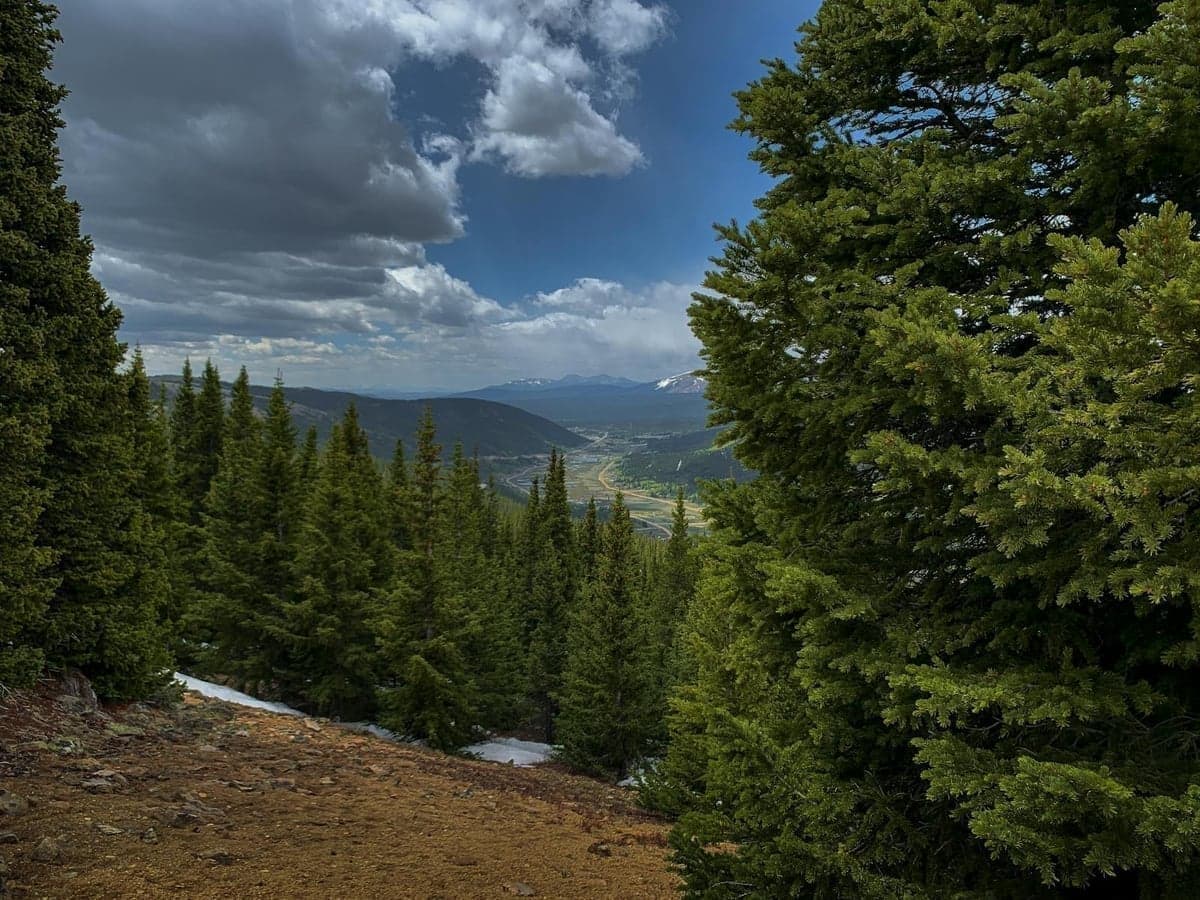
Colorado high country above a river valley. The South Platte cuts through this kind of country southwest of Denver before dropping toward the plains.
CPW electrofishing surveys give a picture of how dense this fishery is. Historical surveys in Cheesman Canyon have documented 3,700 to 3,900 trout per mile, with fish up to 21 inches, and the canyon peaked at roughly 5,500 fish per mile in its strongest years. In one survey of a 300-foot section, biologists collected an estimated 600 to 700 fish.
Species composition shifts through the drainage. The lower canyon runs roughly 70% brown trout and 30% rainbow, with the upper canyon closer to even. Cutthroats and cutbow hybrids appear throughout.
The 2002 Hayman Fire damaged parts of the watershed badly, and populations took years to recover. Pat Dorsey's reporting on the post-fire recovery tracked the slow return toward pre-fire densities. Catch and release regulations in Cheesman Canyon have been central to holding those numbers.
Where can you fly fish the South Platte River?
Four sections carry most of the fishing. Eleven Mile Canyon and the Dream Stream sit above Elevenmile and Spinney reservoirs in South Park. Cheesman Canyon and Deckers sit below Cheesman Reservoir, about an hour southwest of Denver. Each has its own regulations, flow behavior, and difficulty, and each has a dedicated guide on RiverReports.
What is the best flow for fishing the South Platte?
It depends on the section. Below Cheesman Dam, local shops put the ideal window at 150-400 CFS, with 100-250 CFS still fishing well for wading anglers and anything under 100 CFS turning ultra-technical. Above 400 CFS wading gets difficult. Because the river is a chain of tailwaters, flows track reservoir releases rather than weather.
Is the South Platte River stocked?
The Gold Medal tailwater sections below Cheesman are sustained largely by wild browns and rainbows rather than by put-and-take stocking. Colorado Parks and Wildlife stocks other reaches of the South Platte drainage. Check current CPW stocking records for the specific stretch you plan to fish.
When is the best time of year to fish the South Platte?
September through early November is the strongest all-around window: good flows, blue-winged olive hatches, thinning crowds, and pre-spawn brown trout. Winter is the underrated season on the tailwater sections, where midges hatch every month and the crowds disappear. Midsummer offers the widest hatch menu and the heaviest pressure.
Which section should a first-time visitor pick?
If you want the easiest introduction, Eleven Mile Canyon. If you want roadside access and a reasonable shot at fish, Deckers. If you want the hardest, most rewarding water in Colorado and are willing to hike, Cheesman Canyon. If you want the biggest fish and can handle wind and exposure, the Dream Stream during a migration window.
Everything this river feeds, by month. Filter by bug, category, or fly size, and switch the axis to see what comes off at what time of day. Pulled from our western hatch and forage guide.
Track South Platte River flows on RiverReports to plan trips. The site shows real-time data from gauges through the drainage alongside historical averages, so you can see how the current number compares to what is normal for the date.
How to read the number:
Compare the live reading to the historical median for today's date rather than to a fixed ideal range. A 250 CFS reading in February means a big release and unsettled fish. The same 250 in August is slightly below normal and completely routine.
Bookmark the page and check it the morning of your trip. Release schedules shift without announcement, and a flow that was perfect yesterday can be a different river today.
Weekly flow updates and fishing intel.
© 2026 RiverReports, Inc.