Quick Reference
| What | When | Key Numbers |
|---|
| Pumphouse to Radium | Late June best (post-peak runoff) | 4 mi; 2-2.5 hrs; Needle's Eye Class II-III |
| Ideal flows | Late June drops below 2,500 CFS | 1,500-2,500 CFS optimal; over 4,000 experienced only |
| Salmonfly hatch | First 2 weeks of June | Triggers at 50°F water; floats are most productive |
| Camping | Reserve via Recreation.gov | Pumphouse: $25/night + $10 day use (eff. July 2025); no cell service |
| Shuttle | Rancho del Rio | $50-105; vehicles at put-in by 1pm |
| Fishing temps | Stop at 68°F | Fish early morning; carry thermometer |
Flow686 CFS
Trendfalling
Clarityclear
Temp60-68°F
Chubby Chernobyl #10 (tan/yellow)Bionic Hopper #12 (tan)Morrish Hopper #8-10Amy's Ant #14-16
🎣 TACTICS RIGHT NOWDry FlyPeak terrestrial season — hopper-dropper rigs are the primary dry fly approach in late August. Chubby Chernobyl #10 (tan/yellow) or Bionic Hopper #12 (tan) are the top prospecting fliesfished tight to willow-lined banks with a #16 olive Perdigon or Black Zebra Midge #20 dropper. Morrish Hopper #8-10Amy's Ant #14-16Bionic Ant 2.0 #16 (black)and small grasshopper patterns #8-12 all producing along sunny banks — terrestrials are the dominant food source for opportunistic surface takes. Caddis hatches remain strong and provide the best traditional dry fly fishing — evening activity from 6-8pm is prime. Corn-fed Caddis CDC #20 (tan/olive) a standout. Elk Hair Caddis #12-18 (olive/brown/yellow)Egan's GTI Caddis #12 (olive)Double Duck Caddis #14-16Missing Link Caddis #14-16. BWO dries strengthening with shorter days and cooler mornings: Christianson's BWO #18-22CDC Baetis Dun #16-22Film Critic BWO #18-22Beefus Emerger #16-20Parachute Adams #12-22. PMD and all stonefly hatches completed for 2026.
NymphPat's Rubber Legs #10-14 (black/olive/coffee) remains the top lead fly per Cutthroat Anglers (August 19). Mercer's Poxyback Micro Stone #14-18 (dark) and TDJ Golden Stone #14-18 also producing well as lead nymphs. Tungsten Pheasant Tail #14-20 and Hare's Ear #14-20 highly effective as second fly. Olive Perdigon #16 excelling as a dropper under hopper patterns. Trailing flies: Black Zebra Midge #20olive Zebra Midge #18-22Sparkle Wing RS2 #18-22Rojo Midge #18-24RS2 #20-24WD-40 #20-24. At 686 CFS with clear waterfish are highly concentrated in structural areas — drop-offsdeeper poolsshaded runsundercut banksand well-oxygenated riffles. Fish 5-6ft subsurface for the most consistent results per Vail Valley Anglers. Clear conditions demand stealth: 6X fluorocarbon tippet15-20ft leadersapproach from downstreamstay low. Tight-line/Euro nymphing increasingly effective at these low flows. Hopper-dropper setups (Chubby Chernobyl #10 or Bionic Hopper #12 with nymph dropper) are the most versatile approach — prospect the banks with the dry and let the nymph do the work in the film.
FORECASTFlows at 686 CFS at Kremmling (USGS, August 25) — down from 716 on August 22 and continuing a steady decline from ~841 CFS at the start of August as Green Mountain Reservoir releases taper. 10-day average 721 CFS with a peak of 762 CFS. Flows remain far below the 1,500 CFS floating minimum — the 2026 float season is completely cancelled, possibly the worst drought year on record for Colorado. Nearly 460 miles of Colorado rivers are under fishing restrictions per CPW. Expect flows to continue declining into September, likely settling into the 500-650 CFS range. Afternoon water temps consistently reaching the 68-70°F danger zone. Cooler nights are beginning to provide some relief, and September should bring meaningful improvement in the thermal window as days shorten and nighttime lows drop. Fish early (5:30-10:30am) and late (6pm-dark) only. Terrestrial fishing at peak — hoppers, ants, and beetles the dominant surface pattern through September. Caddis remain the strongest hatch. BWOs strengthening with shorter days and will become dominant through fall. Wade fishing remains excellent per Cutthroat Anglers — concentrated fish, clear water, peak terrestrial season, and lower pressure than typical years. Looking ahead: September should bring cooler temps, slightly lower flows, and the beginning of fall BWO and streamer season with longer fishing windows. CPW closures on adjacent sections may be lifted as temps improve.
Overview
June on the Upper Colorado River is a transitional month that rewards those who pay attention to conditions. Early June typically sees peak runoff from snowmelt, with flows that can exceed 4,000 CFS and challenge even experienced paddlers. By late June, the river often settles into more manageable levels, opening up opportunities for a wider range of floaters.
This stretch holds Gold Medal water designation - CPW electrofishing surveys find 4,000-5,000 trout per mile in the Pumphouse to Catamount section, with 16-17 inch fish common. The largest brown ever captured here was 17 pounds.
Time your June trip right and you might catch the salmonfly hatch, experience dynamic high-water rapids, or find that window when flows drop into prime conditions.
What Makes June Different
Early June (Weeks 1-2)
- Peak snowmelt runoff typically occurs in early June
- Flows commonly range from 2,500-4,500 CFS at the Kremmling gauge
- Water is cold (45-55°F) and often discolored from sediment
- Rapids are pushy - Needle's Eye becomes Class III with large holes forming
- Best suited for experienced paddlers comfortable with higher water
- The salmonfly hatch typically begins when water temperatures reach 50°F
Late June (Weeks 3-4)
- Flows begin dropping toward the 1,500-2,500 CFS range
- Water clarity improves as sediment settles
- Temperature warms to 55-62°F
- More accessible to intermediate floaters
- PMD and caddis hatches begin overlapping with late salmonflies
- Longer daylight hours (sunrise ~5:30am, sunset ~8:30pm) mean flexibility for trip timing
Flow Windows for June
Check Colorado River flows on RiverReports before any trip. The river's hydrology is strongly influenced by seasonal snowmelt, with peak flows typically occurring in late May through mid-June.
| Flow (CFS) | June Conditions |
|---|
| 1,500-2,500 | Ideal late-June conditions - good current, manageable rapids, prime float fishing |
| 2,500-3,300 | Higher but runnable for intermediate paddlers - faster float, some scouting advised |
| 3,300-4,000 | High water - experienced paddlers only, scout Needle's Eye from river-left |
| Over 4,000 | Very high - not recommended for recreational floating, bridge clearance issues |
The optimal window for most floaters is below 2,500 CFS, which typically arrives in late June but varies year to year based on snowpack and weather patterns.
Key Sections for June
Pumphouse to Radium (4 miles)
The most popular short section, taking about 2-2.5 hours at typical June flows. Features:
- Wake Up Rapid (Class II) - straightforward warm-up at river mile 1
- Needle's Eye (Class II-III) - the signature rapid with a narrow chute. At flows above 3,000 CFS, large holes form above a center-left boulder. Scout from river-left if flows exceed 4,000 CFS.
- Mary's Wall - immediately after Needle's Eye, the river pushes right into a cliff. Stay left at all water levels.
- Radium Hot Springs & Jump Rock - natural warm springs at the takeout tucked against a popular jumping rock, a community gathering spot
Radium to Rancho del Rio (6 miles)
Longer section through the canyon with consistent riffles and a more remote feel. Takes 3-4 hours at June flows.
- Red Eye Rapid (Class II-III) - most significant feature in this section
- Yarmony Rapid - can be pushy at higher flows, stay center
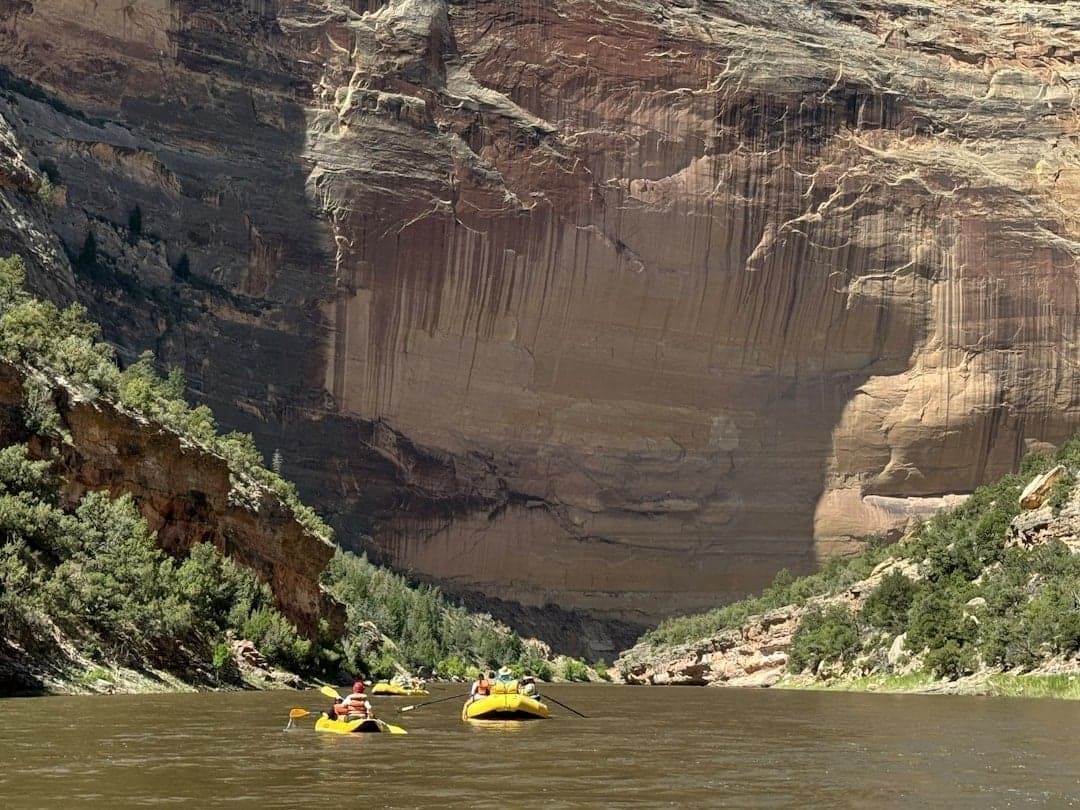
- Canyon walls and cottonwood groves provide scenic float through BLM wilderness
- 9 on-river primitive campsites available first-come, first-served
Rancho del Rio to State Bridge (4 miles)
The mellower finish, mostly Class I-II water. Good option if you want to extend your trip without adding difficulty. Takes 1.5-2 hours.
Access Points and Logistics
All access points are managed by BLM Kremmling Field Office. Note: New fee structure takes effect July 7, 2025.
Pumphouse Recreation Site
- Primary put-in for most floaters
- Three launch areas (Launch 3 is ADA accessible)
- 18 individual campsites - $25/night as of July 2025 (reservations required via Recreation.gov)
- 2 group campsites - $75/night as of July 2025, reserve by calling 970-724-3027
- Vault toilets, drinking water (summer only), firewood for sale
- Camp host on-site during summer season
- Day-use parking: $10 per vehicle (as of July 2025)
- No cell service - bring what you need; Kremmling (15 miles) is nearest town for supplies
Radium Recreation Site
- Mid-river access with two launch/takeout areas
- 9 standard campsites - $6/night
- 2 group campsites - $30/night
- Reservations available at Recreation.gov or call 877-444-6777
- No cell service at Radium or in canyon sections
State Bridge Recreation Site
- Day-use only, $5 per vehicle
- Paved boat ramp and unpaved small-craft launch
- ADA-accessible toilets, dressing rooms
- 14 miles from I-70 (Wolcott Exit #157)
- About 40 minutes from Vail, 1 hour from Steamboat Springs
BLM Contact: Kremmling Field Office - (970) 724-3000
Getting There & Road Conditions
From Kremmling: Head south on Highway 9 for one mile, turn west onto Trough Road (Grand County Road 1). Continue about 10 miles to Pumphouse, marked by a large BLM sign.
From Vail/Wolcott: Take Exit 157 off I-70, head north on Highway 131 for 12 miles to State Bridge. Continue on Trough Road north 18 miles to Pumphouse.
Road conditions: Trough Road is a maintained gravel road (also called the Colorado Headwaters Scenic Byway). It's passable for most vehicles in dry conditions but can get rough and muddy after rain. High-clearance vehicles are helpful but not required. Check conditions with BLM Kremmling if weather has been wet.
Shuttle Services
Most floaters run a two-vehicle shuttle, leaving one car at the takeout before driving to the put-in. If you only have one vehicle, shuttle services are available:
Rancho Del Rio - (970) 653-4431 or ranchodelrio.com
- Shuttles from Pumphouse to State Bridge and other combinations
- $50-105 depending on route
- Vehicles must be ready at put-in by 1:00pm for same-day service
- Online booking closes at 12:30pm for same-day shuttles
- Must sign waiver in confirmation email
- Season runs through early November
Colorado River Rentals - coloradoriverrentals.com
- Vehicle shuttle service in addition to raft rentals
Tip: Day-use fees ($5/vehicle) apply at both put-in and take-out, including for shuttled vehicles.
June Weather and Water Conditions
Air Temperature
Expect highs of 65-85°F with significant day-to-night swings (can drop to 40s overnight). Afternoons warm quickly but mornings start cool, especially in the canyon.
Water Temperature
June water temperatures typically range from 45-60°F - still cold enough to cause rapid heat loss if you swim. The salmonfly hatch triggers when water hits approximately 50°F.
Important for anglers: Stop fishing when water temperature reaches 68°F. Trout become stressed above 65°F and mortality risk increases significantly even with careful handling. Carry a stream thermometer and fish early in the day during warm spells.
What to Wear
- Early June: Full wetsuit or drysuit, splash jacket, neoprene booties, gloves
- Late June: Wetsuit or paddle jacket, synthetic layers you don't mind getting wet
- Always bring dry clothes in a waterproof bag for after the float
Hazards Specific to June
High Water Considerations
- At flows above 4,000 CFS, bridge clearance becomes an issue - you cannot float under the second bridge
- Needle's Eye rapid forms significant holes that can flip rafts above 3,000 CFS
- Faster current means less reaction time for obstacles
- At high flows, vegetation along banks can become submerged and dangerous
Strainers (Downed Trees)
Strainers are more common in June after spring floods deposit debris. They tend to accumulate on outside bends where bank erosion is greatest. In 2024, downed trees spanning the Blue River (a nearby tributary) prompted temporary closures - the same can happen here.
If you encounter a strainer: Paddle aggressively away from it. If you're swimming and can't avoid it, turn onto your stomach and try to climb up and over (never attempt to swim underneath). The current can pin you against debris with tremendous force.
Scout any unfamiliar sections, especially after recent high water events. Ask at Pumphouse about current conditions - the camp host often knows about new hazards.
Cold Water Risk
June water temperatures in the 45-55°F range can cause cold shock and rapid incapacitation if you swim. Hypothermia onset is measured in minutes, not hours. Always wear appropriate thermal protection and know how to self-rescue.
Afternoon Weather
Thunderstorms are common in June afternoons along the Colorado Rockies. Plan to be off the water by early afternoon if storms are forecast. Lightning is the primary danger - get off the water and away from tall trees.
No Cell Service
There's no cell coverage at Pumphouse, Radium, Rancho del Rio, or in the canyon sections. Plan accordingly:
- Tell someone your float plan and expected return time
- Bring a satellite communicator (Garmin InReach, etc.) if you want emergency contact capability
- Know basic self-rescue techniques
Overnight Trip Requirements
For on-river camping, BLM requires:
- Fire pan for any campfires
- Leak-proof human waste containment system
- Pack out all trash
Fishing in June: The Salmonfly Hatch
June brings the salmonfly hatch to the Upper Colorado. These massive stoneflies (2-3 inches long) emerge when water temperatures reach approximately 50°F, typically in the first two weeks of June.
Hatch Timing and Progression
- The hatch moves upstream from Dotsero through State Bridge over 1-2 weeks
- Peak emergence at any given location lasts only 3-7 days
- The really good fishing may only last a few days - usually not longer than ten
- Following salmonflies, Golden Stoneflies extend dry fly opportunities into July
Best Times of Day in June
- Early morning (6-10am): Often best - water is clearest before daily snowmelt adds sediment, and temperatures are in the safe range
- Midday: Typically slower fishing; water can become off-color as upstream snowmelt reaches your section
- Evening: Can be productive if water temps stay below 65°F; watch for caddis activity
- Rule of thumb: Clarity beats flow. 500 CFS of clear water often fishes better than 300 CFS of muddy water. Look for the clearest sections along banks.
June Fly Patterns
Salmonfly Patterns (sizes #2-6):
- Nymphs: Pat's Rubberlegs (black/brown), Bitch Creek, Girdle Bug, Yuk Bug
- Dries: Rogue River Stone, Orange Stimulator, Noble Chernobyl Salmonfly, Orange PMX
PMD Patterns (sizes #16-18): Emerge mid-to-late June
- Nymphs: Trina's Bubbleback PMD, Quasimodo Pheasant Tail, brown Micromayfly
- Dries: Pink Foam Parachute, Melon Quill, PMD Parawulff
Caddis Patterns (sizes #14-18): Kick in as runoff subsides
- Elk Hair Caddis, Lafontane Caddis Emerger, peacock caddis pupa
Tactics
- Fish near the banks in shallow water rather than mid-channel - trout follow nymphs toward shore before emergence
- Float fishing is most productive during the hatch when water is high
- Slam your fly onto the water rather than soft presentations - salmonflies are clumsy
- Try waking or skittering your dry fly for aggressive takes
- In off-color water, go big with nymph patterns (#6 or larger) and fish tight to structure
Fishing Conditions Reality Check
Early June fishing is challenging due to high, off-colored water. Float fishing becomes significantly more productive once flows drop below 2,500 CFS, typically in the second half of June. If fishing is your primary goal, late June usually offers better conditions - but call a local fly shop for current intel on hatch timing.
Trip Planning Checklist
Before You Go
Required Gear
- Coast Guard-approved PFD for each person
- Appropriate thermal protection for water temperature
- Dry bag for valuables and dry clothes
- First aid kit
- Water and snacks (plan for full-day hydration)
- Sun protection - hat, sunscreen, polarized sunglasses
Recommended for June
- Wetsuit or drysuit (early June essential, late June recommended)
- Throw rope (50+ feet)
- Repair kit for inflatables
- River map of your section
- Waterproof phone case or leave phone in car
- Stream thermometer (anglers)
Overnight Trip Additions
- Fire pan
- Human waste containment (WAG bags or similar)
- Water filter or treatment
- Camping gear (or rent from outfitter)
Guided Options
If you're new to the Upper Colorado or uncomfortable with June's variable conditions, several outfitters run guided trips:
Rafting Outfitters
- AVA Rafting - Operates from Kremmling outpost, 45 minutes from Summit County. Half-day scenic floats welcome ages 2+. Raft rentals start at $199. Contact: coloradorafting.net
- MAD Adventures - Full-day and multi-day trips from Kremmling
- Colorado River Rentals - Self-guided raft rentals with shuttle service from put-in to take-out
Fly Fishing Float Trips
- Kirks Flyshop (Grand Lake) - Half-day ($500) and full-day ($650) guided float trips. All gear provided including rods, waders, boots, flies, and boat. Lunch on full-day trips. Fish catch guarantee. Contact: kirksflyshopgrandlake.com
- Mountain Angler - Permitted on 50+ miles from Pumphouse to Dotsero. Has exclusive put-in/take-out at Yellow Dog Ranch for sections other outfitters can't access. Contact: mountainangler.com
- AVA Rafting - 4-hour guided fly fishing floats, 1-2 guests per guide. Walk & wade trips from $249. Contact: coloradorafting.net
Guided trips make particular sense in June when reading water conditions and timing the hatch requires local knowledge.
Using RiverReports
Track conditions and plan your June float:
- Check Colorado River at Kremmling flows for real-time data
- Compare current flows to historical averages to understand where you are in the seasonal pattern
- Set flow alerts to know when conditions hit your target window
Remember that June flows can change quickly. A warm spell accelerates snowmelt; cool weather slows it down. Check conditions the day before your trip, not just a week out.
Bottom Line
June on the Upper Colorado requires flexibility. Early June means high water (2,500-4,500 CFS), cold temperatures, off-color water, and technical rapids - it's for experienced paddlers who know what they're getting into. Late June, once flows drop below 2,500 CFS, opens up to a wider range of floaters.
The key is watching the gauge and being willing to adjust your plans. Check flows the day before, not a week out. Have backup dates if possible. And remember: no cell service means you need to be self-sufficient once you're on the water.
Get the timing right and you'll find excellent fishing, canyon scenery, and far fewer people than Colorado's more famous rivers.
For summer floating after runoff, see our Upper Colorado Summer Guide. For statewide conditions, visit Colorado rivers.