
Alpine Lake Fly Fishing: The Complete Guide
Everything you need to know about finding fish in high-country stillwater
Greg Lamp
June 20, 2025
10 min read

Not every alpine lake holds fish - but the ones that do can provide some of the best fishing you'll experience
TLDR
Alpine lake fishing is different from river fishing. You're not matching hatches. You're not reading current. You're hunting cruising fish in water that receives most of its food from above - literally dropped from the sky by mountain winds.
The keys: find the shelf, fish ants (always), and be patient. Trout in lakes have to cruise to your fly. Sometimes you wait two minutes staring at a dry fly before a fish materializes beneath it.
Finding Productive Lakes
Not every mountain lake holds fish. Some never had any. Some were stocked decades ago and winterkilled. Others are packed with stunted 6-inchers. The trick is doing your homework before the hike.
State Fishery Surveys
The Colorado Parks & Wildlife stocking report tells you exactly what got stocked where and when. This is public data, updated weekly during stocking season. Each record includes an Atlas link showing the exact location.
What to look for:
- Recent stocking (last 1-3 years) = fish are probably still there
- Multiple years of stocking = population may be self-sustaining
- Species variety = different management approaches (cutthroat vs. brook trout vs. tiger trout)
CPW stocks around 350,000 trout into 500+ backcountry lakes annually using aerial stocking from modified Cessnas. Fish dropped from planes survive better than you'd think - they're small enough that air resistance slows their descent.
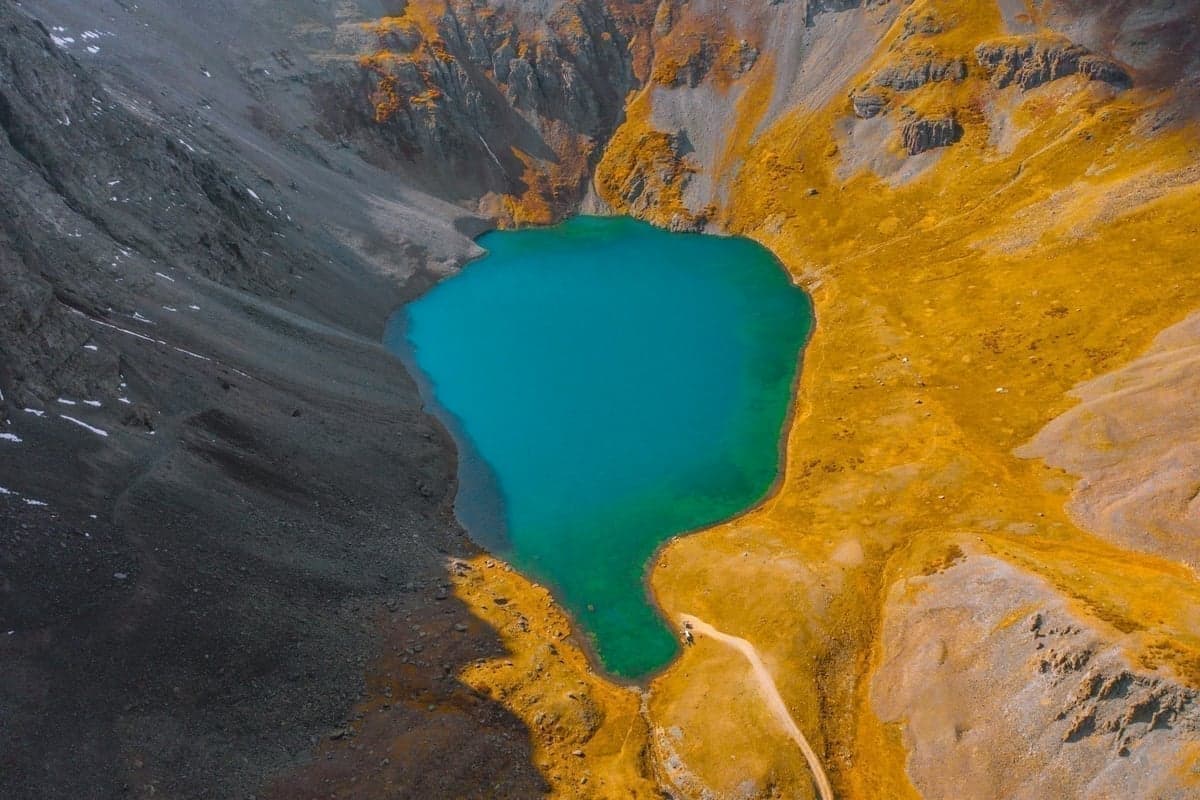
Alpine lakes from above - many get stocked by plane because there's no other way to reach them
The Boom and Bust Cycle
Lakes have personalities. Some support natural reproduction. Many don't.
In lakes without spawning habitat, fish populations follow the stocking schedule. Stock a lake with fingerlings one year, hike in three years later to find 16-inch slabs. Return the following year and find nothing but 4-inch fish from a fresh stocking.
This is why the stocking data matters. It tells you where a lake is in its cycle.
A Note on Spot Burning
Don't do it. There's a special place in hell reserved for people who publish GPS coordinates to productive alpine lakes online.
Yes, there are books claiming to guide you to "800 High Lakes" or whatever. A lot of that information is incomplete or incorrect. The best lakes are the ones you find yourself, or learn about quietly from someone who trusts you.
The Shelf: Where Fish Cruise
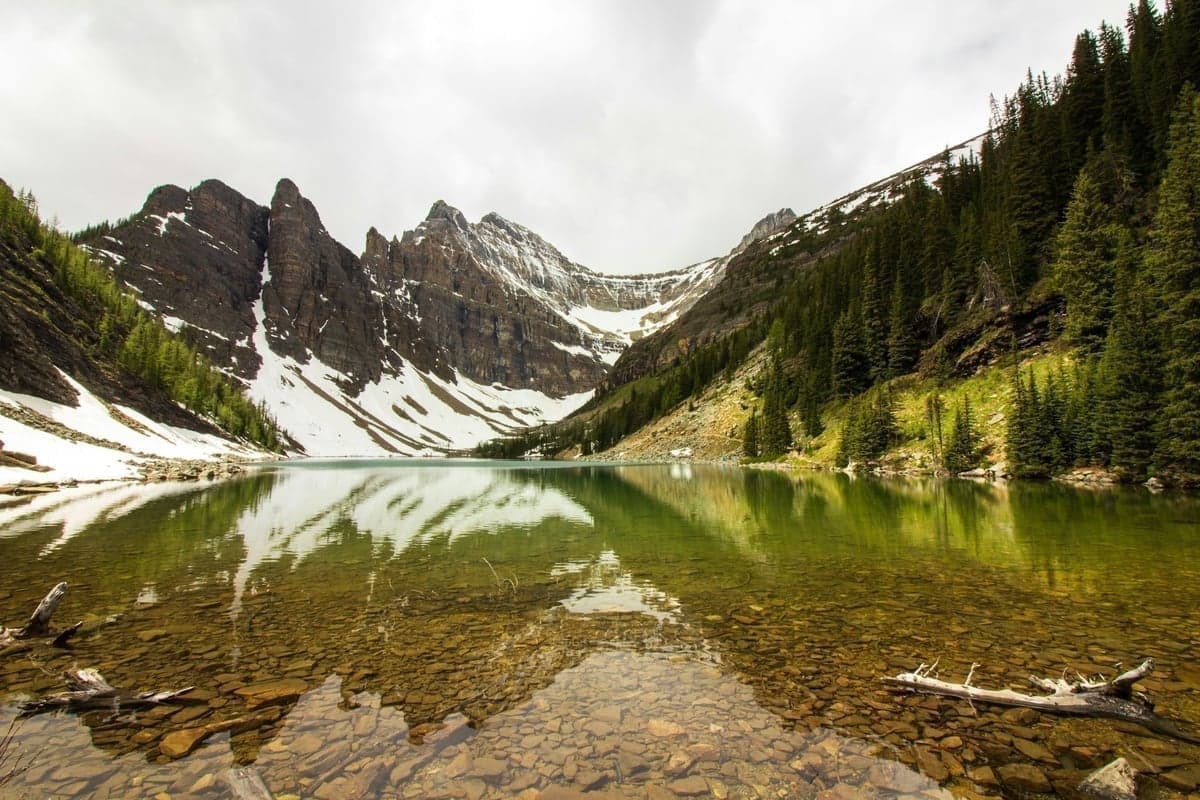
The drop-off from shallow shelf to deep water - fish cruise this edge constantly looking for food
Every alpine lake has shallow water near shore that drops off into deeper water. That transition - the shelf - is where the action is.
Trout patrol the shelf edge like sharks. They're looking for anything that dropped in, washed in, or drifted over from the shallows. If you don't know what to do, wade out until you can cast just beyond the shelf break, then wait.
This is fundamentally different from river fishing. In moving water, fish hold in feeding lanes and current brings food to them. In stillwater, fish must cruise to find food. They're coming to you - or they're not. Patience is the game.
Some days you cast, wait two minutes, and a dark shape materializes beneath your fly. Other days nothing shows. That's alpine lake fishing.
Food Sources: It's Coming From Above
Here's what most anglers miss: alpine lakes don't have the insect diversity of rivers. There are no prolific mayfly hatches at 11,000 feet. The food chain is simpler - and most of it falls from the sky.
Upslope Winds: The Insect Conveyor Belt
As the Denver Post documented, mountain lakes receive a constant supply of terrestrial insects through a phenomenon called anabatic wind.
Here's how it works: Morning sun heats the high ridges while valleys stay cool. The temperature difference creates updrafts that pull air from the valley floor up to higher elevations. Weak-flying insects get swept up and carried toward the peaks.
But lakes act as heat sinks. By afternoon, the water is significantly cooler than surrounding land. When insect-laden air hits this cold spot, the bugs drop like rain.
"Sometimes there'll be tens of thousands of flying ants, spiders, lady bugs, small grasshoppers," says Stuart Andrews, a Colorado guide who specializes in high-country lakes. "Fish will key on them and just graze like cattle on the surface."
Langmuir Circulation: The Foam Lines
When wind blows across a lake surface, it creates rotating tubes of water running parallel to the wind direction. Where adjacent tubes meet, surface debris collects into visible foam lines.
These wind lanes concentrate everything that's floating - insects, pollen, bubbles. Trout know this. They cruise the foam lines into the wind, picking off food from the surface.
If you see foam lines forming, position yourself downwind and fish along them. The trout are essentially grazing a buffet line.
Ants: The Universal Pattern
Ants are everywhere at elevation. Even when you don't see them, they're falling into the water.
They range from size 22 micros all the way up to size 14. They come in black, red, or red-and-black. And they're absolutely helpless once they hit the film. Unlike beetles or hoppers, ants don't kick or struggle much. They just stick in the surface tension and wait to be eaten.
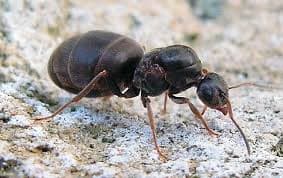
Ants - the most important terrestrial pattern for alpine lakes, and often overlooked
Flying Ants
Flying ants perform mating flights in summer. When these swarms happen over water, the fishing can be exceptional. Fish that normally sip carefully will slash at the surface during a flying ant fall.
Even when there's no visible ant activity, an ant pattern should be your first choice. Fish see ants constantly. They eat them reflexively.
Pattern Selection
I approach ant patterns two ways:
Impressionistic but visible: Foam ants or bionic ants. These float well, are easy to see, and require zero maintenance. They're not trying to be perfect - just ant-shaped and floating.
Natural and subtle: Fur ants tied sparse and low. These sit in the film like real ants. They're harder to see but deadlier when fish are wary.
Start with foam. Go subtle if they refuse.
The Fly Box: What Actually Works
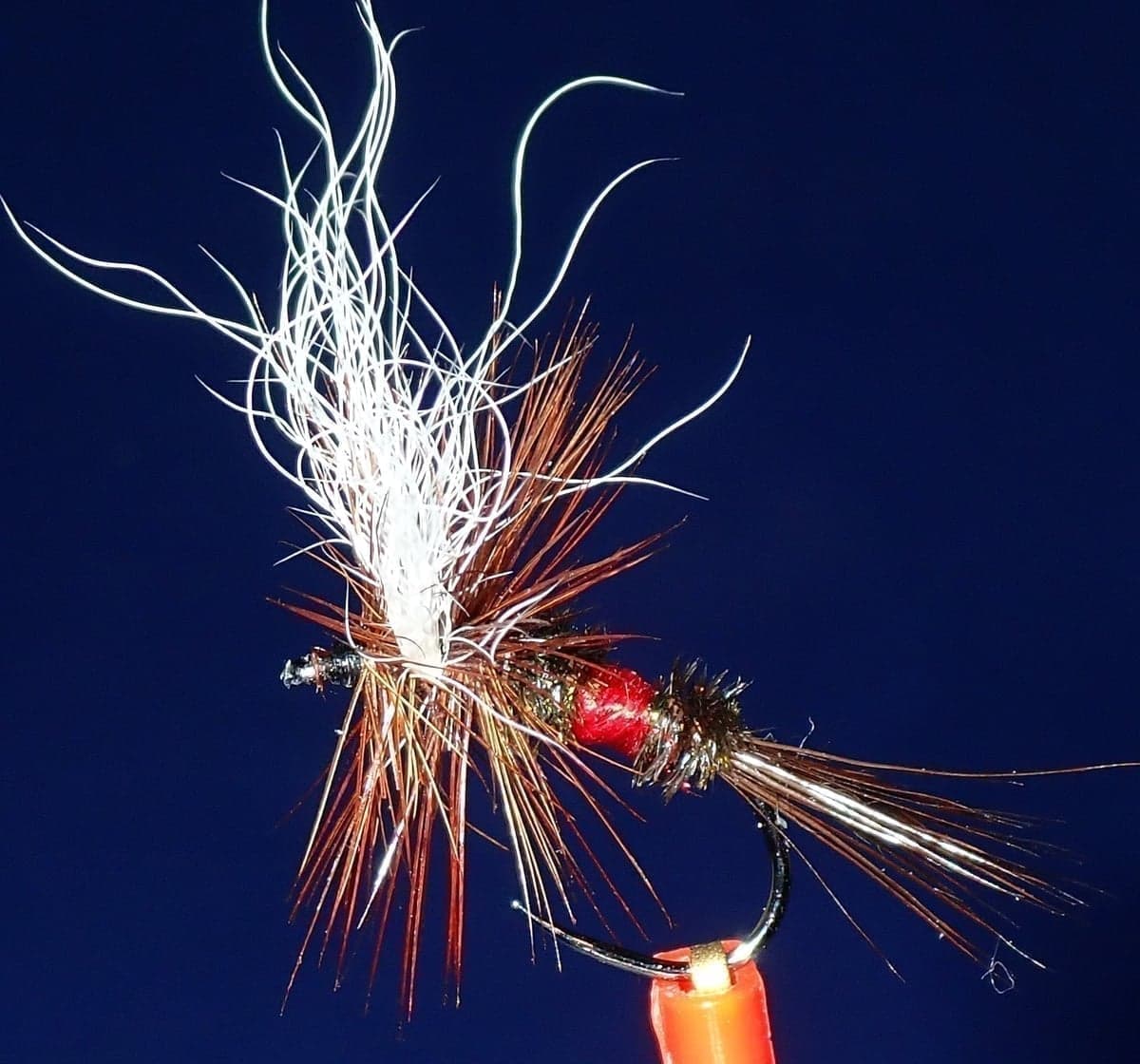
The Royal Wulff - fish take it for an ant, it's easy to see, and it's an absolute classic
Dry Flies
Ants (#14-22): The single most important pattern. Black, cinnamon, or red-and-black.
Beetle (#14-18): Fat, black, and stupid-looking. Fish eat beetles almost as readily as ants.
Elk Hair Caddis (#14-18): Alpine lakes have caddis. Even when you don't see them, this fly works.
Royal Wulff (#14-16): Pro tip - fish take this for an ant. It's absurdly easy to see and looks good doing it. The red band and peacock herl suggest the coloration of many terrestrials.
Chubby Chernobyl (#10-14): Yes, this works at 11,000 feet. Sometimes fish want a cheeseburger. Offer it.
Rusty Spinner (#16-20): Even in lakes without mayflies, fish recognize the spent-wing profile. Worth having.
Subsurface
When dries don't work (or you want to cover more water):
Brassie with neon orange bead (#16-18): Personal favorite. The flash triggers strikes from cruising fish.
Scuds (#14-16): Green or orange. Don't overcomplicate these - orange or olive ice dub, scruffed up with a brush. That's it. Scuds are abundant in productive alpine lakes.
Leeches (#10-14): Black or olive woolly buggers work fine. Fish them slow with long strips.
Egg patterns: Fish eggs, egg-sucking leeches, anything with a bright bead or hotspot. These trigger aggression in fish that see competitors eating.
When There's No Surface Activity
Fish dries anyway.
Seriously. Alpine trout are opportunistic. They spend energy cruising for food - they don't pass up easy meals on top even when nothing's "hatching."
Cast your ant or beetle to the shelf edge and wait. Give it two full minutes before recasting. The trout has to find your fly. Moving it constantly defeats the purpose.
If nothing happens after 30 minutes of patient dry fly work, switch to subsurface. An egg pattern or flashy brassie fished slow along the shelf will find fish that aren't looking up.
When Fish Are Rising
Match the size more than the exact pattern. If fish are sipping something small, they're probably on ants or midges. Size 18-20 black ant or a griffith's gnat.
If rises are splashy and aggressive, they might be chasing caddis or small terrestrials. Elk hair caddis or a beetle.
The Royal Wulff works in both situations because it's visible, it floats, and fish seem to accept it as "food."
Early and Late: Mouse Flies
If you're camping at a lake (or willing to hike in early/out late), fish mouse patterns at dusk and dawn.
Big cutthroat and brook trout are predators. In low light, they hunt the shallows for anything meaty - mice, voles, baby birds, frogs. A deer hair mouse skated across the surface triggers brutal strikes.
This isn't subtle fishing. You're making commotion and waiting for something to smash it. Fish near structure - logs, boulders, undercut banks where a mouse might enter the water.
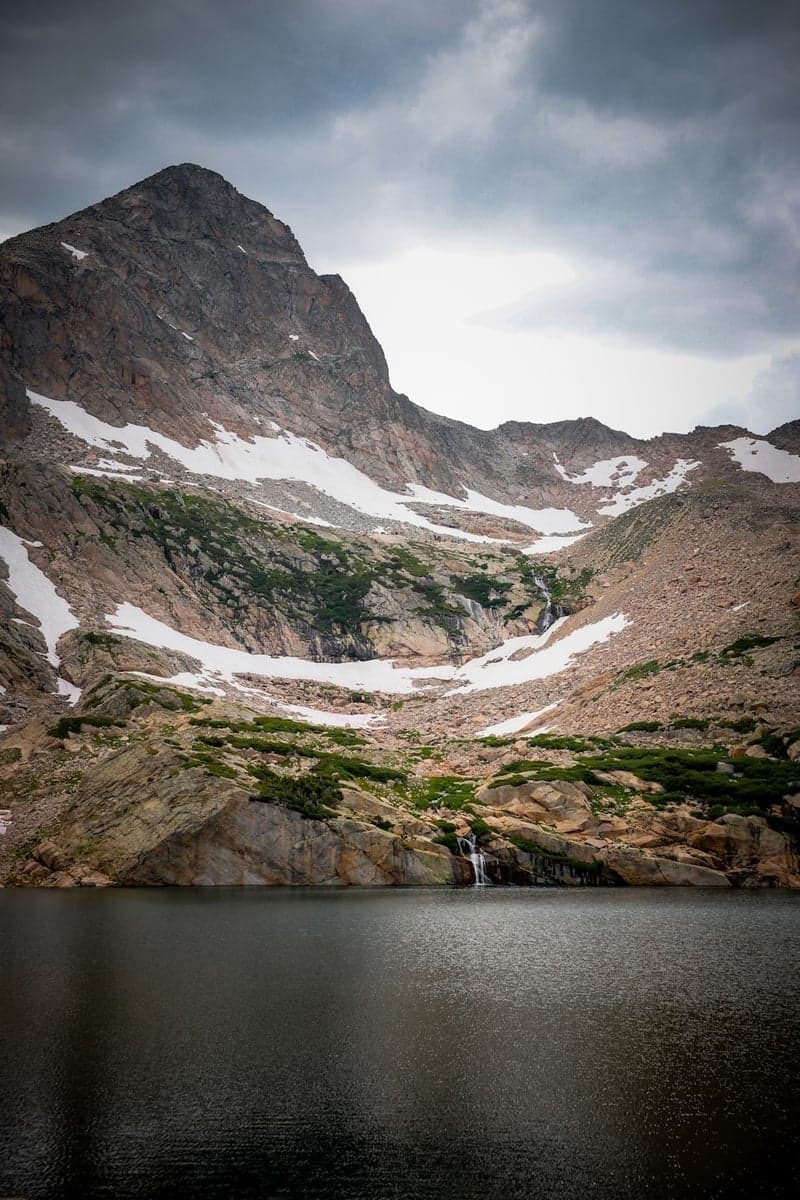
Snowmelt feeding an alpine lake - early season can be excellent as fish wake up hungry from winter
Species and Expectations
Cutthroat
Colorado, Wyoming, Utah, and Montana all have excellent high-country cutthroat options. Many are subspecies specific to certain drainages - Colorado River cutthroat, Bonneville cutthroat, Yellowstone cutthroat.
Cutthroat are generally more willing dry fly eaters than other trout. They're also more fragile - handle with wet hands and release quickly.
Brook Trout
Brookies reproduce prolifically in alpine lakes. This is both good and bad. Some lakes are full of 14-inch fish. Others are packed with stunted 6-inchers competing for limited food.
Check stocking data. Lakes actively managed for brook trout (sometimes with sterile predators like tiger muskie or splake) tend to have better size quality.
Other Species
Some states stock tiger trout (sterile brook x brown hybrids), splake (brook x lake hybrids), golden trout, or arctic grayling in high lakes. Check your state's management plans. These specialty stockings can provide unique fishing opportunities.
Putting It Together
-
Research before you hike. Check stocking reports. Know what's there.
-
Find the shelf. This is where fish cruise. Cast just beyond the drop-off.
-
Fish ants first. They're always eating ants, whether you see them or not.
-
Be patient. In stillwater, fish come to you. Wait for it.
-
Watch for foam lines. Wind lanes concentrate food. Fish know this.
-
Dawn and dusk for big fish. Bring a mouse pattern if you're there during low light.
-
Keep it simple. A dozen patterns cover 90% of situations. Ants, beetles, elk hair caddis, Royal Wulff, scuds, leeches. You don't need more.
The best part of alpine lake fishing isn't the fishing - it's the places it takes you. Miles from roads, surrounded by peaks, watching cutthroat materialize from gin-clear water to eat your fly.
That's worth the hike.
Resources
- CPW Stocking Report - What got stocked where and when
- Colorado Fishing Atlas - Interactive maps of fishable waters
- Utah DWR Stocking Database - Utah's equivalent resource
- Check out our Utah alpine lake stocking guide for more on how states manage these fisheries
Get River Intel Weekly
Flow updates and fishing intel delivered every Thursday.
River Intel Weekly
Weekly flow updates and fishing intel.
© 2026 RiverReports, Inc.