Carp on the Fly: Where to Go and When to Show Up
The hardest sight fishing in freshwater North America is free, it's close to home, and almost nobody is doing it
Greg Lamp
August 27, 2026
10 min read
The hardest fish in freshwater is in your town
Every blog post on this site until now has been about trout. That's a defensible bias if you live in Bozeman. It's a strange one if you live in Denver, Portland, Milwaukee, Austin, or anywhere near a big flat river, because the most technically demanding sight-fishing target in freshwater North America is sitting in the shallows twenty minutes away, and you drove past it to go stand in a crowded tailwater.
Dan Frasier, who wrote the Orvis guide to carp flies and has fished for them almost exclusively for years, puts the difficulty in perspective: it's harder to get a rising carp to eat a dry fly than a rising trout, and a feeding carp is a tougher customer than a redfish in the same situation. He also argues the fish varies so much by water that no universal rule survives contact with a new flat.
Carp get called "golden bonefish," which undersells the problem. A bonefish will eat a fly that lands in the neighborhood. A carp studies it, thinks about it, and leaves.
Why they're this hard
Three things stack up against you before the fish's own experience even enters into it.
First, carp are visual bottom feeders in shallow water, which means they are looking down and forward at a very small window. A fly that lands two feet away might as well be in another county. Guides on the Columbia will tell you to put it within inches of the head.
Second, the state of the fish matters more than the fly. A carp cruising along at a steady clip is not going to eat, and casting at it usually just burns your position. A carp that's tailing, head down in the mud with its tail breaking the surface and a puff of silt drifting off behind it, is the shot you wait for. Learning to tell those two apart is most of the game.
Third, the eat is almost nothing. Carp inhale, and if they take your fly on the drop you may feel nothing at all. Watch the fish instead of the line. When the tail flicks, the head tips down, or the mouth flares white, come tight with a strip set. A trout-style hook set lifts the fly straight out of the zone.
And one blown cast really does cost you the flat. Carp are sensitive to vibration through the water, and a hard-landing line or a wake pushed off your knees will send one fish bolting, which sends the rest of the pod with it. You get one chance per pod, sometimes one per morning.
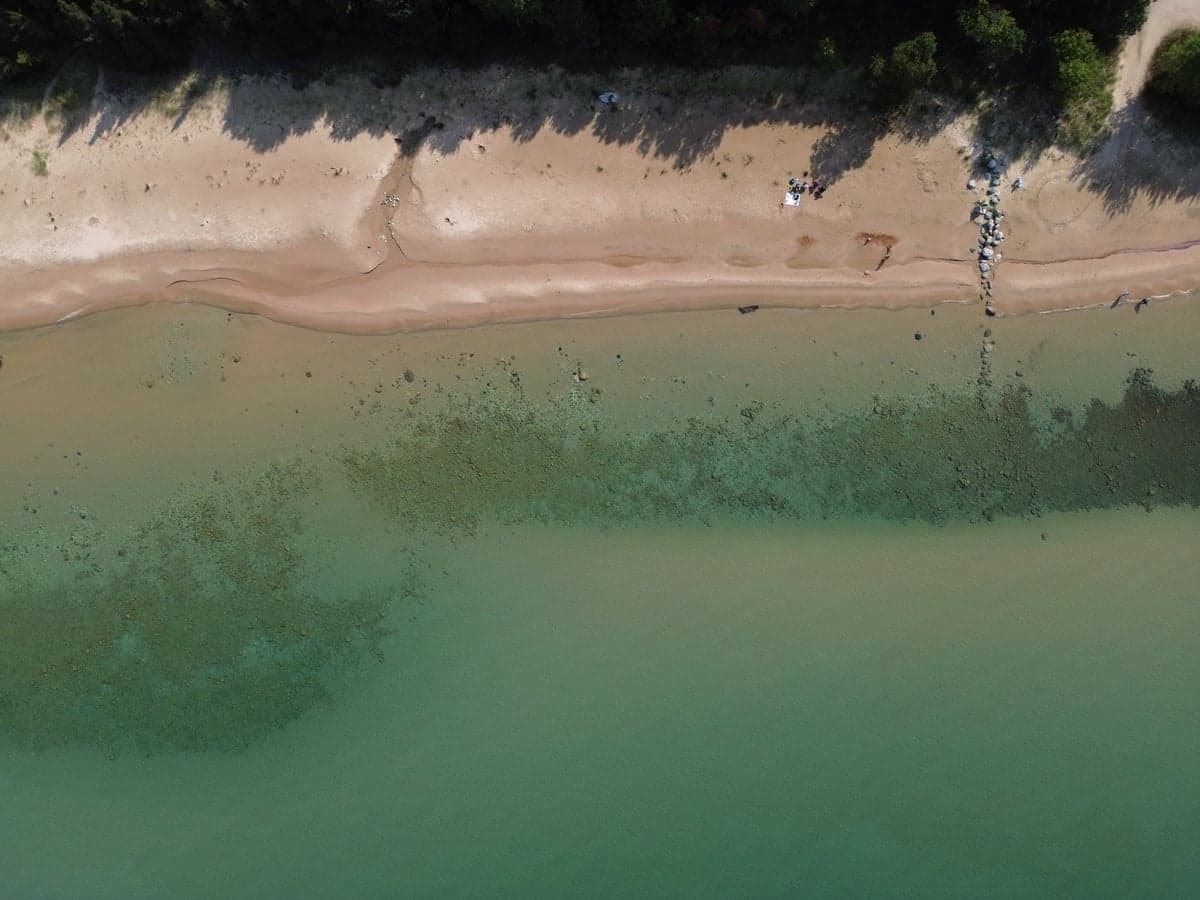
Northern Lake Michigan near Bliss. Sand, gin-clear water, and carp that behave exactly like bonefish.
The Great Lakes: the flats fishery nobody planned
Northern Lake Michigan is the real thing. From late May through early July, carp in the 10 to 30 pound class move out of deep water onto the sand flats around Beaver Island and Grand Traverse Bay to spawn and feed. The water is clear enough that you're spotting fish at a hundred feet, wading in knee-deep water, and watching a 20-pounder take 100 feet of line.
Beaver Island requires a ferry or a small plane, and the guides who built the fishery, Kevin Morlock and Steve Martinez, book out early. Grand Traverse Bay is a drive. Green Bay and the Wisconsin shoreline hold the same fish with less traffic.
Check Michigan flows and Wisconsin flows mostly for the tributaries here, because what actually shuts this fishery down is wind. A 15-knot chop on a sand flat means you can't see, and if you can't see, you're not carp fishing.
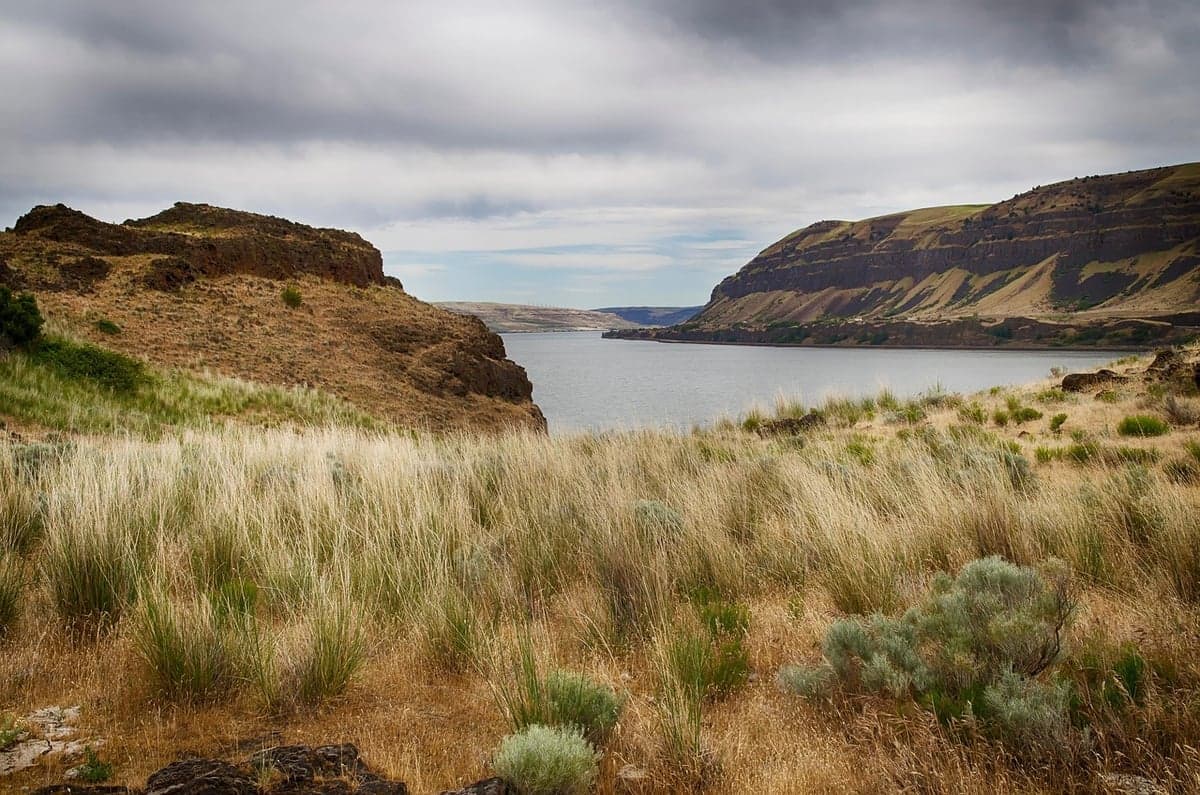
The Columbia's sagebrush banks hide miles of shallow bays and gravel shelves. Most of them have never seen a fly.
The Columbia: miles of flats and no one on them
The Columbia from The Dalles east through Umatilla is warmer, shallower along the edges, and stacked with carp from 5 to 30 pounds. June through August is the window, after runoff has passed and the bankside water has warmed. The Northwest Fly Fishing Outfitters crew and shops in Hood River treat it as a real season, not a novelty.
The technique here is walking. You cover bank slowly, looking for mud puffs, nervous water, and tails, and you cast only at fish you can see. Washington has required a recreational fishing license to fish for carp since June 2024, so don't assume the old rules apply.
For trip planning, watch Washington flows and Oregon flows. The Columbia itself is dam-regulated and doesn't spike the way a freestone does, but its tributaries do, and a blown-out Yakima or Deschutes will push a mud plume into the mainstem that kills visibility for days.
Denver, Austin, and the Upper Mississippi
The South Platte turns warmwater as it leaves Chatfield and runs straight through downtown Denver, and it holds 8 to 20 pound carp that Rick Mikesell has been guiding anglers to for years. Most of the corridor is walkable from the Platte River Trail, so you can fish it on a lunch break. The locals take it seriously enough that Denver Trout Unlimited, a trout chapter, runs an annual Carp Slam tournament on this river that reached its nineteenth year in 2025 and raised over $70,500 for restoration work on the Chatfield-to-120th-Avenue stretch. If you want the trout side of the same drainage, we cover it in the Denver Front Range guide.
Fish it with the right expectations, though. The Front Range carp scene is not a secret anymore, and the water from downtown Denver north through Boulder gets walked most summer mornings. That matters more for carp than it does for trout, because carp are long-lived and they don't wander. Common carp routinely live twenty years or more, and they spend those years on the same few flats. The 15-pounder tailing in front of you has had a rubber-legged crayfish dropped on its head before, more than once, and it has been hooked and turned loose to think about it. Those fish refuse a lot. Longer leaders, smaller and drabber flies, and a first cast you don't waste matter more there than they do on water nobody fishes.
Austin's Lady Bird Lake is one of the best carp fisheries in the world and it's downtown, under the bat bridge. The TPWD water body records list a 44.25 pound common carp on rod and reel and a 33 pound fish on the fly, which tells you what's swimming past the paddleboards. More on the region in our Texas fly fishing guide.
The Upper Mississippi through Minnesota is the sleeper, along with the St. Croix and the lakes around the Twin Cities. The Ridge Fly Fishing puts it this way: on a calm morning, find a flat sunny bank on the Mississippi and you might see a dozen feeding fish move past you in an hour. Missouri's stretches hold the same fish, and MDC sets no bag limit on common carp.
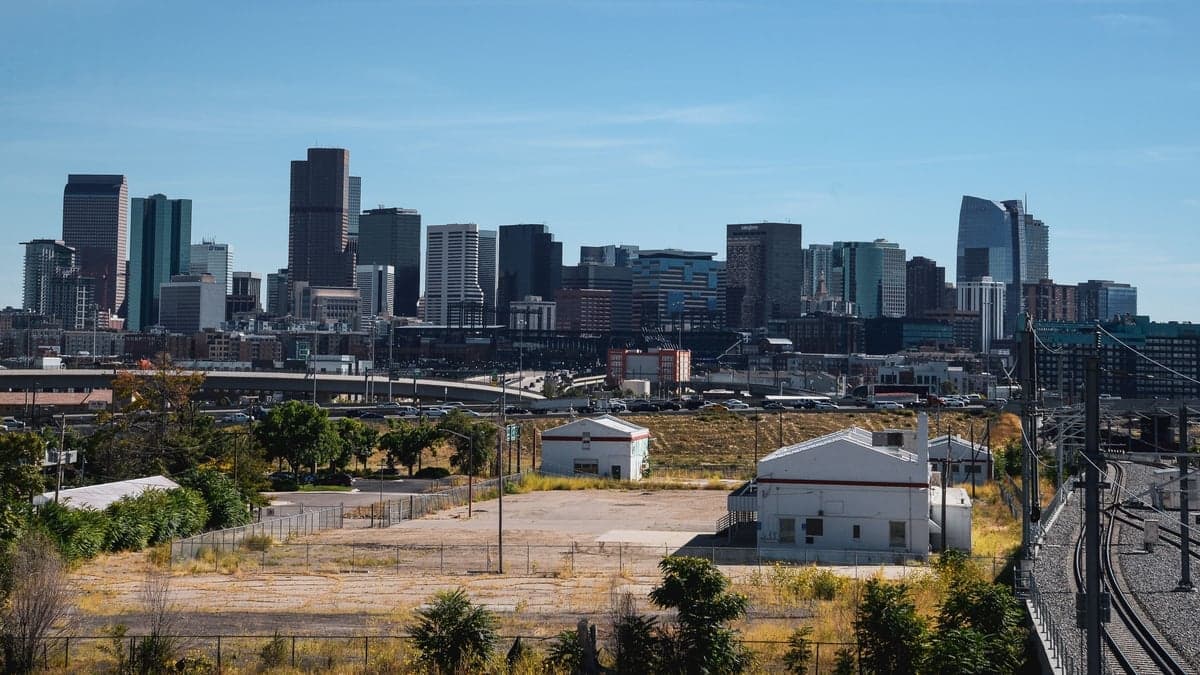
Downtown Denver. The South Platte runs through the middle of this and holds 20-pound carp.
When: flow first, then temperature
This is where a flow app actually earns its keep, because carp fishing on a river is a clarity problem before it's anything else.
The pattern is simple. Runoff and storm flows push carp off the shallow edges and turn the water to chocolate, and you cannot sight fish what you cannot see. As flows drop and the river clears, those same edges become feeding flats and the fish move up onto them. On the Denver South Platte the gauge has recorded flows as high as 5,500 cfs, while late-summer baseflows through town often sit under 500. Those are two completely different rivers. One is a sight fishery and one is a drive home.
Practical rule: before you commit to a carp day, pull up your Colorado flows or whichever state you're in, and look at the trend rather than the number. A river that has been dropping steadily for a week is clearing. A river that spiked yesterday is not, no matter what today's reading says. If you want the fundamentals on reading those numbers, start with understanding CFS.
Temperature is the second gate. Carp go dour and largely stop feeding when water drops below the mid-50s, and they turn on as it climbs through the low 60s. The Minnesota guides key on exactly that: water into the 60s, fish onto the shallows. Summer heat doesn't hurt you here the way it hurts trout. August, when your favorite trout river is under a hoot owl closure, is prime carp time.
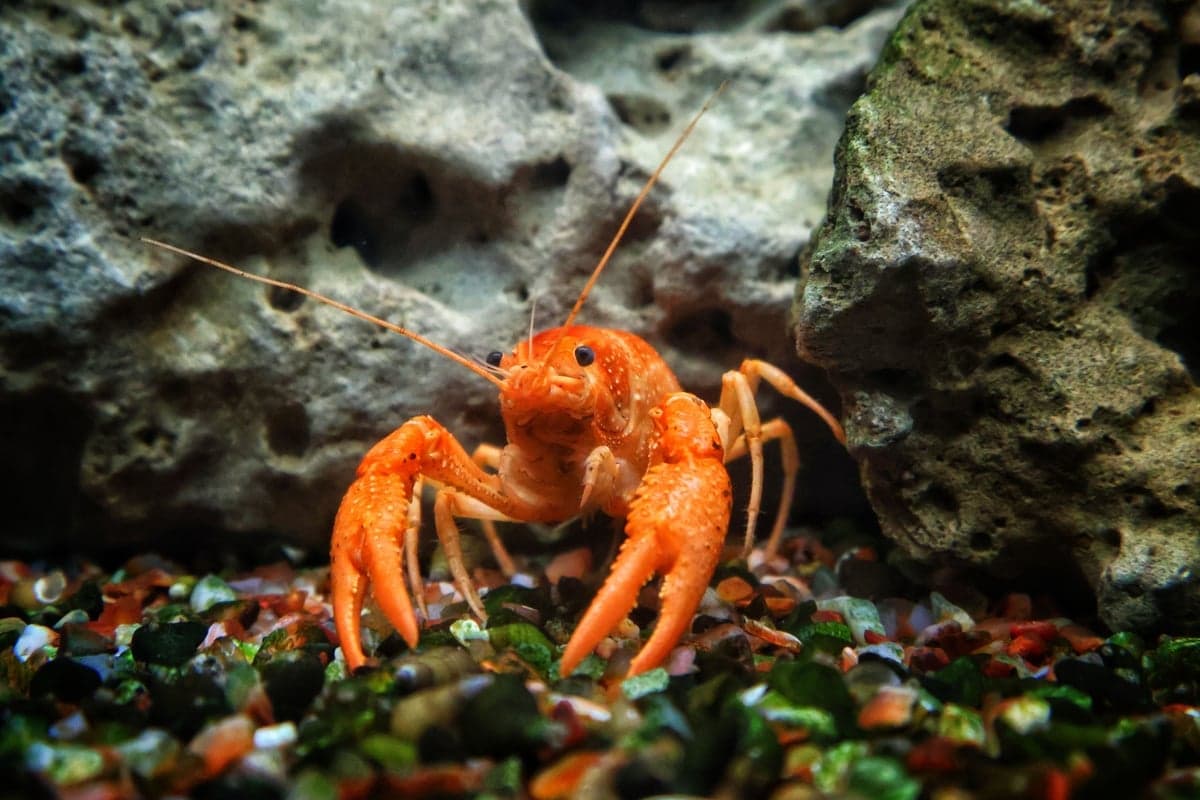
Crayfish are the protein carp are digging for on most river and lake flats. Match the size and the sink rate, not the artwork.
The cast, and three flies
The presentation that catches carp is the drag-and-drop. Cast a weighted fly past the fish, keep the rod high so only the fly touches down, drag it across the surface film until it's sitting above the fish's head, then drop the rod tip and let it fall straight into a dinner-plate-sized zone in front of its nose. Feeding carp are moving slowly, so you have time to set this up.
Fly selection is not the hard part and I'm not going to pretend otherwise. Carry a crayfish pattern in rust and olive, a soft buggy nymph like John Montana's Hybrid, and Jay Zimmerman's Backstabber, which rides hook-point up and has probably accounted for more carp than any other commercial pattern. Sizes roughly 1 to 2.5 inches. Drab natural colors. That's the box.
Sink rate matters more than pattern. On a hard sand flat you want the fly to land softly and settle slowly. In two feet of soft silt you need weight, or the fly disappears into the mud where the fish will never find it.
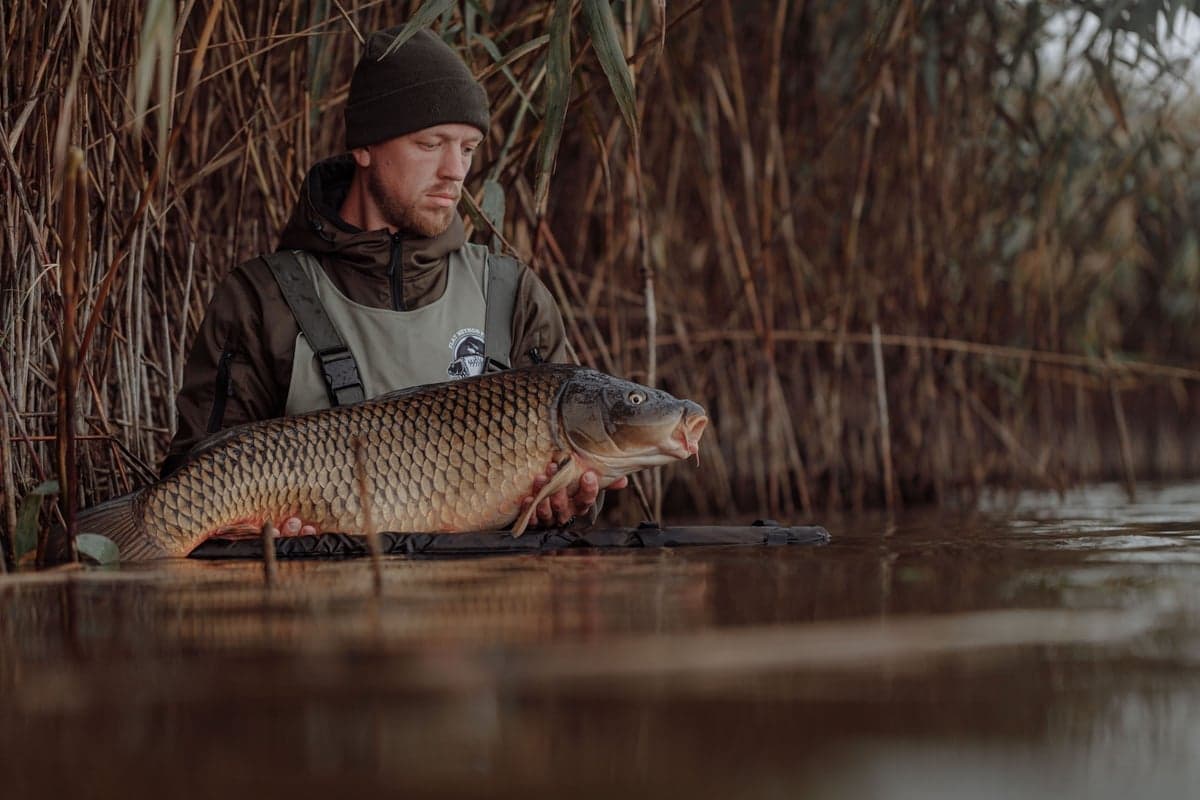
What the walking is for. A fish this size will have your fly line gone and your backing moving before you decide what to do about it.
Gear: 7 or 8 weight, and why
A 7-weight is the everyday carp rod and an 8-weight is the wind-and-big-fish rod. This has nothing to do with the fly, which is small. It has to do with delivering a weighted fly accurately at 40 feet into a breeze, and then holding a 15-pound fish that is going to make one long, ugly run.
Floating line. A 9 to 10 foot leader tapered to 12 to 16 pound fluorocarbon, because carp live around rock, mussel shell, and rebar, and 5X will not survive contact with any of it. A reel with a real drag and 150 yards of backing. Polarized glasses in a copper or amber tint are the single most important thing you'll carry, and a brimmed hat that actually blocks glare.
Go this week
Late August is the good part of the carp season, not the tail end of it. Water is warm, flows are low and clear across most of the country, and the trout crowds are all somewhere else complaining about water temps.
Pick a flat within an hour of your house. Pull up the gauges for Minnesota, Texas, or whichever state you're in, and confirm the trend has been dropping. Go on a bright, calm morning, walk slowly, and don't cast at the first fish you see. Cast at the third one, once you've figured out what a feeding fish looks like on that particular piece of water.
You'll probably get skunked the first time. That's part of why it's worth doing.
Get River Intel Weekly
Flow updates and fishing intel delivered every Thursday.
River Intel Weekly
Weekly flow updates and fishing intel.
© 2026 RiverReports, Inc.