
Winter Fly Fishing: The Rivers That Actually Fish in January
A four-hour window, a short list of water, and almost nobody else on it
Greg Lamp
August 27, 2026
9 min read
Winter fly fishing is a different sport than summer fly fishing. Same rod, same river names, completely different rules. The fish are in different water, eating different things, on a schedule that has nothing to do with when you want to be out there.
Two facts run the whole season. You get about four productive hours a day, and only a short list of rivers is worth driving to. Get both right and January produces better fish-per-angler numbers than July, mostly because there are no other anglers.
Trout in 36-Degree Water Are Running on Fumes
Trout are ectotherms. Their body temperature is the water's temperature, and so is their metabolic rate. At 60°F a rainbow burns through calories and will move several feet to intercept a nymph. At 36°F it burns almost nothing, needs almost nothing, and will not move more than a few inches for anything.
That's the single most important thing to understand about winter. The fish aren't gone and they aren't asleep, they just have a tiny strike zone and no reason to work for a meal. Murray's Fly Shop puts it well: reduced caloric demand makes trout both less active and much more selective.
So your drift has to go to the fish. Not near the fish, to the fish. A nymph passing 18 inches off a trout's nose in July gets eaten. In January it gets ignored.
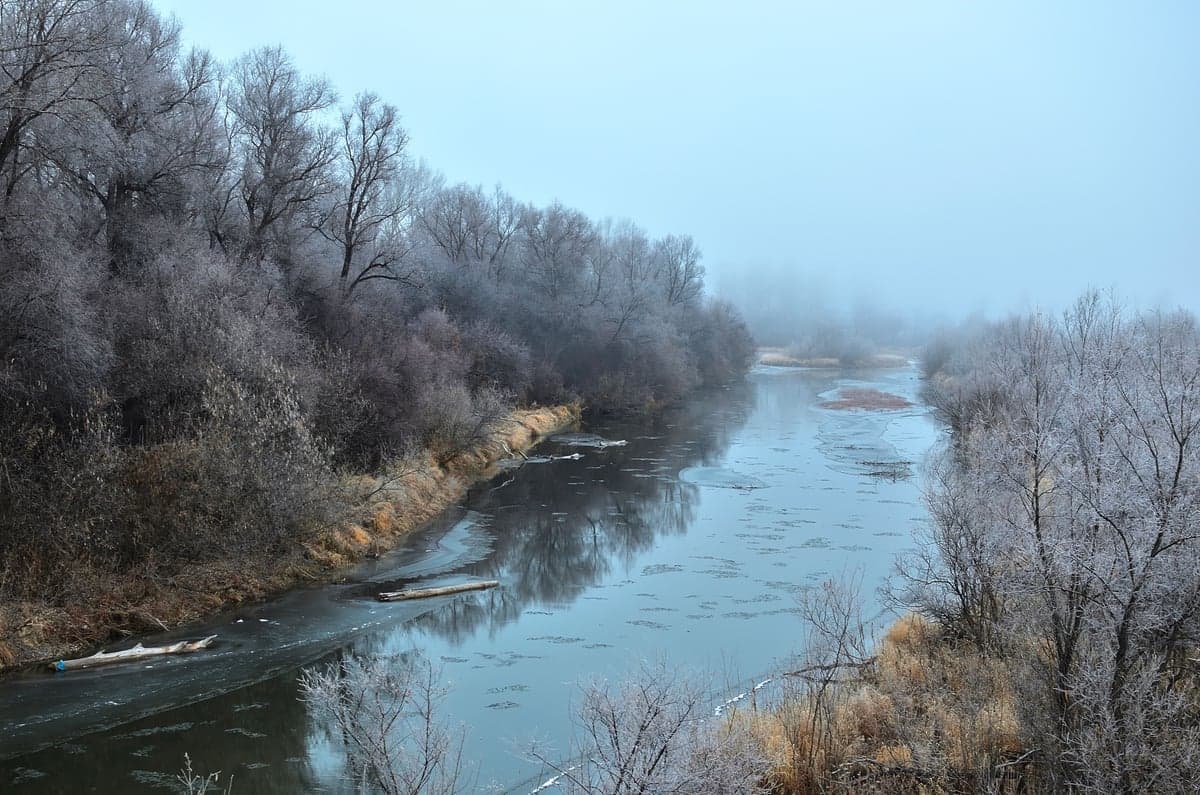
Frost on the banks, mist on the water, and about four usable hours between the two.
The Window Is 11 to 3, and Getting There at Dawn Is a Waste
Every winter regular fishes the same hours. Water temps bottom out overnight, tick up a degree or two as the sun works on the surface, and midges start coming off. On the Madison, local shops put the productive stretch at 11am to 3pm with hatch activity peaking around noon or 1pm. Utah guides say the same thing about the Provo: 10am to 3pm, with midges firing when air temps climb.
A degree or two sounds like nothing. It isn't. It's the difference between a trout that won't open its mouth and one that will eat a size 22 zebra midge drifted right past it.
Which means the 5am alarm is actively counterproductive. You freeze for four hours, spook fish in low clear water, burn your hands on cold guides, and you're worn out by the time the river actually turns on. Sleep in. Eat breakfast in town. Be rigged and standing in the water at 10:30.
It took me a few miserable Januarys to believe this. The first couple of winter trips I treated like summer trips, on the water at first light, nothing to show for it by ten, packed up and driving home by two out of sheer cold and frustration. I was leaving right as the good part started.
Freestones Turn to Slush, Tailwaters Don't
The reason only certain rivers work in January is physical, not preferential.
A freestone river takes its temperature from the air. When it drops below freezing, fast turbulent water forms frazil ice, a slush of loose crystals suspended in the current. That slush welds to the streambed as anchor ice, filling the gaps between cobbles that fish and bugs live in. The Ausable Freshwater Center has a good plain-English explanation of what that does to habitat. Practically, you show up and the river is choked, the guides ice over every third cast, and the fish are wherever they can survive rather than wherever you can reach.
A tailwater takes its temperature from a reservoir. Navajo Dam pulls from roughly 200 feet below the surface of Navajo Lake, so the San Juan comes out at 40 to 46°F year-round. Air temp can be 8 degrees; the river doesn't care. That's the entire trick.
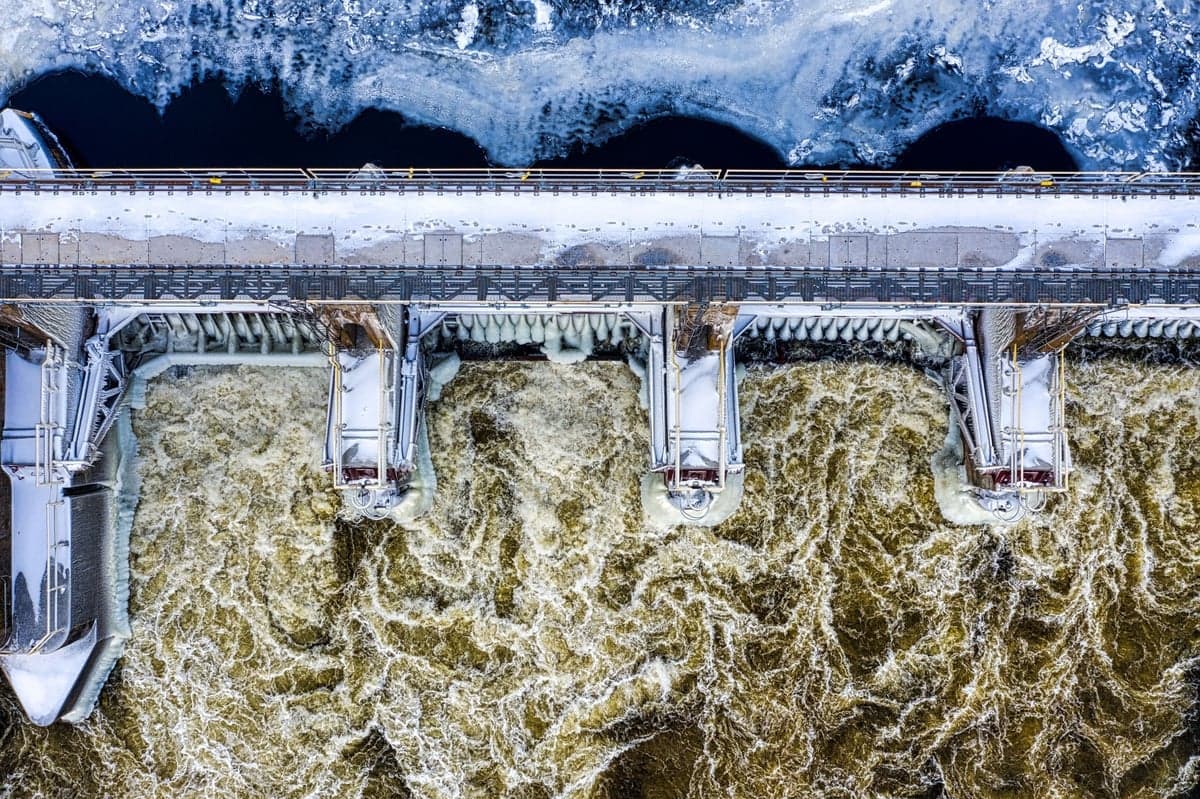
Bottom-release water from a deep reservoir is why some rivers stay open in January and their neighbors go to slush.
The Short List
We have a separate rundown of tailwaters that fish year-round if you want the general case. This list is narrower: the water I'd book a January trip around, and the flows you should actually expect in winter rather than in season.
San Juan, NM. The default winter destination for a reason. Water in the low 40s all winter, steady releases that have run in the 300 to 500 cfs range in recent winters, and enough fish per mile that a bad day still means a fish. The San Juan river guide has the access details.
South Platte, CO. Cheesman Canyon and Deckers both fish through winter at roughly 100 to 150 cfs. Technical, low, clear, size 20-24 stuff. The hike into Cheesman filters out most of the crowd.
Fryingpan, CO. Winter flows below Ruedi run 55 to 85 cfs with water in the 40s. Mysis shrimp and midges. Small water, big fish, cold canyon shade (get there at 11, not 8).
Green River, UT. The most water-year-dependent river on this list. Reclamation's Flaming Gorge operation plan runs a winter base flow period from December 1 to February 28 with average daily releases anywhere from about 800 cfs in a dry year to 2,700 cfs in a wet one, and day-to-day changes of up to 300 cfs. The A section wades well from roughly 800 to 2,000. Look up Utah flows the morning you fish, not the week before.
Bighorn and Missouri, MT. The Bighorn below Yellowtail averages 2,000 to 3,000 cfs with the best fishing in the 2,500 to 3,500 range, and the Missouri below Holter usually stays under 4,000 cfs in winter, which is walk-and-wade water. Both fish while everything else in Montana is locked up.
Provo, UT. Middle Provo winter flows run 130 to 150 cfs with water at 36 to 39°F. Over 3,000 wild browns per mile and an hour from Salt Lake, which makes it the easiest winter day trip on this list.
Taneycomo, MO, and the White River, AR. Western writers skip these and they shouldn't. Bottom-draw releases from Table Rock Dam turned Taneycomo into a cold-water fishery sitting around 48°F, and Bull Shoals created roughly 100 miles of trout water below it. Cheaper flights, warmer air, browns that will humble you. Both swing hard with power generation, so the gauge matters more here than anywhere.
Great Lakes tributaries. Different fish, same logic. Winter steelhead sit in slow, deep, low-gradient water at 32 to 37°F, and the tailwater sections stay open when the free-flowing stretches ice over.
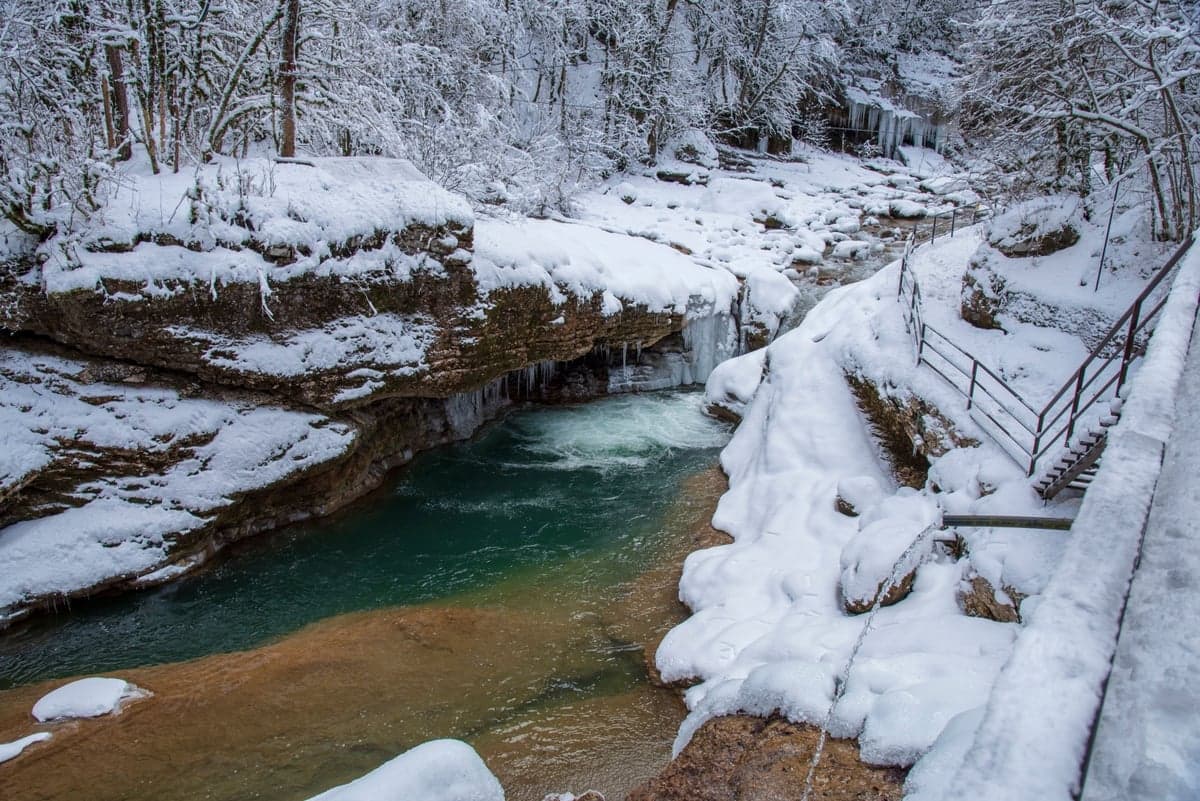
A freestone in January. Pretty, and not worth the gas money.
Winter Flows Follow a Dam Schedule, Not a Weather Forecast
This is where checking a gauge stops being optional.
Summer flows track runoff and rain, so they change gradually and you can mostly guess. Winter tailwater flows track what the dam operator decided, and they get cut way back once irrigation season ends. The Fryingpan is the cleanest example: Ruedi typically releases 150 to 300 cfs in summer and has been pushed toward 700 cfs during drought releases, then drops to 55 cfs in January. At that point you're fishing a different river with the same name. Runs you waded in August are dry gravel. Fish are stacked in the few pools deep enough to hold them.
The flip side hurts more. A release change can go the other way overnight, and a river that fished at 300 cfs on Saturday can be at 900 on Sunday with nothing in the weather to warn you. In summer that's an inconvenience. In January, with one four-hour window and a three-hour drive, it's the whole trip.
Pull up the Colorado gauge page the morning of, not the night before. It takes ten seconds and it's the highest-value thing you'll do all day.
Fish the Slow, Deep, Boring Water
In July you read riffles. In January skip them.
Trout move into the slowest, deepest water they can find, because holding in fast current costs calories they don't have. Long flat pools, deep inside bends, soft slots behind boulders, the tailouts nobody bothers with. It looks like dead water. It isn't.
Midges are most of the diet. Zebra midges, black beauties, RS2s, small mysis or scud patterns where they apply, mostly size 18 to 24 on 5X or 6X. Get the depth right, add weight until you're ticking bottom, and drift it again. Most winter blanks come down to depth and drift, so fix those before you start cycling through the fly box. Streamers work on the Bighorn and the White for browns, but they're a low-percentage, high-reward play rather than a default.
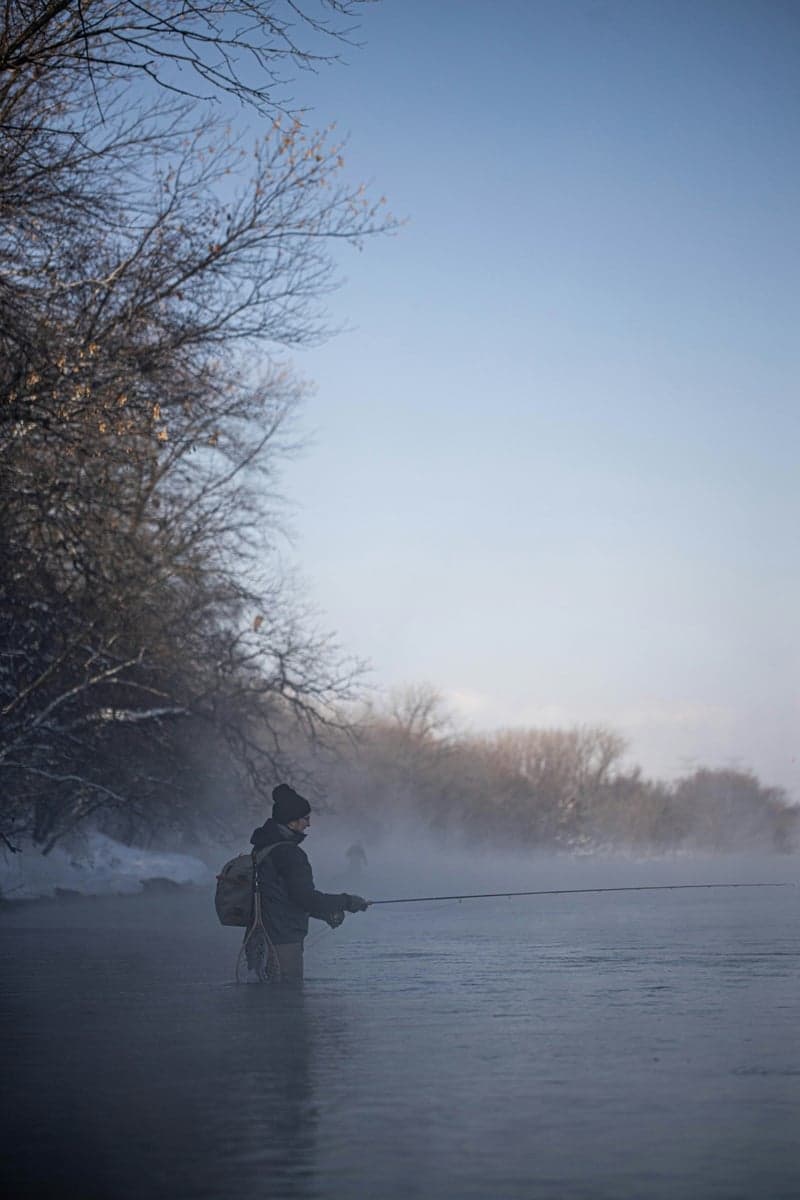
One rod on the whole run. That's the actual selling point of January.
Ice in the Guides Is Annoying. Falling In Is Not.
Two sentences on staying warm: wear more than you think, and carry a spare pair of gloves in a dry bag. Done.
The real hazard is the water. Cold shock hits within seconds, and manual dexterity drops 60 to 80% in the first several minutes of immersion, well before hypothermia is a factor. That's the part people underestimate: you don't get slowly cold, you immediately lose the hands you'd need to pull yourself out or hang onto a rock.
So use the staff, cross where you'd normally walk, and don't wade the deep line for one more fish in an empty canyon in January. Fish with someone if you can. If you can't, tell somebody where you'll be.
Nobody Else Is Out There
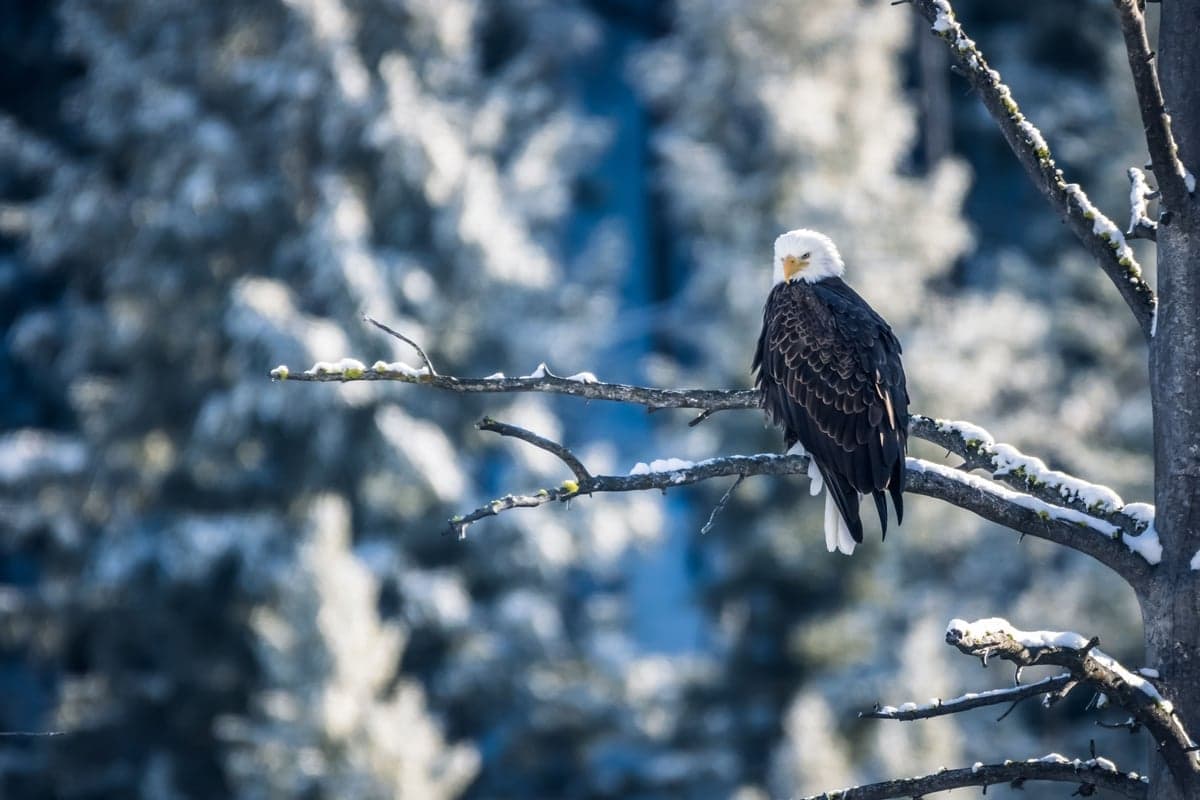
Winter company on most tailwaters.
Cheesman Canyon in July is a parking problem. Cheesman in January is a parking lot with two trucks in it. The San Juan, the Fryingpan, the Missouri around Craig, all of them run at a fraction of their summer pressure from December through February.
Those fish also stop seeing flies for months at a time. They're still selective, tailwater trout always are, but they haven't been drifted over forty times a day since October. On a good winter afternoon you get a famous run to yourself and fish that haven't been educated since fall.
Four hours, one river, nobody else. That's a fair trade for cold hands.
Pick a tailwater from the list, check the gauge the morning you go, and plan on being in the water from 11 to 3. Everything else is detail.
Get River Intel Weekly
Flow updates and fishing intel delivered every Thursday.
River Intel Weekly
Weekly flow updates and fishing intel.
© 2026 RiverReports, Inc.