Low Snowpack Summer 2026: Where to Fly Fish When Western Rivers Run Dry
Tailwaters, spring-fed rivers, and Eastern alternatives for the worst Western snowpack in decades
Greg Lamp
April 4, 2026
12 min read
TLDR
- Western snowpack is at record lows. Colorado's April 1 snow water equivalent measured just 22% of the 30-year median, the lowest in the SNOTEL era. Wyoming has 11 of 19 basins at all-time record lows.
- Freestone rivers across CO, MT, WY, and ID will face low flows, warm water temperatures, and widespread hoot owl restrictions by mid-July.
- Tailwaters are your insurance policy. The San Juan, Green River, Missouri, Bighorn, Fryingpan, and Lee's Ferry all pull cold water from deep reservoirs. Snowpack doesn't matter.
- Spring-fed rivers like the Deschutes and Metolius in Oregon run on groundwater, not snowmelt.
- Go East. The Smokies, Driftless Area, Vermont, and Michigan's Au Sable offer legitimate summer trout fishing that most Western anglers overlook.
- Track real-time flows on RiverReports and set up flow alerts so you know when to pivot.
The Numbers Are Ugly
I've been watching SNOTEL data all winter hoping for a miracle March. It didn't come. Instead, Colorado posted its warmest March on record — 3 to 4°F warmer than any other March in 132 years of measurement, and what little snowpack remained melted out weeks early.
Here's what we're dealing with as of April 1, 2026:
- Colorado: Average snow water equivalent across 115 SNOTEL stations is 3.3 inches, just 22% of the 30-year median. The previous record low (2012) was 9.1 inches. We're at less than 40% of that.
- Wyoming: 11 of 19 river basins are at record-low snowpack. The Bighorn basin hit its all-time low. The Snake River basin recorded its fourth-worst March 31 on record.
- Western US overall: Snowpack is 65% below the 1991-2020 normal, the lowest on record since monitoring began in 1981.
- 18 Colorado snow course sites recorded zero SWE on April 1 that have never previously been snow-free on that date. Let that sink in. Places that have always had measurable snow on April 1 for the entire period of record are bare ground. Sixty of 64 long-term measurement sites set all-time lows.
What does this mean for fishing? Less snowpack means earlier, shorter runoff. Rivers that normally run high through June will drop to base flow by late June. By mid-July, water temperatures on exposed freestone rivers will climb past 65°F, stressing trout. By late July and August, expect widespread hoot owl restrictions, which means no fishing from 2 PM to midnight when water temps hit 73°F for three consecutive days. Last year, Yellowstone National Park implemented hoot owl closures on June 19. This year could be earlier.
Rivers most at risk: the Yellowstone below Livingston, Madison below Ennis Lake, Big Hole, Gallatin, Roaring Fork, Eagle, upper Colorado mainstem, and most small freestones across the Rockies. Check Montana flows, Colorado flows, Wyoming flows, and Idaho flows throughout the summer.
This doesn't mean summer is cancelled. It means you need a different plan.
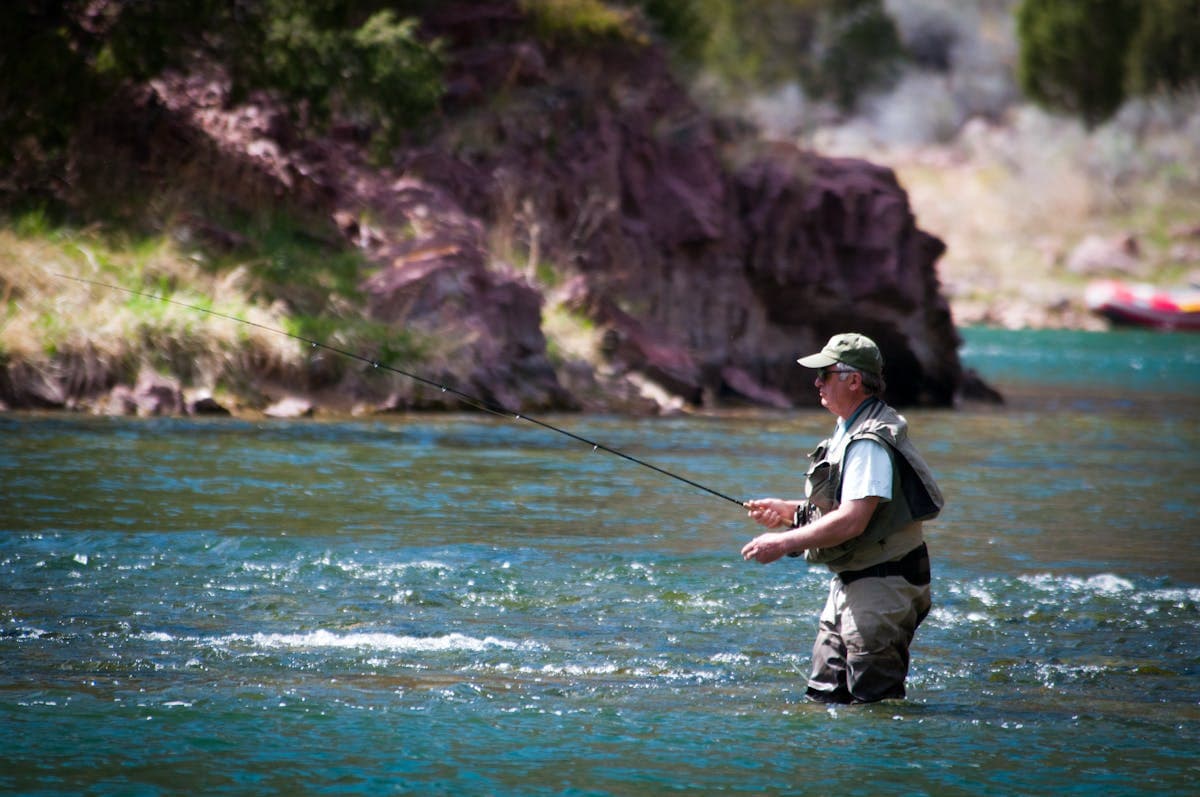
Clear water and cold feet — a tailwater in August doesn't know anything about snowpack.
Drought-Proof: Western Tailwaters That Don't Need Snow
Tailwaters pull cold water from the bottom of reservoirs. When the reservoir has multi-year storage (and most of the big ones do), a single low-snowpack winter barely registers in the outflow. These rivers will fish well in July and August no matter what.
San Juan River, New Mexico
The San Juan below Navajo Dam is one of the most reliable fisheries in the country, period. The dam releases 42-50°F water year-round, and the first 3.5 miles of catch-and-release water hold an estimated 15,000 trout per mile. Summer flows typically run 500-1,200 CFS — perfect for wading the braided channels and working size 22-26 midges on 6X tippet. I fished it last August during a 98-degree afternoon. My boots were soaked in 45-degree water while my neck was sunburning through SPF 50. Caught fish all day on RS2s in the back channels while every freestone within 500 miles was under restrictions. By July, spring environmental releases are done and flows stabilize. Fish early morning to beat the heat, but honestly, the cold water makes even midday manageable.
San Juan River guide | New Mexico flows
Green River, Utah
The A Section below Flaming Gorge Dam might be the best summer dry fly tailwater in the West. Spring-fed reservoir releases keep the water in the 40s, visibility often exceeds 10 feet, and trout densities run 8,000-22,000 fish per mile depending on the section. July and August bring cicadas, PMDs, caddis, and terrestrials. Fish look up all day. Optimal flows run 800-2,500 CFS for wade fishing; watch for daily hydroelectric swings. Float trips open up more water.
Utah flows | Park City area guide
Missouri River, Montana
Three reservoirs in series (Canyon Ferry, Hauser, and Holter) create a massive buffer against any single bad snow year. The Missouri below Holter Dam runs 4,000-5,000 CFS year-round with 5,000-8,000 trout per mile. July means PMDs, caddis, and early Tricos. August is Trico season with some of the best sight fishing of the year, with pods of fish sipping size 20 spinners in flat water, visible from 40 feet away if you can keep your shadow off the surface. Craig is the hub. This is Montana's drought insurance. In 2021 when hoot owl restrictions shut down rivers across the state, the Missouri kept fishing and guides were booked solid through September.
Montana flows | Bozeman area guide
Bighorn River, Montana
The Bighorn below Yellowtail Dam is one of the most consistent tailwaters in America. What makes it special is the Afterbay Dam downstream, which smooths out hydroelectric generation pulses, giving you stable flows all day. Trout densities run 3,000-6,000 per mile with a 14-inch average and plenty of fish over 20. BWOs, PMDs, and caddis carry you through summer. Less crowded than the Missouri, and Fort Smith has everything you need.
Fryingpan River, Colorado
This is your Colorado play. When the Roaring Fork blows out, the Eagle runs warm, and the Colorado mainstem is unfishable, the Fryingpan below Ruedi Reservoir keeps flowing at 80-150 CFS of cold, clear, Gold Medal water. Green drake and PMD hatches start in early July and last into September. Mysis shrimp patterns work year-round. Stay near Basalt and you've got the Fryingpan in your back pocket when every nearby freestone disappoints. Book a guide early — in drought years, everyone pivots here.
Colorado flows | Vail area guide
Lee's Ferry, Arizona
Glen Canyon Dam releases 50°F water from the bottom of Lake Powell year-round. Air temperatures in July will hit 100°F while the river runs 50°F. You're casting in the desert heat and your feet are going numb at the same time. Fish early morning and late evening. Thousands of wild rainbows per mile in the 14-22 inch range, feeding on midges and scuds against a backdrop of 700-foot sandstone walls. Zero dependence on snowpack. If you've been meaning to check Lee's Ferry off the bucket list, this is the summer to do it.
Lee's Ferry guide | Arizona flows
The Sleeper Picks: Spring-Fed and Snowpack-Independent
Not every Western river depends on snowmelt. These run on groundwater and springs, so drought barely touches them.
Deschutes River, Oregon
The Deschutes is the most important river on this list for one reason: it's a Western freestone that behaves like a tailwater. Massive spring systems feed the river, keeping flows stable at 4,000-5,500 CFS through summer regardless of snowpack. The water stays cool. Wild redside rainbows are aggressive. PMDs, caddis, and Golden Stones carry you through July, and summer steelhead start showing in August. The lower canyon is hot during the day — fish the mornings and evenings, but the water itself stays fishable when every other Western freestone is cooked. The Metolius, another spring-fed river nearby, offers a smaller but equally drought-proof option.
Bend, Oregon guide | Oregon flows
South Platte, Cheesman Canyon, Colorado
Cheesman Reservoir provides year-round cold releases to one of Colorado's most technical and rewarding stretches of trout water. Summer optimal flows run 150-400 CFS, enough to wade comfortably. The 1.5-mile hike in filters out casual anglers, leaving you with educated fish in a gorgeous canyon. BWOs, PMDs, and Tricos dominate summer hatches. Fish average 14-16 inches with 20-inch browns in the deep pools. It's hard fishing, but it's open fishing.
Denver Front Range guide | Colorado flows
White River, Arkansas
If you're willing to leave the West entirely, the White River below Bull Shoals Dam offers nearly 100 miles of cold tailwater holding all four trout species, including browns over 20 pounds. The dam releases keep water cold enough for trout even in July and August when Arkansas surface temperatures soar. Generation schedules create two modes: wade during low generation, float during pulses. This is a genuine summer destination that sidesteps the entire Western drought conversation.
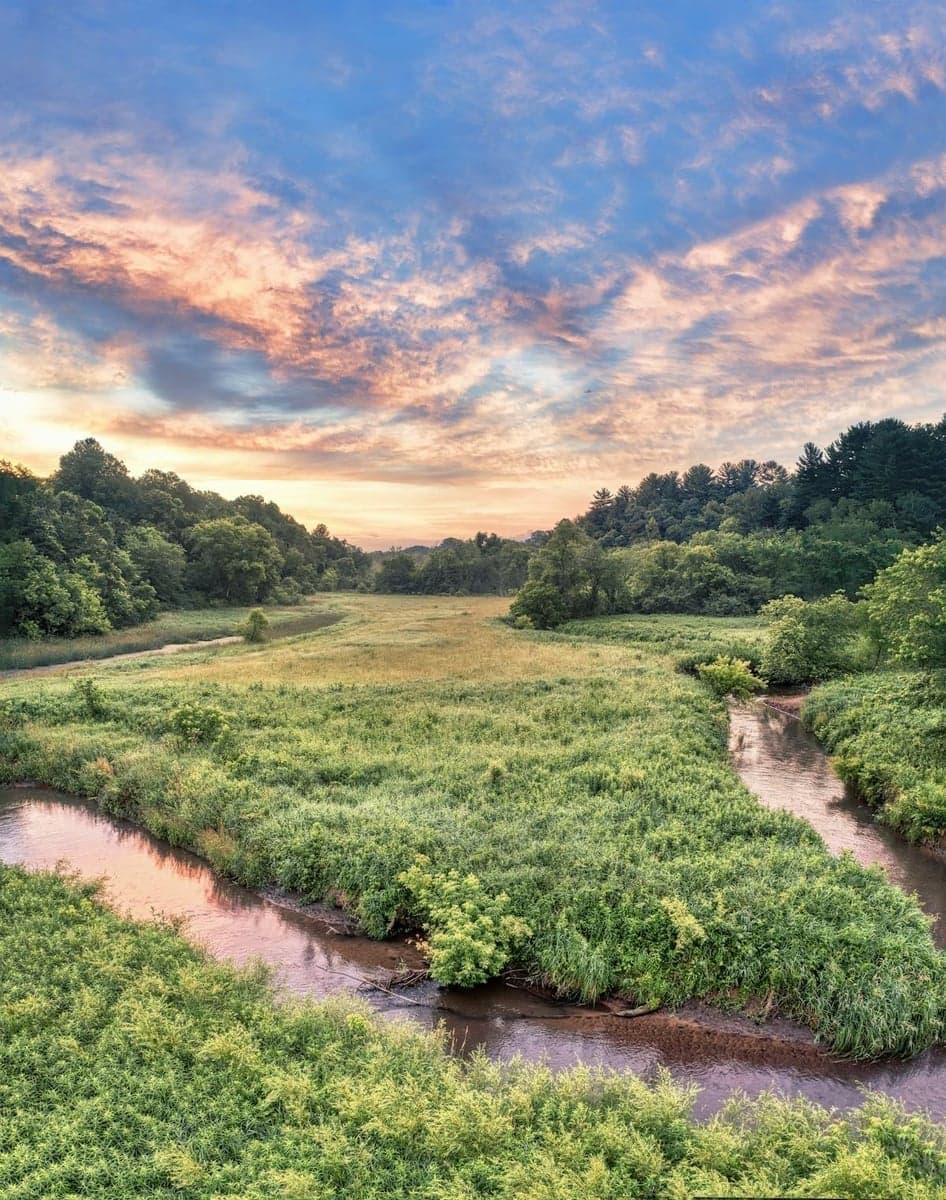
A spring-fed Driftless creek in Wisconsin. Water this cold and this consistent doesn't need a single flake of mountain snow.
Think Outside the West
Here's the honest take: if Western rivers are going to be compromised, why fight it? Some of the best summer trout fishing in the country has nothing to do with snowpack.
Great Smoky Mountains, Tennessee & North Carolina
Over 800 miles of wild trout streams in a national park with no stocking fees. Brook trout in the high-elevation streams (above 3,500 feet) stay cold all summer. Wild rainbows in the lower streams provide fast action on dry flies. The Little River above Townsend fishes well at 80-300 CFS in summer. It's rain-fed, not snow-fed, and completely independent of what's happening out West. Combine it with a few days in Asheville and you've got a proper trip.
Smokies guide | Tennessee guide | Tennessee flows
Driftless Area, Wisconsin
This is the most underrated trout destination in the country and I will die on this hill. Over 600 spring-fed streams running 48-52°F year-round across southwestern Wisconsin, southeastern Minnesota, and northeastern Iowa. These creeks are immune to drought because they're spring-fed from the bottom up. July and August bring Trico hatches for technical morning fishing and terrestrial action (hoppers, ants, beetles) all afternoon. Most streams fish at 15-50 CFS — intimate water where you're sight-casting to individual brown trout. Wisconsin alone has 13,000 miles of classified trout water. Nobody from out West ever goes here. That's their loss.
Driftless Area guide | Wisconsin flows
Vermont
The Battenkill is legendary for a reason, and also legendary for humbling you. Gin-clear water, wary browns that have seen every Adams and Elk Hair Caddis ever tied, and beautiful pool-riffle-run structure through green farmland. Summer flows sit around 150-300 CFS, perfect for wading in shorts. If the Battenkill frustrates you, the White River offers more forgiving pocket water with rainbows and brookies, and the Winooski has underrated smallmouth action. Eastern base flows are rain-driven, so there are no snowpack concerns. Combine fishing with Manchester's restaurants and Vermont's craft beer scene and you've got a trip that's easy to sell to a non-fishing partner.
Au Sable River, Michigan
If you time it right, the late-June Hex hatch on the Au Sable is one of fly fishing's great experiences: size 6-8 Hexagenia mayflies emerging after dark, and browns that haven't looked at the surface in months suddenly smashing dries like they're angry about it. By July, the Hex is done but terrestrial fishing picks up with hoppers, ants, and beetles along grassy banks. Summer flows run 300-600 CFS with water temps in the 55-65°F sweet spot. The Holy Waters section offers 8 miles of wadeable, fly-fishing-only water restricted to artificial lures. It's Michigan's answer to a spring creek.
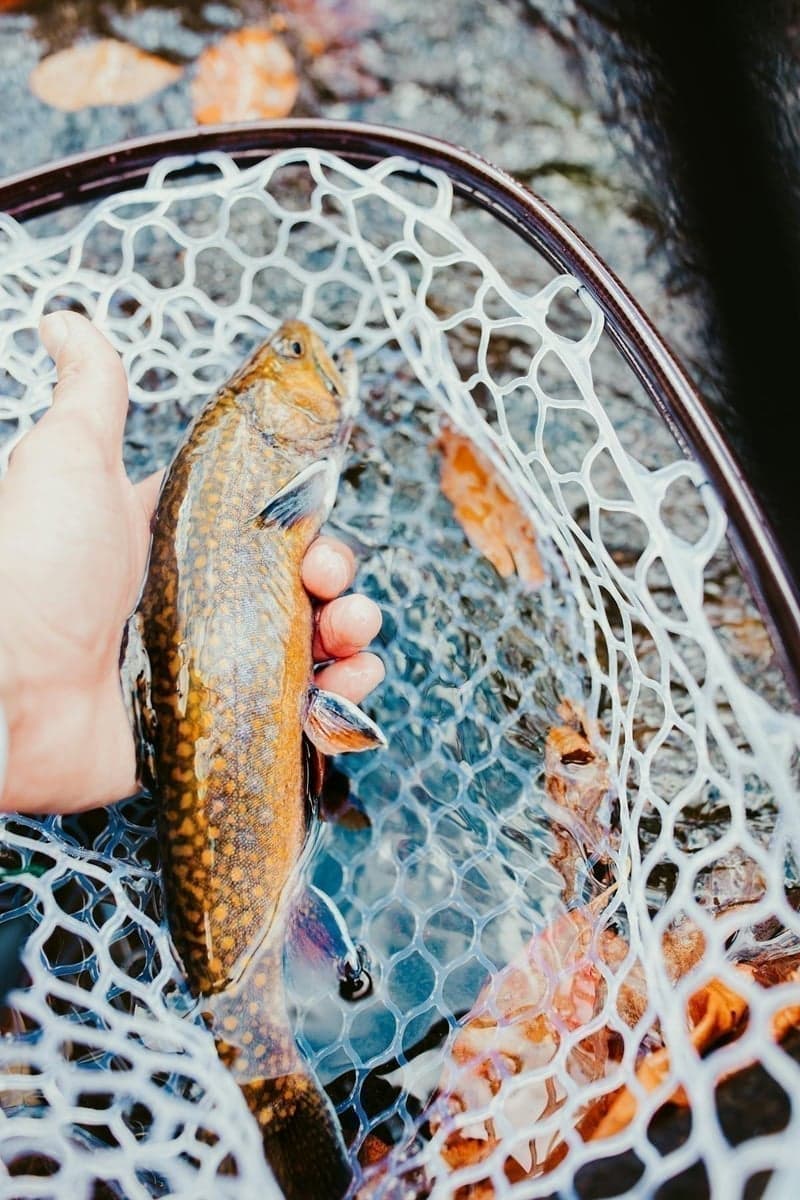
A wild brook trout in the net. Eastern streams are full of these — no snowpack required.
How to Plan Around Low Flows
Monitor flows obsessively. Check RiverReports before every trip. Compare current CFS to optimal ranges. If a river is running at 30% of its summer optimal, that's a red flag. Set up flow alerts to get notified when your target rivers drop below fishable levels.
Understand hoot owl restrictions. When water temperatures hit 73°F for three consecutive days, many Western states close fishing from 2 PM to midnight. In practice, plan to fish before 10 AM on any freestone river in July or August regardless of formal restrictions. Even where fishing is technically open in the afternoon, catching stressed trout in 68°F water isn't sporting. Trout caught and released in water above 65°F have significantly higher mortality rates. Respect the closures and the fish will be there next year.
Always have a Plan B. The anglers who do best in drought years are the ones who book near a tailwater backup. Planning to fish the Roaring Fork? Stay near Basalt so you can pivot to the Fryingpan. Heading to the Yellowstone? The Missouri is two hours away. Targeting the Big Hole? The Bighorn is a three-hour drive. Having a backup isn't pessimistic, it's realistic.
Book guides now. In drought years, everyone pivots to the same tailwaters. San Juan, Green River, and Missouri guides fill up fast. If you're planning July or August trips, book by May.
Your Move
Low snowpack doesn't mean no fishing. It means smarter fishing. The anglers who adapt, who target tailwaters, explore spring-fed rivers, or make the trip to the Driftless or the Smokies, will have a great summer while everyone else cancels their trips and complains on Reddit.
Start by checking current flows across all states. Set up flow alerts on your target rivers. Read our guide to tailwaters that fish year-round and understanding the difference between freestones and tailwaters.
The water is out there. You just need to know where to look.
Get River Intel Weekly
Flow updates and fishing intel delivered every Thursday.
River Intel Weekly
Weekly flow updates and fishing intel.
© 2026 RiverReports, Inc.